


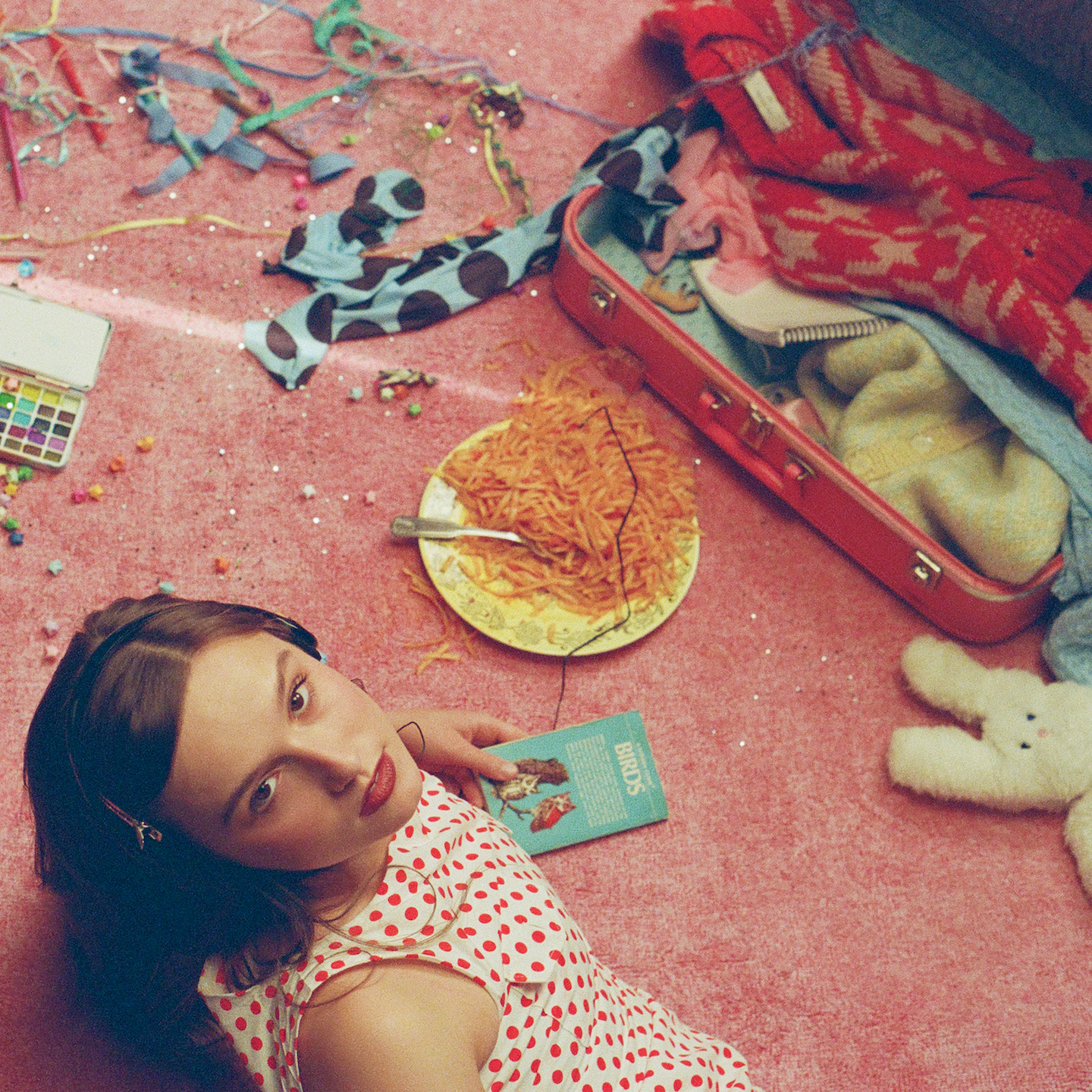
Preschool teacher by day and musician by night, Diva Smith doesn’t think the two roles are as different as they sound. Whether she is leading a room full of 3-year-olds or stepping onstage with a guitar, the Los Angeles-raised, New York-based singer-songwriter is chasing vulnerability and inspiring bravery.
After growing up on the sunny West Coast in a musically inclined household (her father is Tears for Fears’s Curt Smith), she crossed the flyover zone to study journalism, psychology, and music production at NYU. In forging her path as an artist, Smith coined a name for that ever-expanding genre that pairs diaristic songwriting with pop production: “therapy pop.” Her debut EP, Sunny Surrender, is rife with it, following her emotionally expansive transformation from LA girl to New York artist.
Before its release, Smith built anticipation on the road alongside Carol Ades and opening for Holly Humberstone. Fittingly, many of her lyrics circle the idea that the best things in life come from being pushed out of your comfort zone; Sunny Surrender, out now, is plenty proof of that.
This EP is largely about turning from anxiety to enthusiasm about what’s to come in life. What helped you make that shift?
I’ve reached a point in my life where I’ve decided that dwelling on the darkness too much is a waste of my time. I have always felt things deeply, for better or for worse, and at times that negativity can paralyze me. The relationship I was in at the time of writing these songs felt like a leap of faith into trust, which shockingly made me feel secure. I’ve been leaning into doing things scared, and faking it ’til I make it. Sometimes you have to put a smile on your face and do the scary thing. I’ve learned that the best things in my life have come from being pushed out of my comfort zone.
You called your music “therapy pop.” How is this process akin to therapy for you?
The process of creating and performing is therapy for me. Being able to go through something, process it, write about it, wrap it up with a bow, and give it to people makes me feel a greater purpose—like the things I’ve gone through can maybe help someone else who’s feeling that same emotion.
As a “preschool teacher by day, and artist by night,” how do these two modes inspire or interact with each other?
I think being a preschool teacher keeps me sane in a lot of ways. In the early stages of being an artist, it’s a big part of my job to write, talk, think about myself all the time, which isn’t the healthiest. Being in a classroom where all I can focus on is the 15 three-year-olds in front of me gives a greater perspective. It forces you to be selfless, and somehow teaches you so much about yourself in return.
Do you remember the moment you decided to pursue music? What gave you the confidence?
I always knew music was what I wanted to do, but it wasn’t until college that I got the guts to pursue it. Something about moving to New York inspired me to write songs for the first time. After two years at NYU studying mainly psychology and music journalism, I realized that I was either going to go down one of those paths or I was going to commit to this dream of being a musician. So I transferred into the music school. I knew I would regret not trying. It was terrifying, but the best choice I ever made.
How did touring with Holly Humberstone change your view of performing? What does it push you to accomplish next?
Holly really prioritizes her fans. She is constantly making sure everyone is safe throughout the show, offering waters, and saying hi and taking photos with everyone as she leaves the venue, no matter how long it takes. She’s insanely hardworking and busy, and yet her kindness is unmatched. The second I walked onto this tour, she said that her door was always open, and continually checked on me to make sure I had everything I needed. She really cares about people, and so does her band. That’s a big thing I became excited about on tour—finding a close-knit touring crew like hers. They made every day feel like summer camp.
What songs or artists did you have on repeat while making this EP?
The Chicks, Dijon, Haim, Megan Moroney, Lainey Wilson, and Kacey Musgraves.
What is your go-to cure for writer’s block? What about stage fright?
Finish the song, even if you think it’s bad. It allows you to feel like you’ve accomplished something. And weirdly sometimes they’re the best songs. I find that concerts always inspire me too—a reminder of the communal aspect of all this. And get inspired from other forms of art—go see a movie.
For stage fright, the greatest advice I’ve ever been given about performing is to smile before you walk on. Even if you’re anxious, it forces you to look excited. Get yourself on that stage, even if you need to fake it ’til you make it. I always feel grateful after.
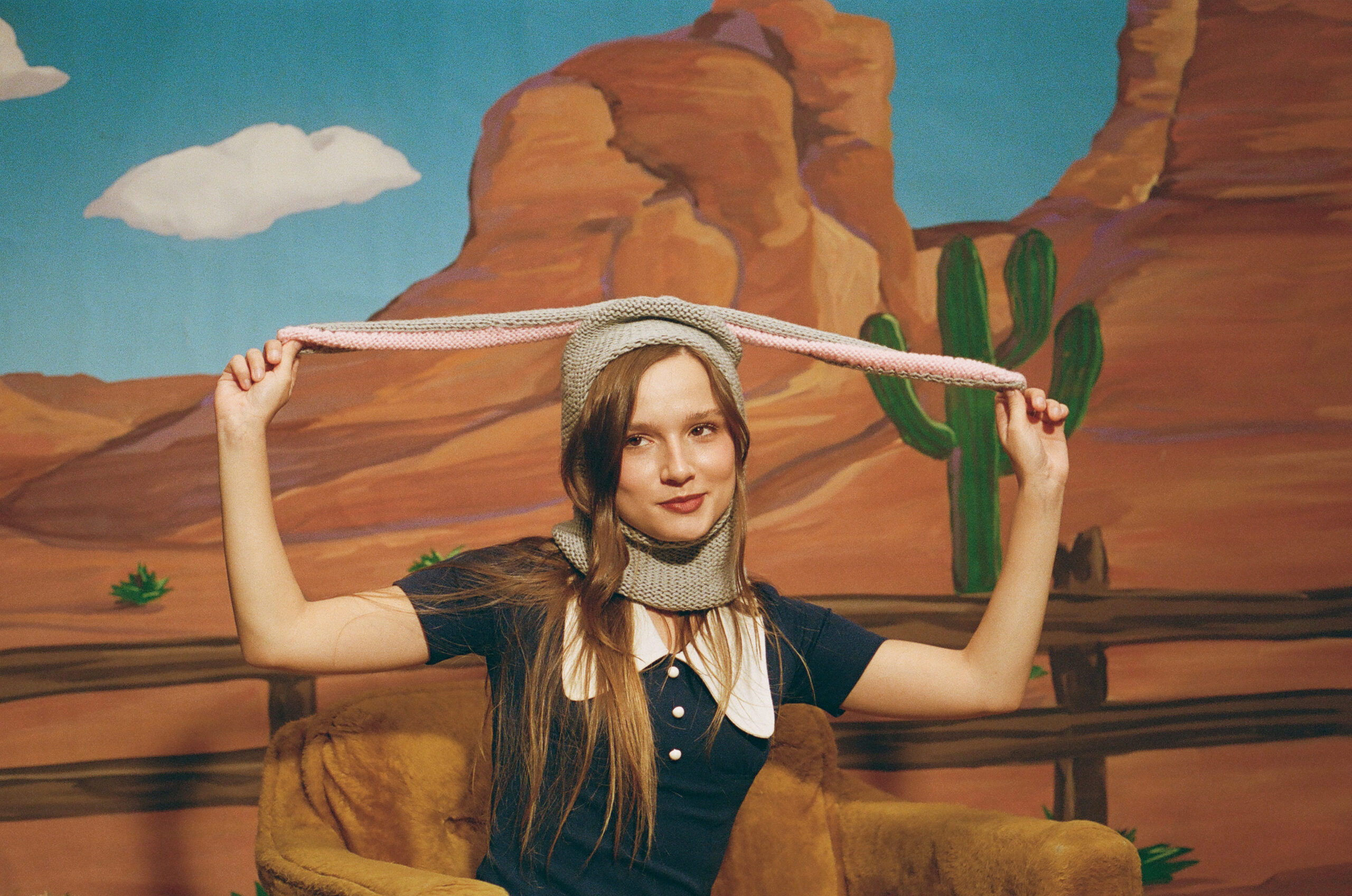
In “2-step,” “Still the Kid,” and “Sunny Surrender,” a bunny motif shows up. What does that mean to you? Is it inspired by a specific childhood memory?
I’ve slept with a stuffed bunny since I was little. My dad brought him home from London for me when I was three. Bunny is my comfort, and has become a symbol of my younger, uninhibited self. It’s crazy how the thing that used to lull me to sleep and calm me when I was afraid on an airplane as a kid is now the thing that aids me through heartbreak and 20-something drama. He has been with me through it all.
How did the move from LA to New York shift the kind of music you listened to, or were interested in making?
Growing up, I was obsessed with pop stars, and now I’m more obsessed with songwriting. I love songs that take you on a journey, keep you engaged, and make you think. I’m really into country, folk, singer-songwriter music now, and especially love pop music where you can hear those influences shine through.
What’s your favorite memory of working on the “Still the Kid” video with Nina Ljeti? And how do you feel you were able to push yourself as an artist with this release?
Nina is really good at pushing me to do things a little bit out of my comfort zone, and encouraging me to be my most authentic self. She gets me, and knows how to direct me. She’s probably the only person who could get me to keep a straight face walking around New York City in a bunny costume while everyone stared and took pictures. I think this release has allowed me to show my personality in ways I haven’t yet—and I feel really lucky to have found collaborators that made that possible. The music I released in the past felt like more one-dimensional heartbroken singer-songwriter music to me, and this EP feels more fun, sarcastic, exploratory, honest, and wholeheartedly me.
More of our favorite stories from CULTURED
America Is Turning 250. These 13 Must-See Exhibitions Are Grappling With Its Legacy.
Is This 28-Year-Old Our Next Great Playwright?
Tiny Can Be Mighty. These Cottages Are Here to Prove It.
Paul Thek’s Difficult Afterlife: David Rimanelli on the Cult Artist’s New York Shows
Olivia Wilde Takes a Second, More Successful, Swing at Failing Marriages in ‘The Invite’
Sign up for our newsletter here to get these stories direct to your inbox.






 in your life?
