


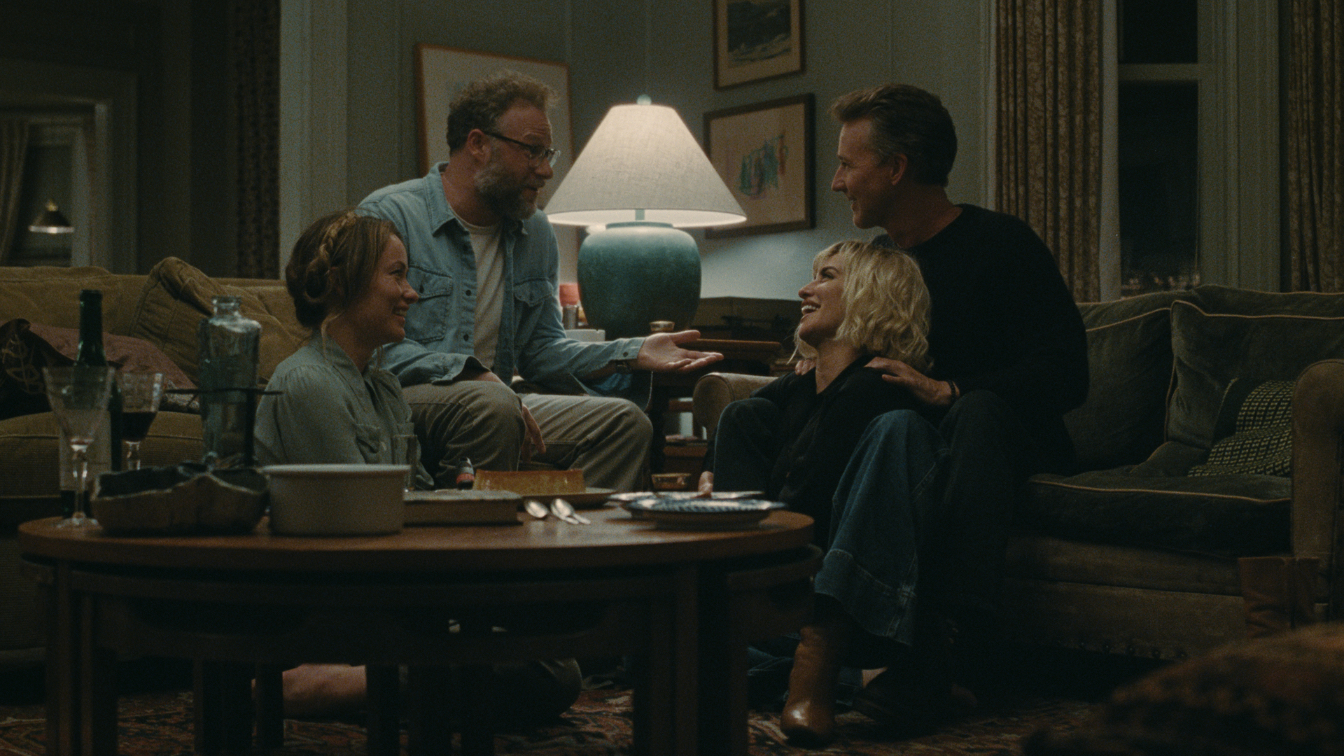
“It’s based on a Spanish film,” a young man wearing all black informed his friend after the screening, “which is interesting, because it’s about such a quintessentially American marriage.”
We were standing outside the theater, having just finished watching The Invite, Olivia Wilde’s new movie about a dinner party where no one eats dinner, although at one point Seth Rogen is force-fed Penelope Cruz’s flan. (Much is made of this flan; one character likens it to heroin and says that once you eat it, you can “never go back.” Go back to what? Not eating it? Other flan? Life as you knew it? But we are getting ahead of ourselves.)

What, I wondered, did my fellow audience-member consider so American about the marriage at the center of this movie? Joe (Rogen) is a middle-aged, has-been indie rocker who had one hit, “One Girl,” and now teaches music at a shitty conservatory. His former muse, his “girl,” is now his wife, Angela (Wilde), the stress-case who swats his hand away from a charcuterie plate when, collapsing home from a long day of work with a backache, he reaches for a snack.
Angela worked hard on that charcuterie plate. Another artist raté who did “nothing” (her word) with her art school degree, she channels her creativity into domestic presentation, consumed by the project of renovating the apartment Joe inherited from his parents. Metaphor alert: Marriage is an old framework that new generations of straight people keep moving into and failing to meaningfully renovate. Angela has made some beautiful changes, not that Joe notices, but do you know which room is unfinished, which room she lacks a vision for? The bedroom.

Anyway, hands off the prosciutto, Joe; it’s for their guests. Guests? Who has Angela invited? Oh, just the gorgeous couple from upstairs whose orgasms are so raucously wall-shaking that Joe has been intending to lodge a noise complaint. Angela, though, wants to make nice. Knock knock—that must be them!
Wilde’s last film, also about marriage, took a speculative, parabolic approach. The swirl of dish about intra-cast relations that surrounded the release of Don’t Worry Darling, about a woman conscripted into wifehood via a virtual simulation, nearly eclipsed the fact that it was a very bad movie. The Invite, a much better one, proposes a different kind of alternate reality game: the kind we play by seeing, or imagining, how other people live.
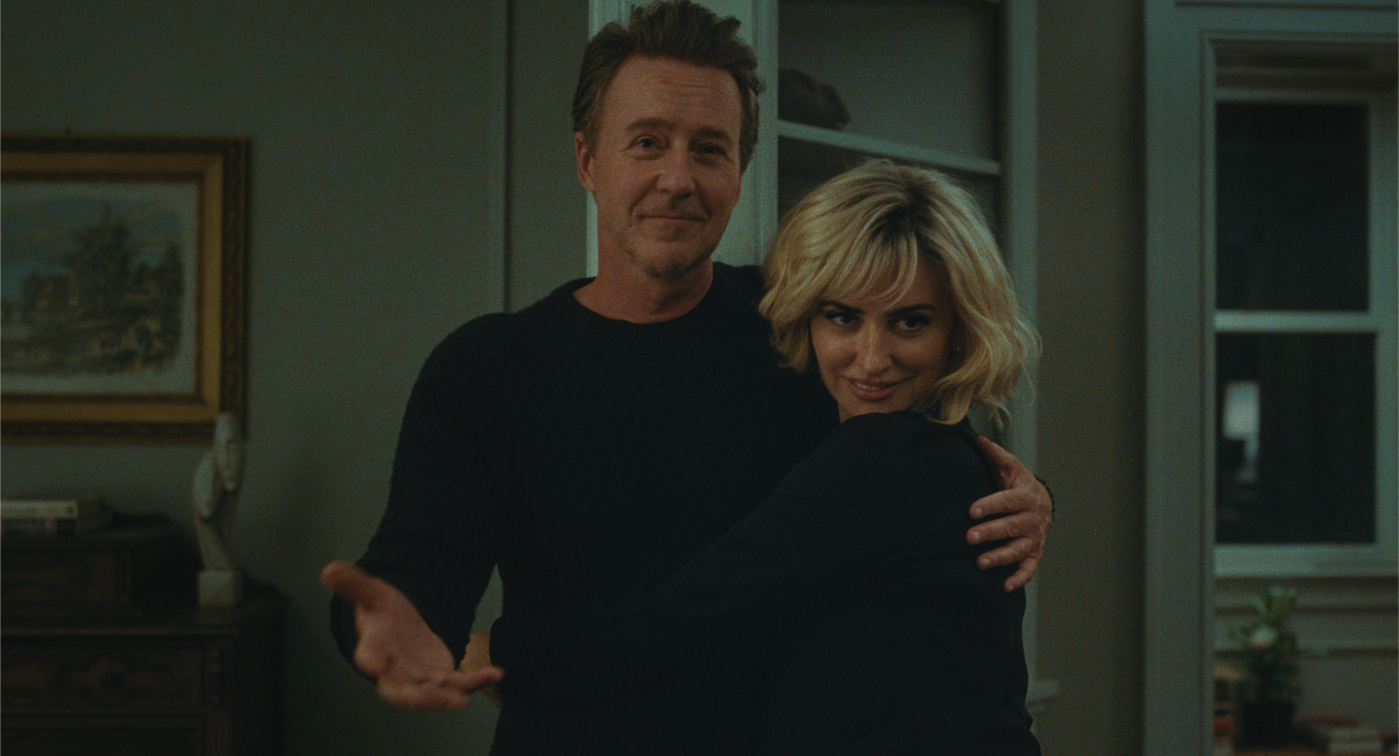
Enter the neighbors, Hawk (a hilariously earnest Ed Norton) and Piña (Cruz, flan in tow). Where Joe and Angela’s relationship is longstanding, contentious, monogamous, and organized around childrearing (their 12-year-old daughter is out at a sleepover), Hawk and Piña’s is newish, demonstrative, swinging, and centered on experimental pleasure. Radiating self-assurance, calling everything like they see it, and speaking casually about their taste for group sex in which everything is “on the menu,” they seem ageless, especially Cruz, whose sexual presence I can only describe as cosmic. For Joe they represent a pretentious incursion on the status quo, but Angela is in awe. Can these people be for real? If so, what does that say about the way she and Joe have been “doing” reality? After tasting Piña’s fruit-of-knowledge flan, can they ever “go back”?
As advertised, The Invite depicts a comic stand-off between heterosexual partnership’s past and its potential future, or at least a stereotyped sketch of that past and a fantasy version of that future. It asks what the mainstreaming of nonmonogamy means for more traditional marriage, and how we adapt to an expanding menu of sexual and romantic possibilities. (The film has fun with this idiom: Here is Angela tasting all the salamis at the butcher—get it?; here is Hawk, stroking a vintage rug, saying how he wants to buy all the rugs in the world.) But it’s most engaging as a study of creative stuckness, exploring how we use each other to shrink our hunger and aspiration down to manageable size, and asking whether, and to what extent, renewal is possible past a certain age. To me, what stands out about Piña and Hawk is not that they are sexually liberated swingers, but that they are both post-marriage, Piña as a divorcee and Hawk as a widower tortured by his mistakes as a husband. These are people, we learn, who have passed through the clarifying fire of romantic suffering and emerged in new relation to their own agency. “You’re here because of the choices you made,” Piña says to Joe and Angela, stunning them with what they already know.

Don’t see this movie for any great revelation about the state of contemporary marriage, which doesn’t require structural critique from a creative class that is in no danger of being oppressed by it. Don’t see it for Olivia Wilde’s Angela, whose panting, jittery, over the top performance is exactly the kind of representation that perimenopause, having finally stepped out from the shadows, does not need. Don’t see it for sex; there isn’t any. See it for Seth Rogan’s iconic, guttural, growling laugh, here finally deployed to its full dramatic potential as an expression of rage, insecurity, desire, impotence, and male existential panic.
“I’m gonna see the Spanish version,” said the young man in black outside the theater who regarded the “quintessentially American marriage” as laugh-out-loud miserable. “My fiancé says it’s really good.”
More of our favorite stories from CULTURED
Sienna Spiro, Your New Favorite British Belter, Loves It When a Musician Puts Her in Her Place
The Stars of Art Basel: Four Artists Having a Moment on the Fair Floor
15 Must-See Gallery Shows on View in London This Summer
How Chef Julia Turshen Cooked Up the Season’s Spiciest Queer Romance Novel
Sign up for our newsletter here to get these stories direct to your inbox.









 in your life?
