


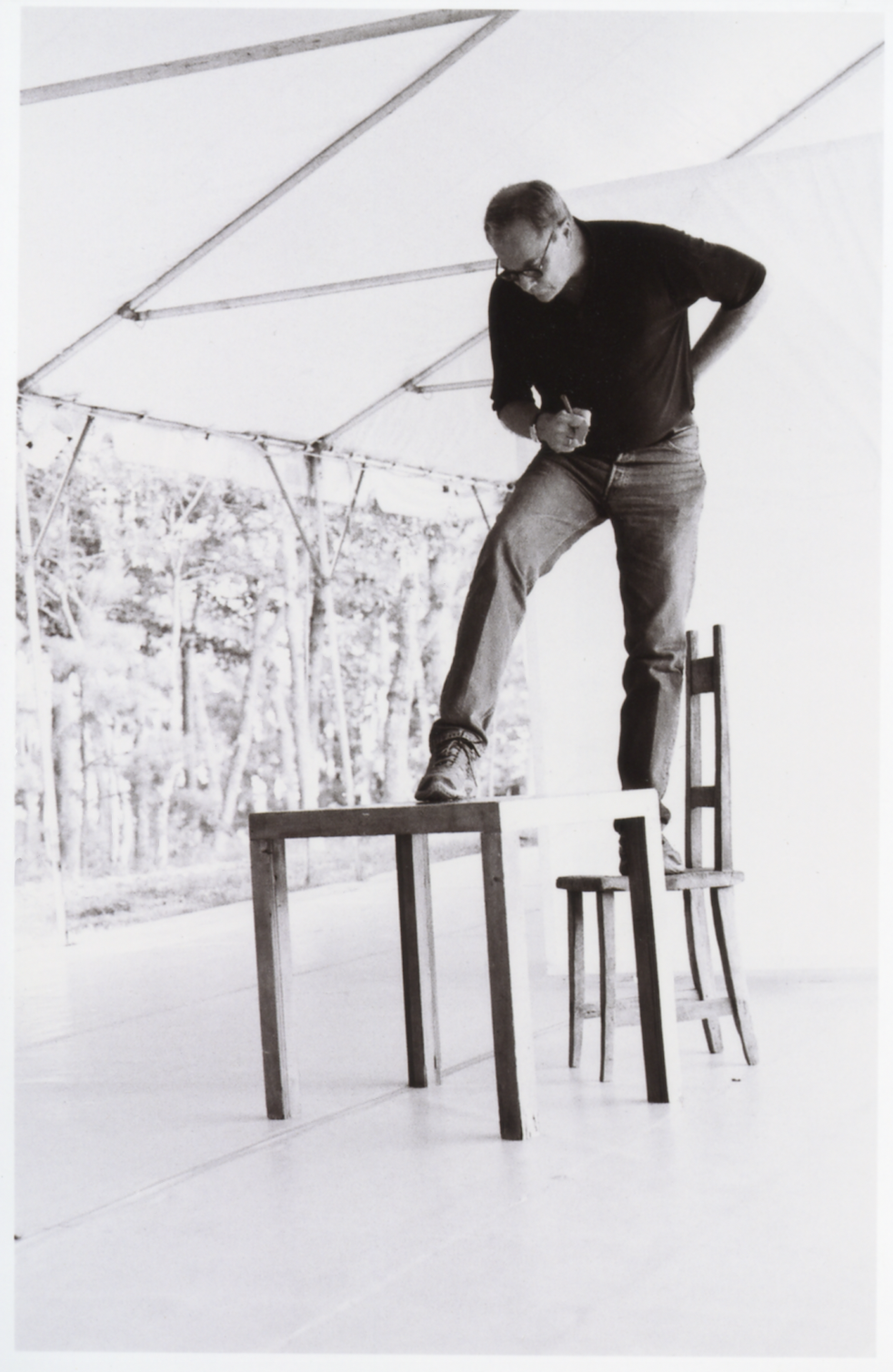
When Robert Wilson founded his experimental performance company in 1968, he named it the Byrd Hoffman School of Byrds after a teacher who helped him manage a stutter as a teenager. This simple nod to the importance of mentors—to nurture, to challenge, and to enliven—returns like a refrain whenever those close to Wilson (“Bob” to friends and fans) speak of the legendary avant-garde theater director and artist or his half-century career.
His stage productions—marked by stark relationships between light, space, and movement, often across many hours—took root in countless locales, from his Spring Street loft to the grand opera houses of Europe. But perhaps no place was more important to Wilson and his work than an abandoned Western Union research center in Water Mill. He purchased the property in 1986 and converted it into the Watermill Center, a creative hearth that attracted a tribe of artists, writers, musicians, scholars, and other characters. From inestimable art-world figures like Philip Glass and Lucinda Childs to cult iconoclasts like Tom Waits and David Byrne, artists were drawn to Wilson because he recognized what made them tick. On the first anniversary of his passing and ahead of Watermill’s summer festival Limitless Time, taking place this Saturday, July 25, CULTURED reached out to six artists whose lives were touched by Wilson to reflect on his life, work, and legacy.
Willem Dafoe, actor
What was your relationship to Robert Wilson and his work?
Coming to New York in 1977 after Einstein on the Beach, Bob’s work was on everybody’s lips in the downtown community. I suppose Curious George was the first thing I saw live. I loved Bob’s performance and was very interested in his work with Christopher Knowles and a different way of approaching text and the durability of the specific gestural language Bob was creating. After Civil Wars, he seemed to be mostly working in Europe where I saw several shows in the ’80s and ’90s, often in languages that I did not understand. But no matter, I loved his shows through his light, sound, architecture, and his embrace of an artificial theatrical world.
Do you remember the first time you met him? What was your first impression?
I worked with him briefly on the first batch of VOOM Portraits in 2007, and he told me he had seen me at The Wooster Group and that he’d like to work with me someday. I got the impression he had never seen me in a movie, and while aware of certain pop culture events, it seemed he had stopped seeing movies sometime in the ’60s. I had worked with Bob substantially with The Life and Death of Marina Abramović and The Old Woman. I was struck by his instinctive and playful approach to making things.
Bob was like a teacher in some ways. I think because he worked with so many different people from different cultures and traditions, he always had to educate them to his highly designed and precise gestural language for the actor and to break the actor of a purely interpretive role. Submission to the form was essential, and in that I found great freedom.
He would often quote people that had influenced him: “The space behind you is as important as the space in front of you.” “I have never asked a performer what they are thinking.” “Try to touch everyone and you get no one; try to touch one person and you’ll touch everyone.” Sometimes I felt the play/opera of a performance was a way to go deeper into his aesthetics and theater language of his world rather than using his techniques as a mode to interpret. He would bring the material into his world created by his passions and curiosity.
His instruction to the performer was about gesture, timing, tone—never psychology. Everything was rooted in action which appealed to me immensely.
Bob was a total artist. His design leaned into architecture. His staging leaned into dance. His relation to text leaned into a kind of classicism. His relationship to technology was practical and direct. His approach to language leaned into consciousness research. His precise gestural language is much imitated but seldom with the personal instinctual connection with which it was created.
I liked how when starting the workday in the development stages, after a “Good morning,” Bob would pause in silence for maybe five minutes before speaking to bring everybody’s attention into the room and put people on point to start the day.
“His instruction to the performer was about gesture, timing, tone—never psychology. Everything was rooted in action which appealed to me immensely.” –Willem Dafoe
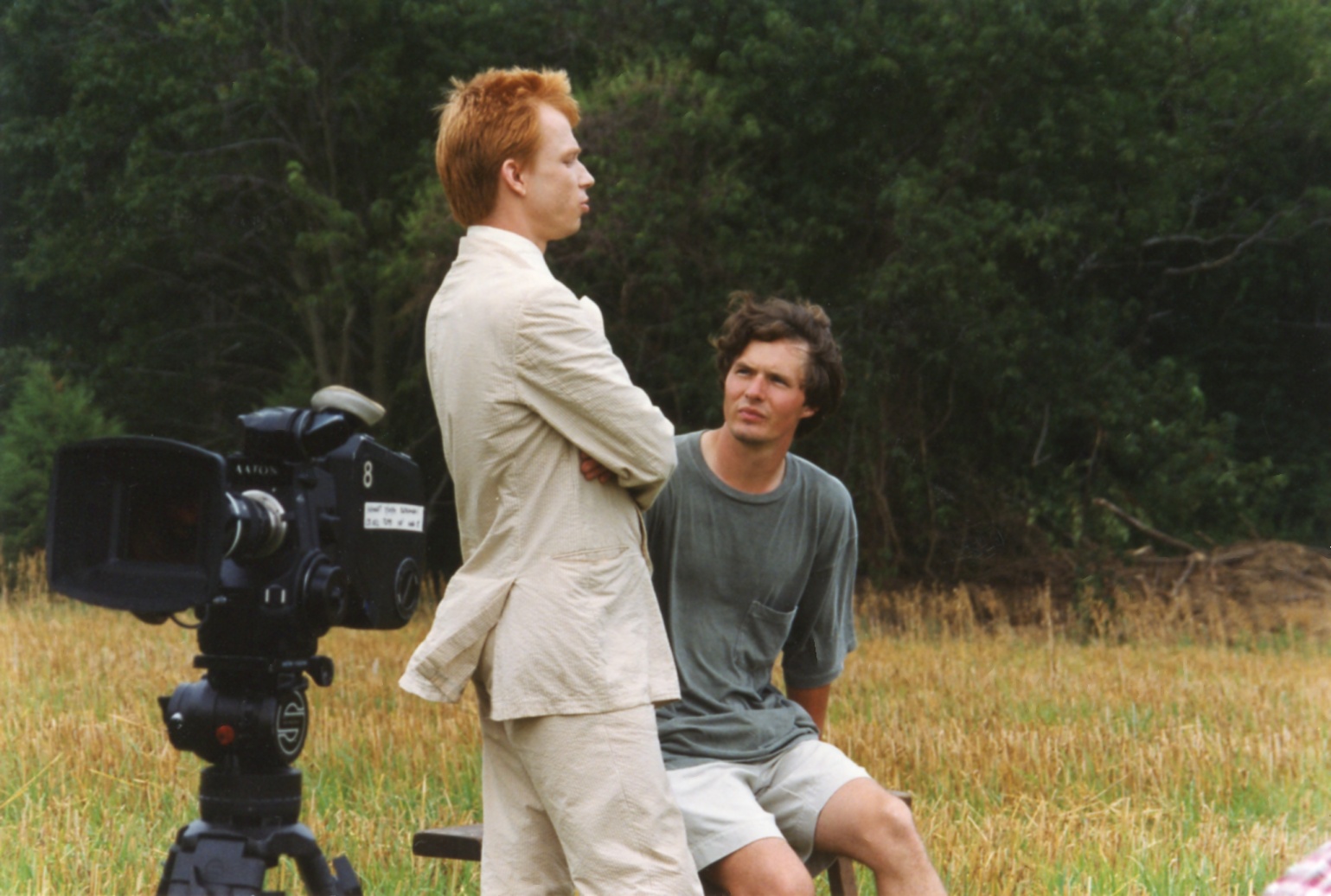
Thomas Kamm, set designer and architect
What was your relationship to Robert Wilson and his work?
I was Bob’s set designer from 1979 through 1987. During that period, I designed sets for Deafman Glance (a video production of the prologue with Sheryl Sutton), The Man in the Raincoat, Stations (also a video production), The Civil Wars – A Tree is Best Measured When It’s Down, Alcestis, and The Forest.
Do you remember the first time you met him? What was your first impression?
I first learned about Bob’s work while I was studying theater at the UCSD Drama School in the mid-1970s. At that time, Performing Arts Journal published an article by Frantisek Deak, analyzing The Life and Times of Josef Stalin. I was struck by how much the work encompassed the type of theater I was already drawn to.
I will never forget first meeting Bob. I was scheduled by his producer to meet during a break in an early rehearsal of Medea. I assumed it was an interview. Big portfolio under my arm, I climbed the stairs to the second floor of a loft on Broome Street. The rehearsal was still underway, and I settled into a corner to observe. Once Bob was free, we had a long conversation about Medea and about his vision for making new work on video. When he finally needed to get back to rehearsing, I had to ask, “Do you want to see my portfolio?” He replied, “Oh no, no. I can see you’re a great artist. ” And that was that. That was Bob; he was quick to see the potential in the people he gathered around him.
What do you think his lasting legacy will be in the culture?
Of course, the work itself (performances, drawings, installations, furniture) will be the most obvious and apparent legacy. I’m sure that the operas that are still in repertories around the world will continue to be presented, although without Bob’s direct involvement I can’t imagine past work being revived.
I think that there is a mostly unseen legacy which might be the most lasting: the people he gathered around him. During the last year, following Bob’s death, I can’t tell you the number of times I’ve heard, “If it weren’t for Bob I would never have been an artist, actor, dancer, writer, designer, filmmaker, etc.” That legacy lies in the ever-expanding ripples of his influence on all of us.
Do you have any particular memories of him in the Hamptons? What lasting legacy do you think he left on the region?
I only visited Watermill once when he invited all the early Byrd Hoffman Byrds (and me) out to a short residency during the summer workshop in 2018. He wanted to share with us what he was teaching the interns, and for the younger artists to understand more about the early genesis of his work with that crowd of performers.
How did Robert and his approach to making art influence or inspire you in your practice? What lesson did he teach you?
I can think of three lessons. First, working with Bob taught me to see more clearly. We all tend to develop shorthand for perception, experiencing things the way we expect them to be or have experienced them in the past. Experience at-a-glance, you might say. Bob had the amazing ability to see very directly without that filter.
Second, the power of visual relationships. If you’ve ever seen Bob’s work, you’ll understand that the lighting serves to isolate each element—actor, prop, scenic element—as its own powerful object. The relationships of those objects to each other, in space, in time, in historical context, in motif, establish the power of Bob’s imagery.
Third would be the openness of his process. His working process was intuitive and personal, but open to all sorts of outside and seemingly random influences. I’ve always operated the same way, but it took working with Bob to help me understand that about myself.
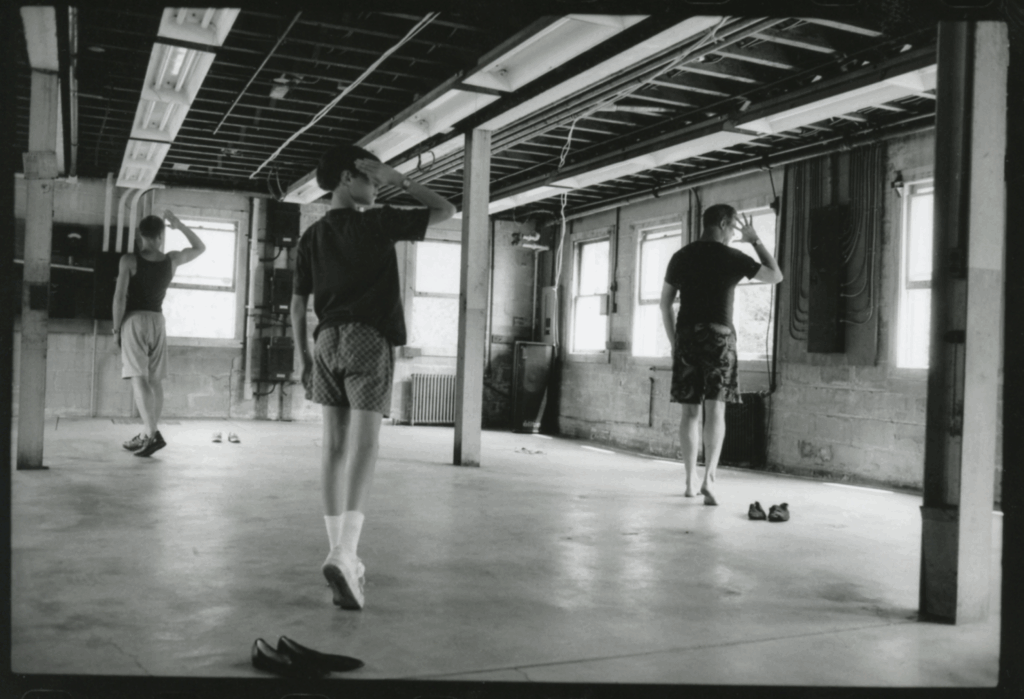
Carlos Soto, director and designer
What was your relationship to Robert Wilson and his work?
He was an incredibly demanding and generous mentor and a profoundly influential person in both my artistic and personal upbringing as an artist for whom theater was less of a culture than a medium, as a homosexual, as a person obsessed with history, beauty, and the mysteries of perception.
Our ages were far enough apart that my relationship to him inevitably took on an almost filial cast, and I attempted to transcend his highest expectations with the same determination as I would for a parent. My own father being absent, Bob naturally assumed an outsize role in my life as a benevolent, if authoritative, figure: a model for how to be and often how not to be. Our friendship originated as that of artist and acolyte, mentor and novice. He nurtured my artistic maturation but also took pains to mold me as a person.
A recurring theme reaching back as far as the Byrd Hoffman School of Byrds is the transformative quality of his attention to a multitude of people of varied backgrounds and how his intervention pulled something out of them which they hadn’t acknowledged prior possession of. His putting me on the stage prompted a liberating metamorphosis, performance proving to be a strange form of therapy for a painfully shy and anxious person like myself; I found in that stillness both an unexpected courage and a grounding focus.
His extended family at the Watermill Center was my extended family of many, many generations of artists who also benefited from his generosity, his traumatizing insistence, his humor, his fascination with the most rarefied things alongside the most pedestrian and commonplace. I found myself in a novel milieu of homosexual men of varied generations and walks of life, all of whom played equally formative roles in my early adulthood and my first tentative steps toward realizing an artistic voice.
Do you remember the first time you met him? What was your first impression?
I became aware of Bob in my adolescence through my interest in Philip Glass’s music, which I first encountered in Peter Greenaway’s four-part documentary series 4 American Composers. I was first captivated by Glass’s music for Einstein on the Beach and learned only later that there was an entire visual and performative universe connected to it, which eventually became almost mythical to me, culminating in my redesign of the costumes for the 2012 revival.
Everything about Bob was suffused with a mythical tint. Some years later, when I was 15, Vanity Fair published a profile on Bob and his Watermill Center, accompanied by a trio of portraits by Annie Leibovitz in which he played the role of magician—Bob grasping an orb like Hamlet clutching Yorick’s skull, aglow in the murk of a beechwood forest at twilight; Bob floating through a hoop held aloft by a dancer done up like a magician’s assistant standing on the seashore at sunset.
That Autumn, his Alice played at the Brooklyn Academy of Music. I became obsessed, my fate sealed—I’d run away with his circus. The following spring I wrote him a letter and he responded; thus started three decades of friendship, learning, practice, striving to always do the “wrong” thing—that is, the least obvious. We shared a fondness for approaching ideas otherwise.
That first work felt like a lightning-strike: shattering, undeniable, sublime. How does one acknowledge the revelation of something one can barely recall having sought out, let alone process the shock? I don’t remember the establishing image of Alice, but I recall a palette of watery blues, lavender, mauve, like the refracted colors on the surface of a soap bubble before it bursts. I recall an actor dressed in brilliant crimson astride a long, twilit blue table (or was it galvanized steel?)—both resplendent under saturated stage light yet the shadows did not bleed purple. Everything seemed less lit than radiant, people and objects appearing through a clever sleight-of-hand; the eye seduced in one direction to distract from some mysterious advent elsewhere. It all confirmed that beauty can elicit the profoundest, if ambiguous, emotions; can move one to tears without the least trace of sadness. Beauty can also become a compulsion, elusive, stupefying; the impulse to create it a life-force, and this was the pinnacle of our affinity.
There was a feeling, which has significantly accreted and elaborated over the years—especially through our shared love of the ancient Noh theater of Japan—that similar acts of presence, dislocation, perhaps possession, are how the gods were made manifest in antiquity, in pre-history. We often sought out the most ancient forms as clues to a work. For our Œdipus, which premiered in the 2000-year-old amphitheater in Pompeii (and later performed at the Teatro Olimpico in Vicenza within Palladio’s set for a production of the same play from 1580—the oldest surviving stage set in existence) we represented Jocasta as a stack of giant pebbles like the most rudimentary of seated Bactrian figurines; Tiresias slowly entered resembling little more than a trailing bolt of undyed wool felt (acquired from Beuys’ Bavarian supplier), the Sphinx a column of raven-hued feathers like the ancient feathered Tupinambá cloaks brought back to Europe from Brazil after the conquest.
He loved show-and-tell, to explain everything in his possession, where he got it, what it might mean. Those first summers at Watermill we would rearrange the furniture and objects nightly, fueled by much red wine and storytelling. I recall the excitement with which he unlatched the doors of an innocuous-looking shipping crate containing a miniature prehistoric landscape by Paul Thek: marbled plasticine dinosaurs within a small rectangular fish-tank surrounded by volcanic explosions painted in garish pinks and blues on the interior of the crate. It was like opening an altarpiece. He claimed, and it’s highly likely, that the work had languished in storage for years, its contents known to no one. Again, the reverberating stuff of myth.
What do you think his lasting legacy will be in the culture?
The tragedy of Bob’s influence is that his work was already so diffused into general culture, so often quoted and re-quoted without any sense of the original, that it’s sometimes imperceptible and most often remains on the surface. Ultimately, his influence won’t be stylistic, perhaps—it’s the license and audacity to reject convention, to exist in a liminal space between various media, genres, and disciplines.
Do you have any particular memories of him in the Hamptons? What lasting legacy do you think he left on the region?
Bob wasn’t the first artist to be attracted to the light on the East End, but he is perhaps the first to have envisioned a self-contained and incredibly diverse community of artists living and creating together in close quarters. Transporting the communal atmosphere of his Spring Street loft in the ’60s to the abandoned Western Union laboratory he purchased in Water Mill in the ’90s, he attracted an international coterie of collaborators, artists, scholars, philanthropists, celebrities, and characters forming the nucleus of the cultural and social constellation of the Hamptons.
How did Robert and his approach to making art influence or inspire you in your practice? What lesson did he teach you?
To engage with Bob as a designer was to learn to see, to look incessantly and at a wide angle.
Reaching a crisis point in which I had to decide what I wanted to study, he advised that one should never study the thing one wishes to practice—so, if theater was my destined medium as a visual artist, I should study art history. I immediately regretted enrolling and accepted his offer to work on a production in Europe, which resulted in 25 years of collaboration; my education was rooted in the process of doing and engaging with the world at large through travel and observation, not in theoretical discourse. If discovering the potential of theater as a visual medium was a shock, its pursuit as both outlet and vocation was life-affirming. At every point of crisis throughout my life, the labor of art-making has proved a deliverance
Of all the conversations (touching on subjects both very high and very low), of all the guidance, the sharing and demanding, a recent bit of advice glimmers at me; perhaps one of the best bits of knowledge Bob ever imparted to me. Somewhere in 2020 or 2021, after more than two decades of mentorship and collaboration, by which time we’d grown to know each other as artists separate from our own work together, it came with no preamble or lecture but with a wink. An elegantly brief, sincere and simultaneously backhanded compliment of the type we lovingly tossed back and forth which acted as shorthand for something long mutually understood and thus silent. I forget the context, whether it was in response to an observation I shared or an image I suggested, but with an air of admiration he remarked, “It’s extremely elegant, but it’s also possible to be too elegant.”
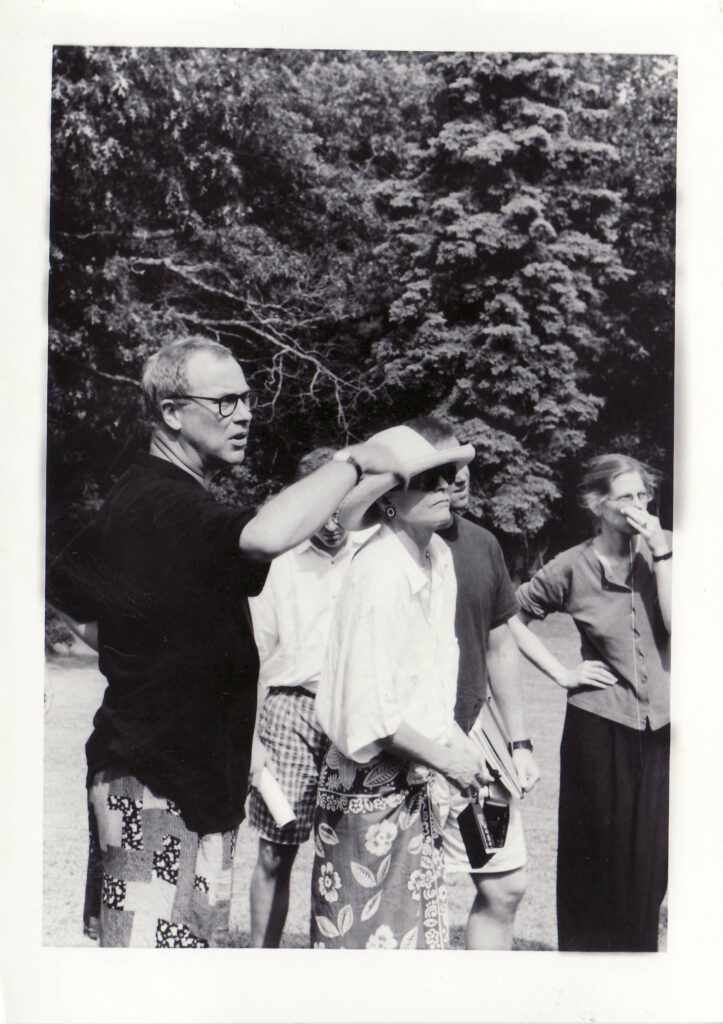
Elise Herget, managing director of the Watermill Center
What was your relationship to Robert Wilson and his work?
I worked with Bob for 15 years at the Watermill Center, the last five leading the organization alongside him. When I started, I was 20, a college student. Bob always said you learn to walk by walking, or falling down. You learn by doing. He had an incredible trust in young people, a way of bringing you in and making you feel you were an essential part of something greater. For me, that wasn’t through a performance. It was the Watermill Center, its own kind of ongoing production. Any great theater work requires many different kinds of people. We were and are essential to the continuity of its creation.
Do you remember the first time you met him?
It was the first evening of my summer internship at the Watermill Center. Bob arrived at dinner and to my surprise sat down right next to me. He asked me where I was from and what I was doing. I told him I was a student in Charlottesville, Virginia, and politely thanked him for inviting me to Water Mill. He said, “Where were you born?” “Texas,” I replied. “Me too,” he said.
The following year, I saw Einstein On The Beach. My first Bob production. Its own kind of first meeting. An irreversible meeting.
When you remember him now, what springs to mind?
His smile, the mischievous one. It often felt like, even sometimes in his silences, he was bringing you in on something. Sometimes funny, other times serious, and when you least expected it, profound.
Do you have any particular memories of him in the Hamptons?
We spent a lot of time in the car. His assistant driving, Bob in the passenger seat, me in the back. Answering emails. Always working, and always late.
What lasting legacy do you think he left on the region?
The Watermill Center was the place Bob called home and the space he created as a framework for other artists to create within. Bob envisioned the Watermill Center as a laboratory for creative thinking. Everything comes back to his founding principles: to look to the past as we create art of our time, and to look to the world community as we enrich our own. It’s for the region, but it’s especially here for a global community.
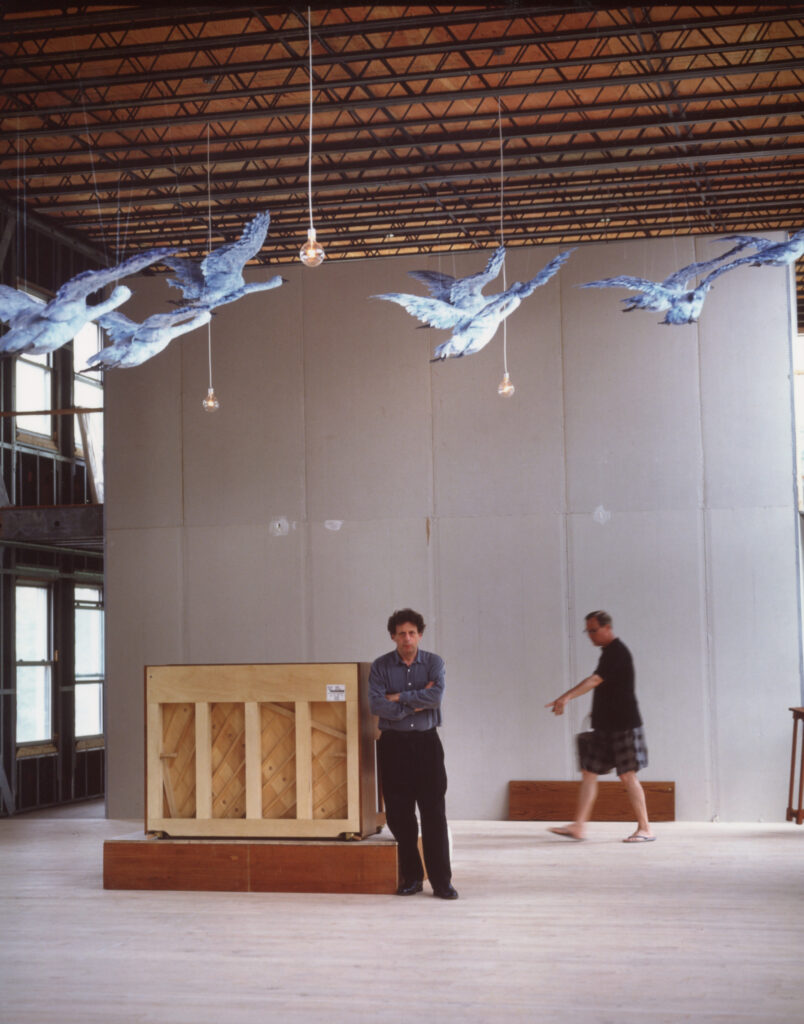
Anna Calvi, musician
What was your relationship to Robert Wilson and his work?
I was a fan of his work for many years, especially The Black Rider. I was lucky enough to write the music for two of his operas: The Sandman and Moby Dick.
Do you remember the first time you met him? What was your first impression?
It was in Dusseldorf. I remember spending time with him in a studio with Hal Willner. I thought he was very charming, and I loved his sense of absurdist humor, which definitely comes out in his work.
When you remember him now, what springs to mind?
I will forever be amazed by his intuition, and his ability to sculpt light and movement. He had such a singular vision; it was incredible to watch him work. We did several workshops together and they always pushed me further than I felt I was capable of, in the best possible way.
What do you think his lasting legacy will be in the culture?
As a pioneer of avant-garde theater, and a singular artist, with an interior world like no one else.
How did Robert and his approach to making art influence or inspire you in your practice? What lesson did he teach you?
He taught me to trust my instincts and to go further than I think is possible to see my vision through. He made life his art; even his handwritten notes were beautiful. I feel so lucky to have met him.
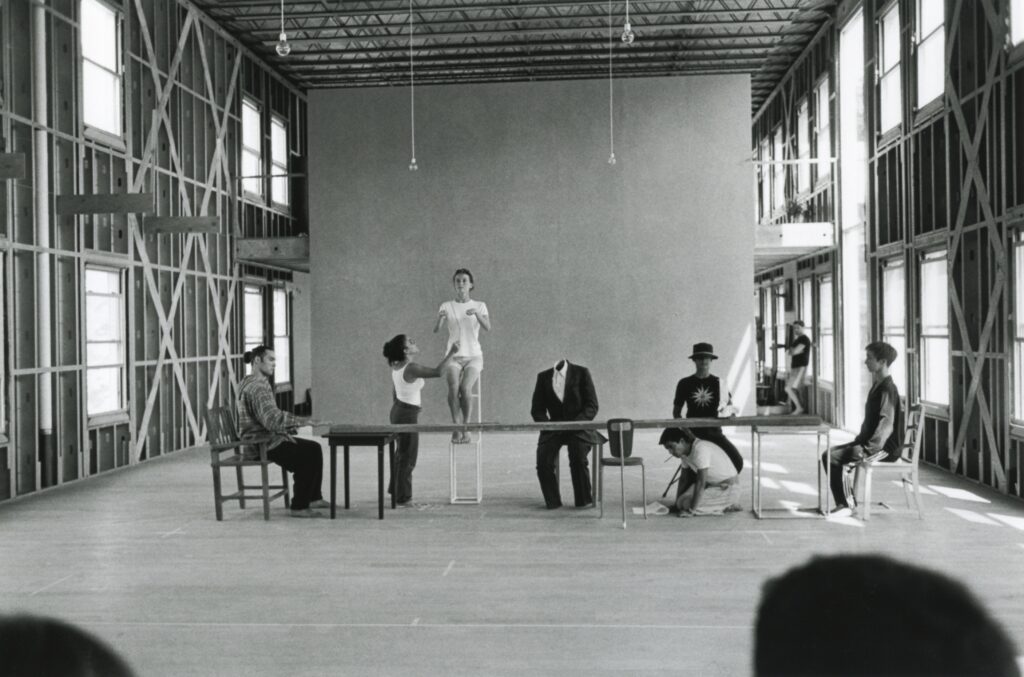
Charles Chemin, artistic director of the Watermill Center
What was your relationship to Robert Wilson and his work?
Our collaboration lasted 33 years. I’ve known him my entire life, and started working with him at an early age. At first, I performed in his plays, and since 2010 we co-directed over 20 works together. I don’t remember a week when we didn’t connect about our on-going projects, ideas for future works, or about the Watermill Center, where I came for the first time in 1993. I had a tremendous chance to grow up artistically at his contact and with other artists from all over the world. We built Watermill as a place that carries his mark and his singular vision, while fostering a younger generation of artists. In some strange ways, we are still collaborating daily, as I am pursuing several works that we had initiated together. To assume the artistic direction of the Watermill Center after his passing represents for me the continuity of a life-long dialogue, in both a humbling and responsible way.
Do you remember the first time you met him? What was your first impression?
No, I am unable to remember the first time we met. I was a newborn. As I grew up, we had particular ways of communicating. For example, Bob would bark at me, like a dog, when I wasn’t able to speak yet. I answered, and our non-verbal exchange carried some embryo of interaction. His smile and laugh stay very present in my mind, as they were revealing his thoughts and being enigmatic at the same time.
What do you think his lasting legacy will be in the culture?
He represents one of the revolutions in the arts of the 20th century, with his integration of all arts within his practice, his distortion of space and time, his art of composition and editing, his use of silence, of counterpoint and contrast, the centrality of the core human above the social and normative conventions, the relativity of the importance of a rational meaning, a poetic sense that helps a public invent new worlds… the list goes on.
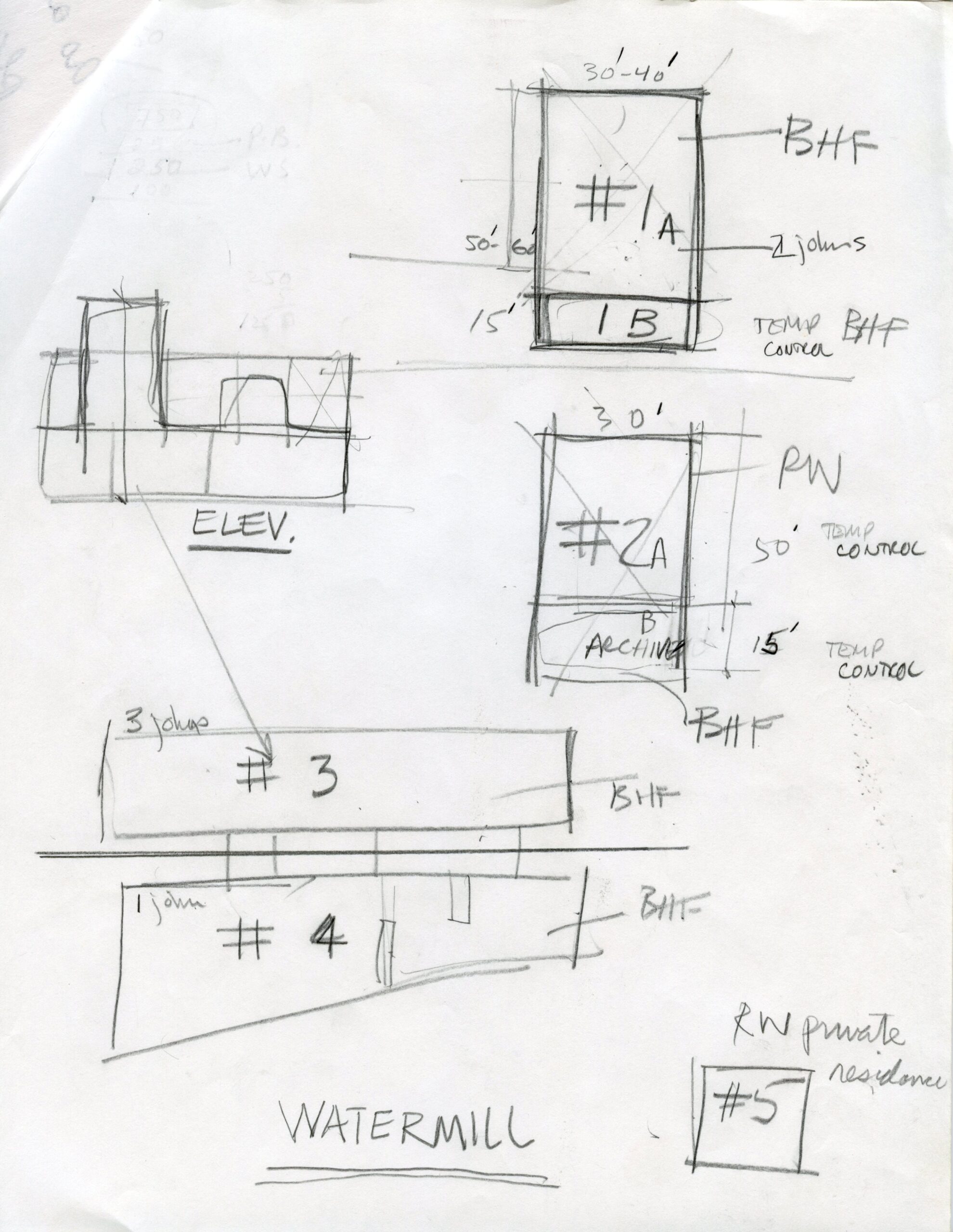
Do you have any particular memories of him in the Hamptons? What lasting legacy do you think he left on the region?
Yes, we spent a good part of our time working together at the Watermill Center. It is like a bubble of creativity, out of time, and feeling as if it was located in a different space than normal life. So, it is sometimes particularly refreshing to go out and see the world in the Hamptons. I particularly liked when we went out for dinner at some friends’ place around, with the car rides seeming very long, when I was realizing that he actually knew the whole area very well, with its hidden gems, recounting the stories about generations of Hamptons inhabitants. His legacy is the Watermill Center. One cannot walk its grounds or building, without being exposed to a revolutionary vision. We also attract the most interesting artists on the planet, and at the same time we serve as a haven for next generations to break new ground. I invite all Hamptonians to visit us and allow the time to be transported somewhere else, whether it is for our education programs, artists-in-residence showings, exhibitions, open houses or our Festival, limitless time, on July 25th. We are also proud to be present in the Hamptons community and to share our global community with the Hamptons.
How did Robert and his approach to making art influence or inspire you in your practice? What lesson did he teach you?
We collaborated so many years, that I cannot briefly describe the colossal influence he had on me and my work. The biggest learning is maybe about listening and looking. In a special way, closer to an animal’s and/or a poet’s mind, freed from the prejudice of rationality.
More of our favorite stories from CULTURED
How Ina Garten, Everyone’s Favorite TV Chef, Learned to Trust Her Appetite
How ‘The Odyssey’ Opening Weekend Birthed Its Own Ticket Resale Black Market
What Do Basketball Stars Talk About in the Locker Room? Fine Art, According to Kevin Love
We Asked 18 Food Insiders Where (and What) to Eat in New York This Summer
Jarrett Earnest on How Lovers Claude Cahun and Marcel Moore Redefined Collaborative Artmaking
Sign up for our newsletter here to get these stories direct to your inbox.







 in your life?
