


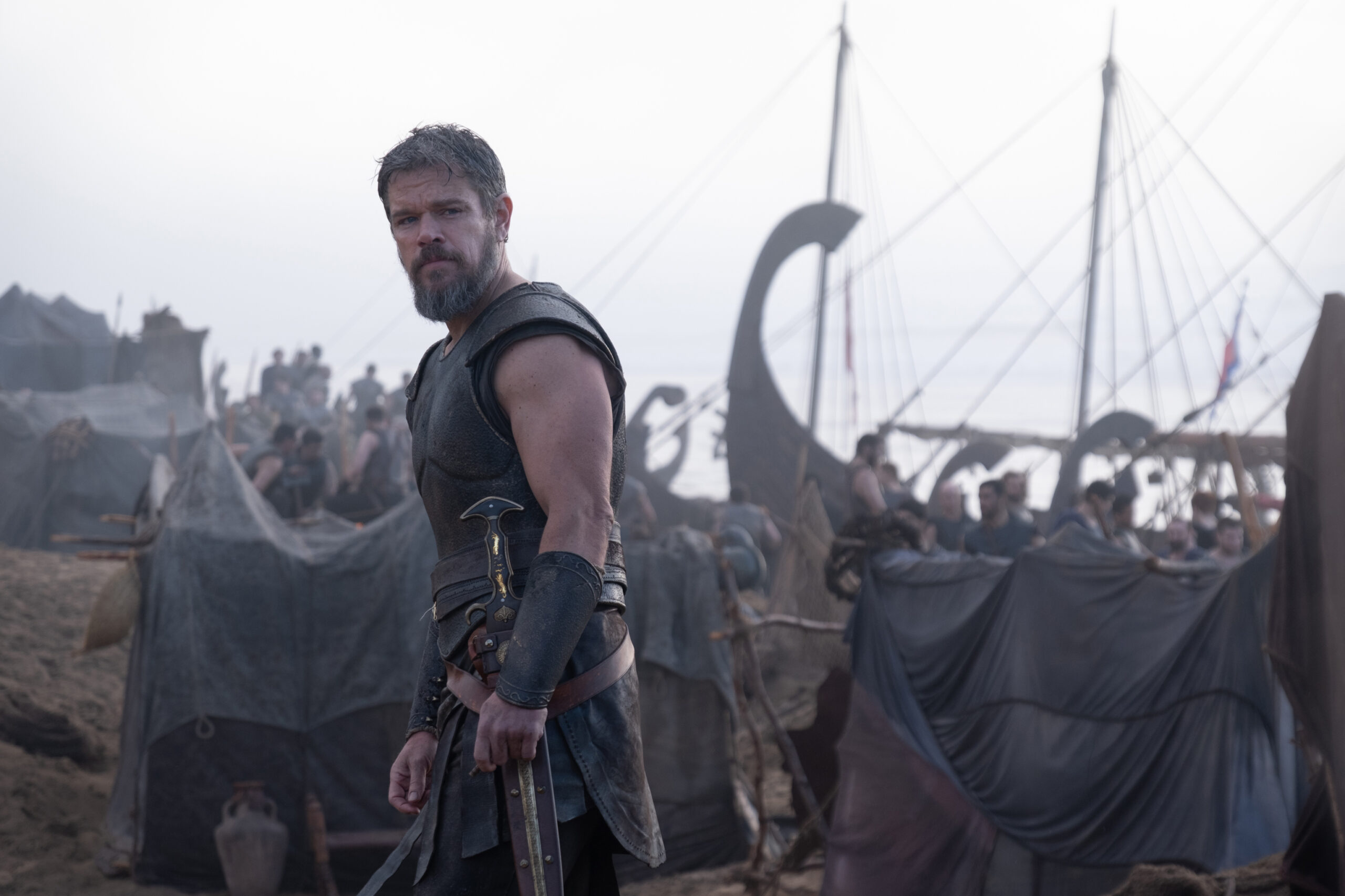
Before he was casting Matt Damon as Odysseus, John Papsidera was opening fine-dining restaurants for the very ’80s restaurateur Jonathan Waxman while secretly harboring an MFA in acting. He couldn’t shake the film bug and slipped through the side door to Hollywood as a casting director. Papsidera’s fortune changed forever in the ’90s when his former producers from the Austin Powers films slipped him a puzzle box screenplay about a man with memory loss. Memento captivated Hollywood and kicked off a lifelong partnership between Papsidera and Christopher and Jonathan Nolan.
Papsidera has a keen eye for sculpting the onscreen demigods of the 21st century. Heath Ledger and Cillian Murphy both nabbed Oscars for their turns as the Joker and J. Robert Oppenheimer, respectively, while ultra-stars like Leonardo DiCaprio and Matthew McConaughey lent their talents to career-defining roles at near-cosmic heights in Inception and Interstellar. It’s this skill that’s made the casting director so well-suited for The Odyssey, a film populated with gods, monsters, and men that shape civilizations. Of course, when adapting one of the foundational epics of the Western canon, one is implicitly making an argument about the values at the heart of modern-day culture itself. As a result, The Odyssey sparked its own share of casting controversies and inspired a slew of triumphant/hand-wringing/rage-baiting headlines (one example: “The Odyssey’s Epic Box Office Haul Breaks The “Go Woke, Go Broke” Myth”).
But Papsidera, as a former actor himself, is more interested in the craft and the collaboration than litigating right-wing Internet whinging. Matt Damon, who’s so often keenly combined mischief with salt-of-the-earth scrap from Good Will Hunting to The Talented Mr. Ripley to The Departed, and Robert Pattinson, the heartthrob who would almost always rather play a sniveling sleaze with a little freak accent, were no-brainer choices for Odysseus and the smarmy suitor Antonius. But Papsidera also can’t resist tapping an undersung character actor for their moment in the sun. Just look at Samantha Morton, whose turn as Circe has earned her early Oscar buzz, or Bill Irwin, a professionally-trained clown favored by Jonathan Demme and Sesame Street alike, who voiced and puppeteered and voiced the cyclops Polyphemus. (Papsidera has continued to anoint under-celebrated actors in his television collaborations with Jonathan Nolan, who developed Westworld and Fallout.)
As the Oscar buzz for The Odyssey performances grows louder (Could we see Lupita for her dual role as Helen of Troy and Clytemnestra? A long shot best supporting nod for Himesh Patel as Odysseus’s second-in-command?), CULTURED caught up with Papsidera to discuss what really goes into casting the starriest epic Hollywood has seen in years.
What was your journey into this field like?
I went into undergraduate and graduate school to act. I realized once I got out, I just didn’t have the confidence and the wherewithal to allow a camera to stare at me, to examine me. I’m way too critical of myself. I thought, Oh, great, now what am I gonna do?
Jonathan Waxman was a celebrity chef of the ’80s in New York, and I ran his restaurants and traveled with him. I was kind of in the celebrity chef world for a long time. I opened up Mark Peel and Nancy Silverton’s first restaurant, Campanile, and I opened up Border Grill for Susan Feniger and Mary Sue Miliken, who are still dear friends. Then I thought, Am I gonna do this forever?
I always felt like I walked away from the entertainment business, and that’s where my heart lied. I knew I didn’t have the hubris to be a director, and I knew I didn’t wanna be an agent. Casting was a great blend of still working with artists and business that always came somewhat easy to me. The blending of those two things really attracted me. So I started all over again in casting. Knock on wood, it worked out, and I’m really blessed to have had the career that I have.
You’ve been linked up with the Nolans since the beginning, save for Insomnia.
I didn’t do Insomnia only because of politics at the studio. It was Chris’s first movie at a big studio, and they would only let him bring so many heads of departments. True to his word, Chris called me and said, “They won’t let me bring you, but I’ll be back, and I promise you that.” And he did on Batman Begins; we’ve worked together ever since.
In the case of Insomnia, it seems like, from what I understand, the film could have benefited if the studio was a little more hands-off.
It’s a little tough for the creator, writer, and director of Memento to then go, “Well, but we know better.” But, it is what it is. In hindsight, it worked out the way that it was supposed to.
Did you have that gut instinct that Christopher Nolan was going to be somebody you would work with your entire career?
The producers of Memento were friends. We had done Austin Powers together. The Todd sisters, Jen and Suzanne, called me and said, “We have this little movie. Do you think you’d be interested?” I read it. It took me three times. I loved the script, and then I met Chris. It was probably one of the easiest casting jobs, in that Chris just trusted me. He was just like, “Bring me your favorite actors.” So I did, and we made decisions very quickly. I didn’t put a lot of weight on it, like, “Oh, my God, he’s gonna turn into one of the greatest directors of our time,” but I always had a real connection to Chris and his intelligence and his insight into actors. That’s only grown over the years.
What does a casting session look like for the two of you? I imagine it’s changed a bit as you’ve gotten more leeway with the studios.
I think they’ve changed mostly because the materials have changed and the style of films have changed. We embarked upon this litany of well-known actors really because the movies allowed it, but they also demanded it. When you look back, and I point to Oppenheimer as when we first did it, we wanted actors that represented the rock stars of their time, which those scientists were. We didn’t want them to just be faceless people in a crowd. We wanted to give them identities.
When we moved into The Odyssey, it was a game changer in the sense that now you’re casting the superheroes of that time. These characters are myths, are legends, are oral traditions passed down for 2,000 years. The magnitude of those characters need people that are of that same stature in our own worlds. You want the giants to walk amongst them because that’s what they were in Homer’s story.
Doing a three-hour film about the creator of the nuclear bomb is a tough sell to a modern audience possibly, so you wanted to stack the deck. Chris has brought people into a theater to study one of the oldest texts around. We want to pay homage to the source material and the characters, but the fact is that we’re doing these films in a modern world. You want people to come and see the film.
You anticipated my next question, just starting with Odysseus. He is in many ways the archetypal Western hero. From the very beginning, he is this word, ‘polytropos.’ He’s wandering, a man of many turns, a shifting figure. This question has been much-discussed and contested recently: What is the modern Western hero? What values does that figure embody? When casting the film, was it always Matt Damon?
Chris plays things close to his chest. I’ll read the script, and then right afterwards we talk. He’ll say, “Who did you think of?” and we’ll discuss people. We discussed people that we had worked with before. We had discussed people that we hadn’t. He had Matt in there, amongst other actors.
I was thinking about Homer’s words about Odysseus being a man of craft. When I think about Matt, it is a man of craft. Not only there’s a workman-like quality to Matt, but he’s a guy that, if you think back on his career, the amount of work that he’s done and varied kind of roles in his career embody intelligence, embody brawn, embody humor, embody pathos. All these things that Matt has done, small versions of it in some ways, fit that man of craft to me.
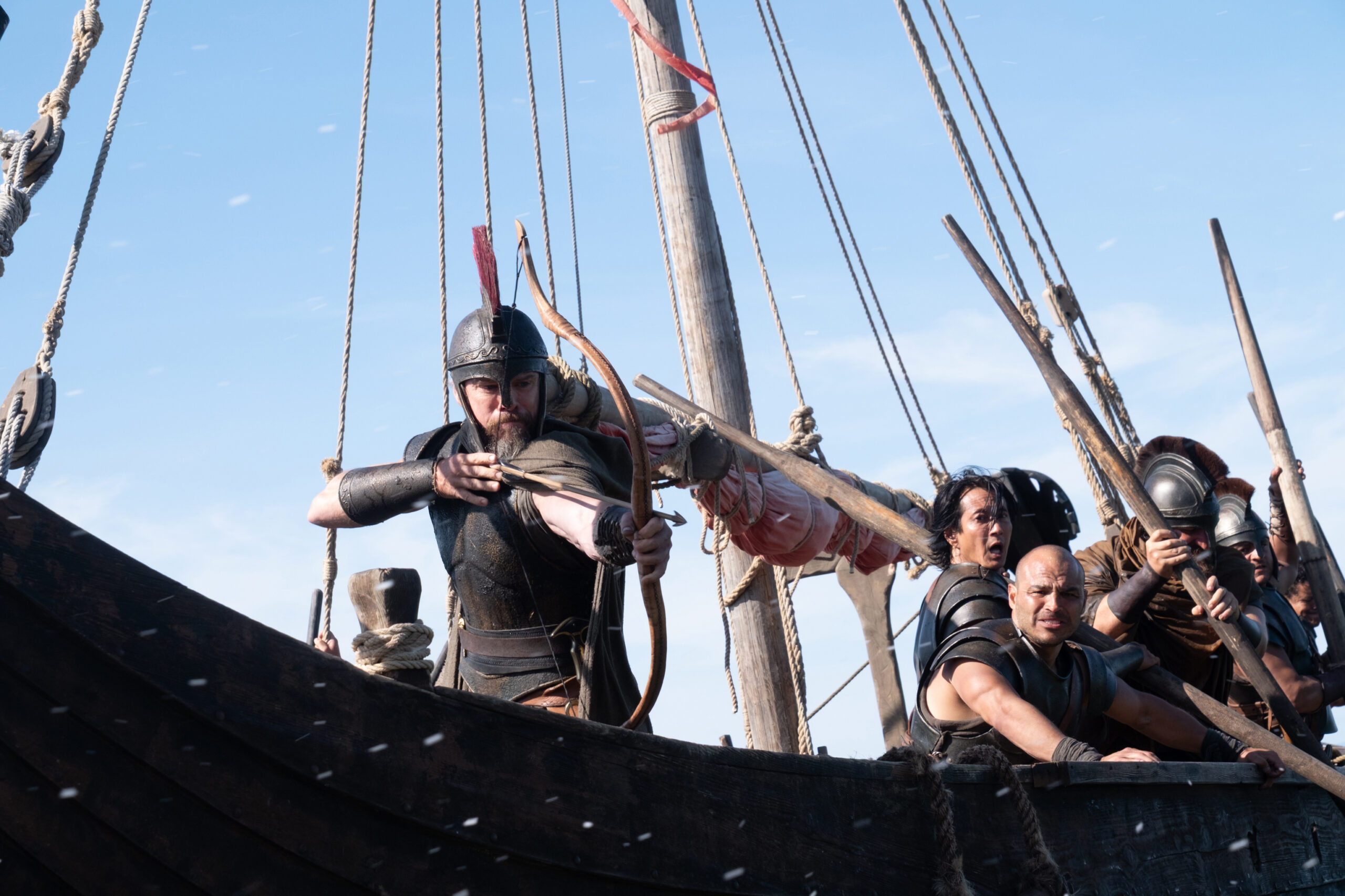
I thought it was funny when Odysseus shot the arrow at the end and turned to the camera and said, “How do you like them apples?”
[Laughs] Somebody brought up to me that the book spends so much time talking about his flaws as a character. You do see them in the film, though. Chris has laid it in subtly. Odysseus wasn’t satisfied with the one sheep; he wanted to go find the herd. He wasn’t satisfied leaving the Cyclops; he had to turn around and shoot an arrow in his eye. There are these things that are layered in subtle ways that do show the fallibility of who he was and the character flaws that he carried with him as well as all the heroism. To me that makes a well-rounded performance and an interesting human being, rather than just a Marvel superhero.
When it comes to a leading man like this, do you even audition A-listers anymore?
No, not really. Especially for Chris. But meetings usually happen. Chris will have meetings that are two hours long and never really mentions the film until the very end. I think that’s him examining and prodding and seeing how an actor will respond, and finally he’ll make his own decisions about how appropriate it is. From what I hear, he’ll go at the end, “Oh, by the way, there’s this role, and I’ve been thinking about you for it.” Then we’ll get into reading actors.
Who else was in contention?
I can’t talk about that. You can go down a list of very well-known actors that we’ve worked with before, and I’ve brought up people that are emerging. We both felt strongly about the fact that it should be a man with experience, not a young man.
In the first wave of responses to the film, Samantha Morton’s name has jumped out as a fan favorite. She’s a talent and established in her own right, but she’s not really a household name the same way some of these other stars are. What first caught your eye about her?
The uniqueness of Circe just spoke to me about Samantha. She’s such a revered actress, somebody that I’ve admired from afar for so long. When we started talking about Circe, we wanted something that was very different and unique and a little bit extreme. I think Chris does this a lot. He leaves those roles to the people that he hires to create them. In Samantha’s hands, we felt like it’ll be grounded, it’ll be odd, it’ll be left of center, but oh-so-real. That whole set piece was marvelously Samantha.
As a TARS fan, I was looking forward to seeing Bill Irwin as the Cyclops.
You’re naming all my favorites. When I went to the premiere in New York, I went up to Bill and I thanked him for Interstellar as well as this. That was probably the first role, beyond Odysseus, that we discussed because they needed to build all that makeup and design to create the creature. So we went back to Bill.
It’s one thing to take roles where you’re front and center and you get to show off in a certain way and be exposed, and it’s another thing to take roles that you’re hidden in. Truly it’s a collaboration of ideas and visuals and movement.
Does he have a background in puppetry?
He’s one of the world’s greatest clowns. Bill has an ability to tell stories through movement and the empathy that he can create when he does that work, it’s just astounding. A simple movement of his hand or his arm can lead people to tears. When you think about somebody with that kind of mastery, applying it to this monster that was yet to be created, those are like little side things that are just delicious and special about the film.
When it comes to the business perspective of casting, when is the moment to bring someone because they’re artistically suited to the role, and when is the moment to bring someone because they’re meta-textually suited?
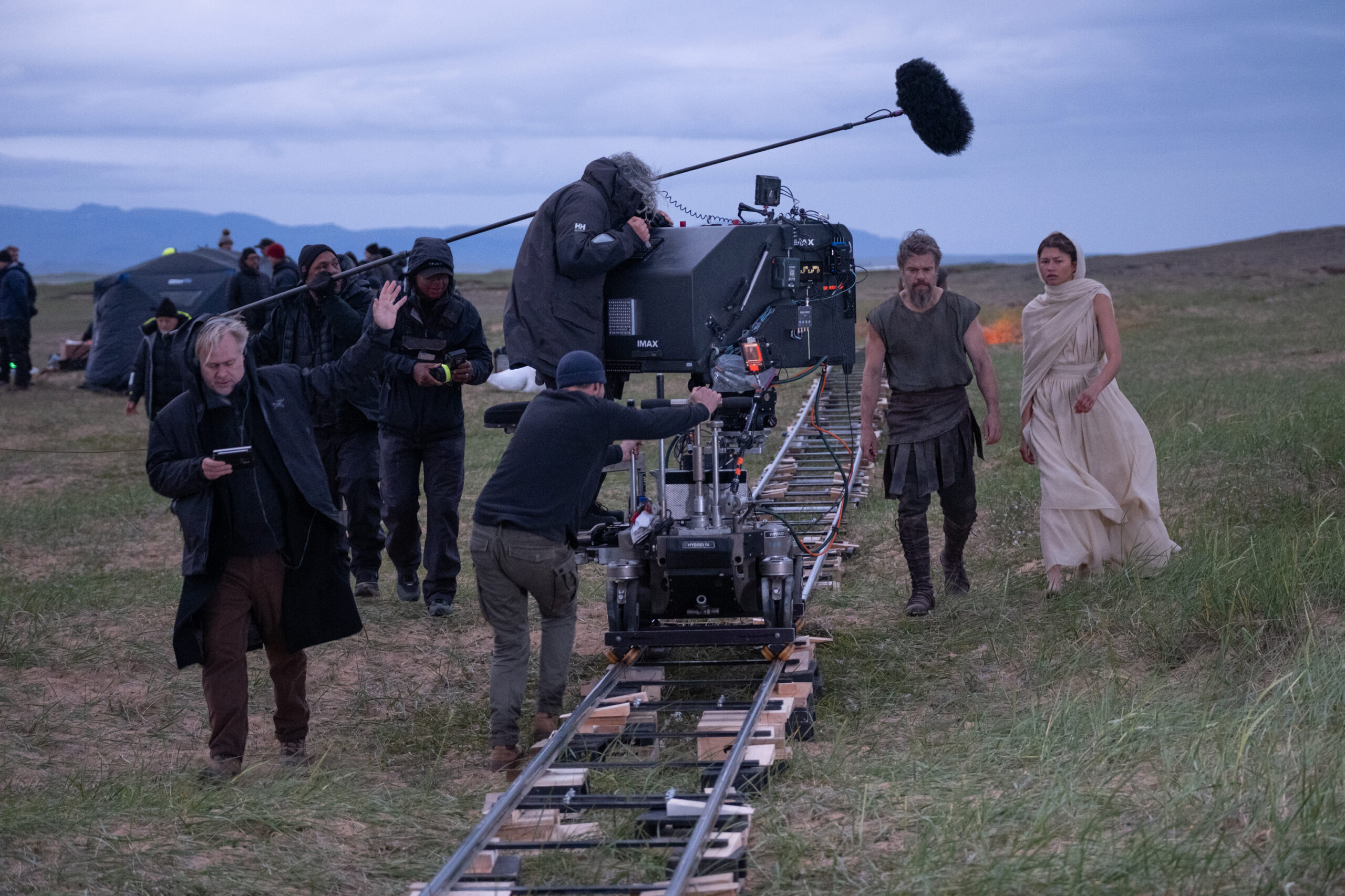
Especially with Chris, it’s not forefront that we worry about those red carpet moments. We think about artistry first. I saw somebody say, “Oh, it’s just a list of A-listers,” but it’s not. Chris does not suffer fools, and he is professional to the utmost degree and prepared beyond belief and doesn’t ask actors to do anything he’s not willing to do himself by being on the set, not having phones, no seats on the set, no spending the day in your trailer. He is out there amongst them doing all that as well. I think it’s a certain kind of actor that we look for that is willing to go to that commitment as well.
Many people that we’ve cast in The Odyssey have written me afterwards saying, “I had no idea what I was in store for, both in hardships and in artistry. It’s renewed my faith in being an actor and it makes me feel like I’m an artist.” Those things are incredibly powerful when you think about why actors go into it. Albeit I might be little Mary Sunshine around this idea, but I truly believe that most actors go into it wanting to be artists, wanting to be actors to express something about their souls, about the world, about themselves. It’s not red carpet moments, and it’s not just fame, and it’s not just money. There are those actors, but I try to fill worlds with actors that believe in artistry and still care about finding characters and bringing things to life to tell stories that move people.
Was it in the script that Clytemnestra and Helena of Troy were going to be played by the same actor, or did that come in later?
We did know that it was gonna be played by the same actress. When I think of Lupita, she’s uniquely singular. Talk about somebody whose look embodies “the face that launched a thousand ships” to their soul.
Any insights into who the others in consideration were for that one?
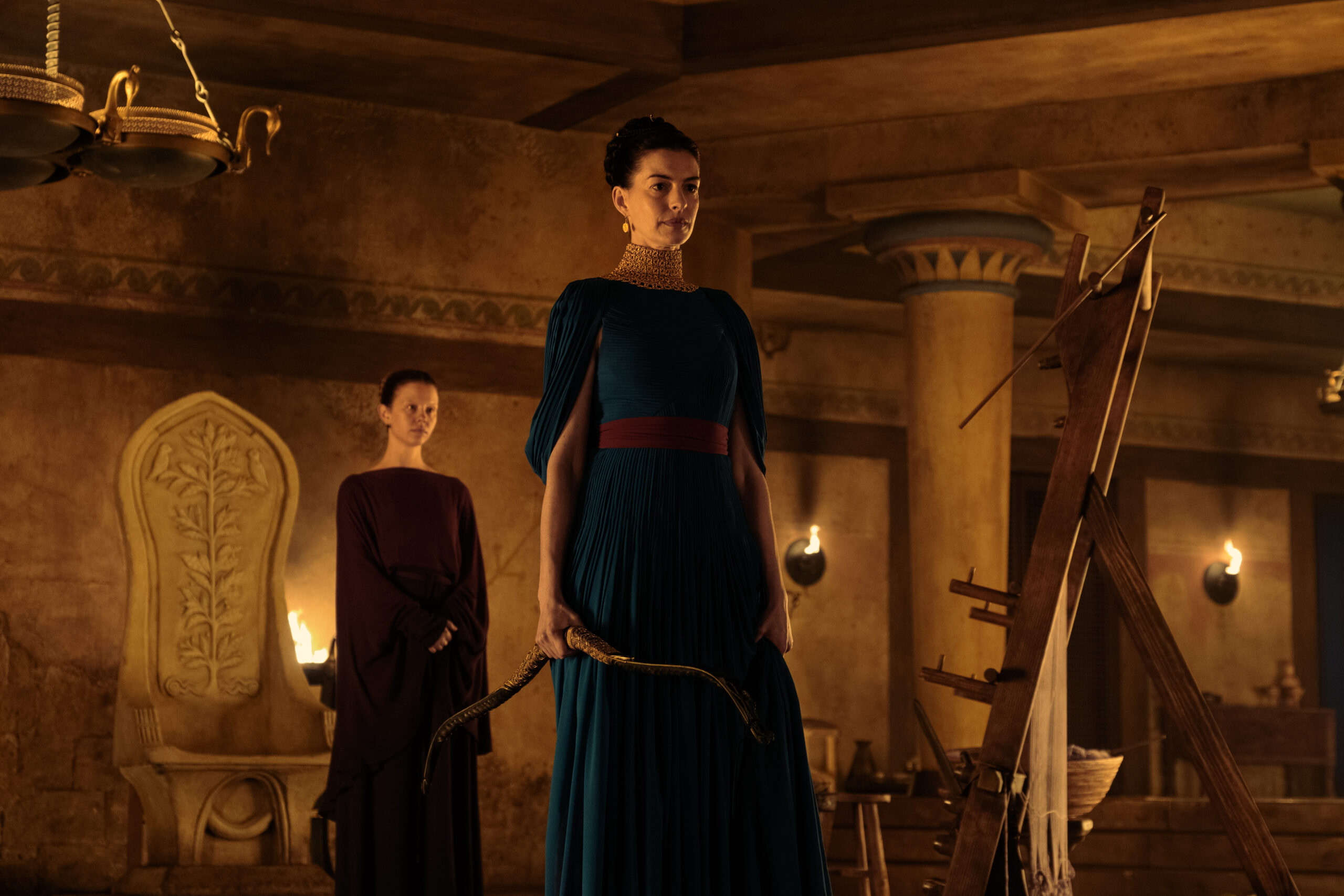
I’m sure we talked about Charlize for that. But thinking about Calypso, it had to be Charlize. Homer talks about how Calypso compels him to sleep with her at night while he spends his days weeping on the shore. I think I said to Chris, “If anybody’s going to have somebody ensnared for seven years on an island, it would be Charlize.” There’s this power to her. It’s not just a beauty. There’s a strength. The power to keep a man trapped for seven years that wants to go home takes an extraordinary individual. It takes a force of nature.

Can I ask about your philosophy of casting? You had Benny Safdie in this movie, who often populates the worlds of his films with people that are known figures, if not really trained actors. Where do you stand on that?
The Safdie brothers do that really well. Jennifer Vendetti, who is their casting director, has done an amazing job with those films. I go by a different philosophy a little bit, having been an actor. I hire actors. I’m not making reality shows. My wife is in reality, actually.
But I respect the craft of acting. When you start to take away the ability for an actor to play characters, and you just hire who already embodies that character, to me that’s a little bit like you’re reality casting. I think the world has pivoted to that a little too much in my taste. Part of the beauty of the craft of acting is being able to craft a performance. Much like a writer, where you lay seeds in the first pages of a novel and you pay it off 400 pages later, that’s what actors do. They find moments that resonate with human beings. You don’t get that out of people walking down the street that look a certain way. It’s just a different philosophy.
Now that there’s an Oscar for casting, there’s been a lot of discussion of what makes a great casting director. In your view what makes a well-cast film as opposed to, say, a good ensemble?
I think a big part of my job is dramaturgy, reading a script and then matching human souls to what those characters are. Matching souls to something that’s two-dimensional on a page is what I really feel like I aspire to do. I think it serves storytellers the best because you’re not just getting a singular performance. You’re getting somebody that can give you that and can also shade it with something else. I want to give directors as many bullets in the gun as I can.
The Odyssey aside, what do you think is the strongest cast for a Nolan movie you’ve helped assemble? Or your favorite?
I have a real soft spot in my heart for Dunkirk. I love the simplicity of that movie. When I read it, I closed the last page, and it was quite emotional. I said to Chris, “This is a love letter to home.” It lives in my heart in that way. Also finding all those young actors, Barry Keoghan and Finn [Whitehead] was really exciting. I also think probably Oppenheimer because it was such a big cast. It was filled with actors I had known for 20 years. They were kids when they started out, now they’re men with families. That holds a really strong place in my heart as well. Of course Inception, but Dunkirk and Oppenheimer are hard to beat for me.
More of our favorite stories from CULTURED
How Ina Garten, Everyone’s Favorite TV Chef, Learned to Trust Her Appetite
How ‘The Odyssey’ Opening Weekend Birthed Its Own Ticket Resale Black Market
What Do Basketball Stars Talk About in the Locker Room? Fine Art, According to Kevin Love
We Asked 18 Food Insiders Where (and What) to Eat in New York This Summer
Jarrett Earnest on How Lovers Claude Cahun and Marcel Moore Redefined Collaborative Artmaking
Sign up for our newsletter here to get these stories direct to your inbox.





 in your life?
