


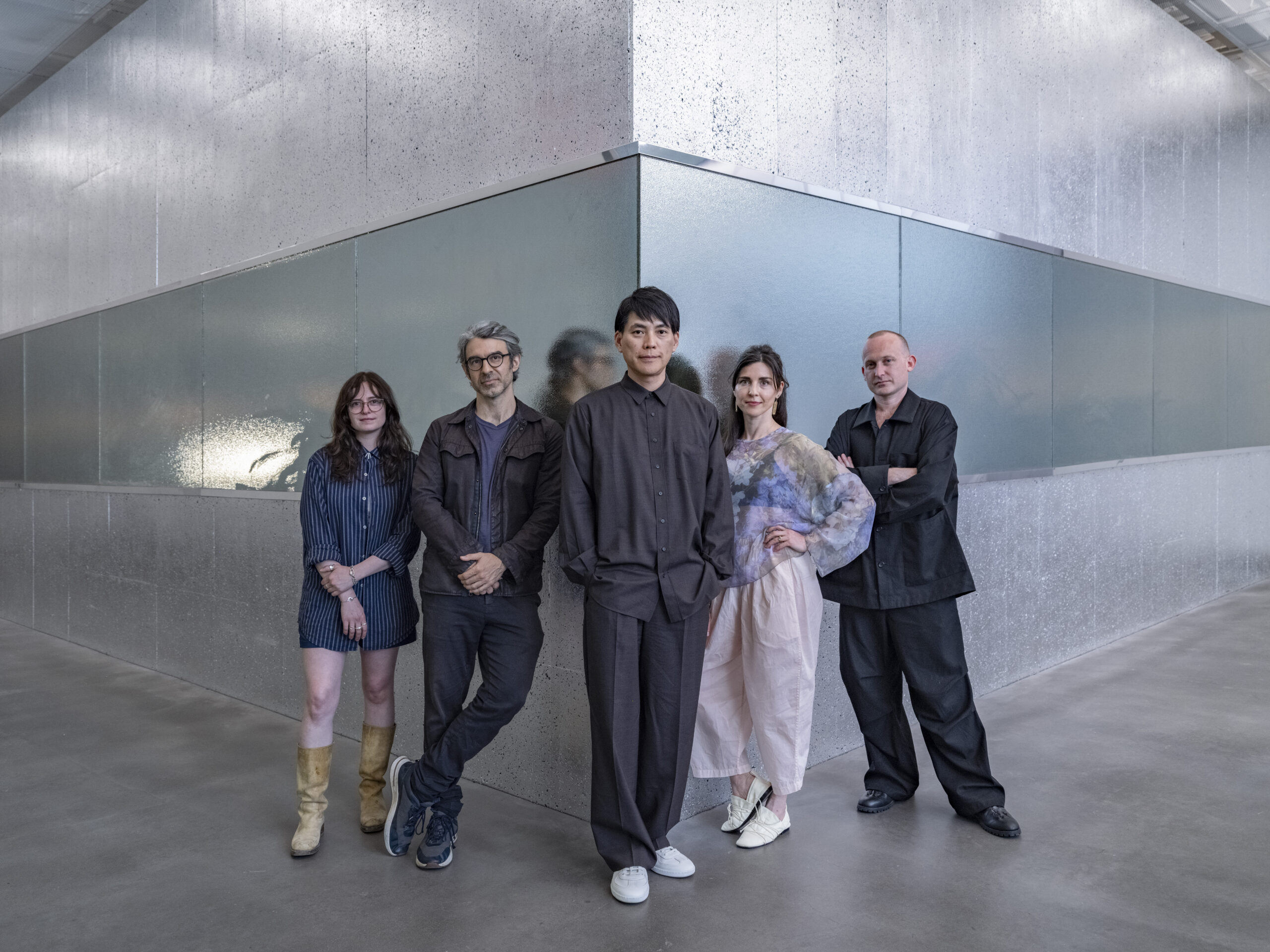
Some of the most talked-about restaurants in New York right now can be found in art venues. There’s Marcel, the ultra-high-end French bistro in the basement of Sotheby’s, where it costs $36 to drink a Monkey 47 martini underneath a Joan Mitchell painting. There’s Zoli, a seafood-focused minimalist restaurant at the private art space Amant in Greenpoint. And as of this month, there is Oberon, the first full-service restaurant in the newly expanded New Museum.
Named after the fairy king in William Shakespeare’s play A Midsummer Night’s Dream, Oberon is meant to evoke a sense of mystery and transformation. It shares its name with Oberon Group, the sustainability-focused hospitality outfit founded by Henry Rich that is responsible for Brooklyn hits like Rucola, Rhodora, and June as well as collaborations with Metrograph, Nowadays, and Public Records.
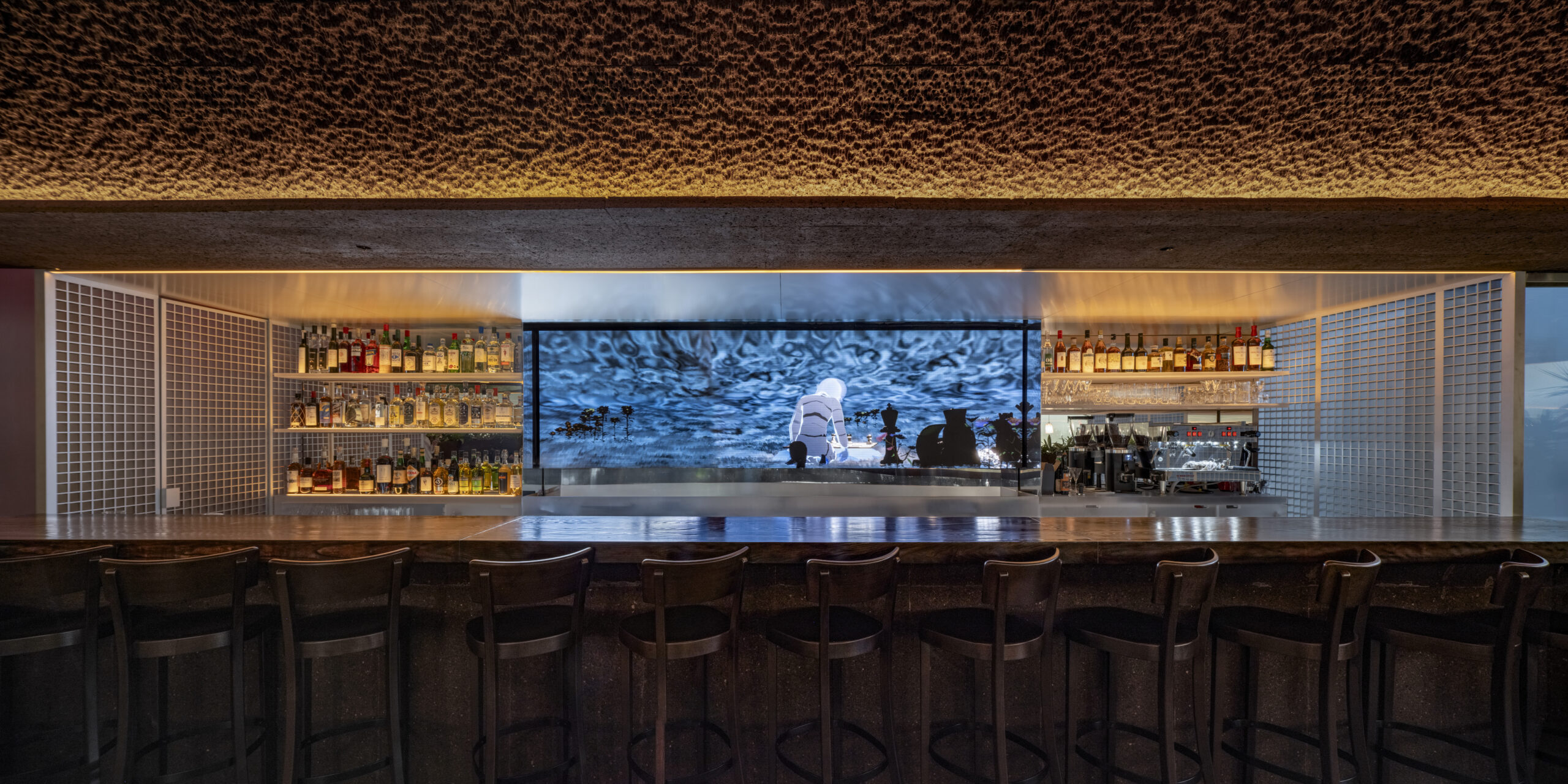
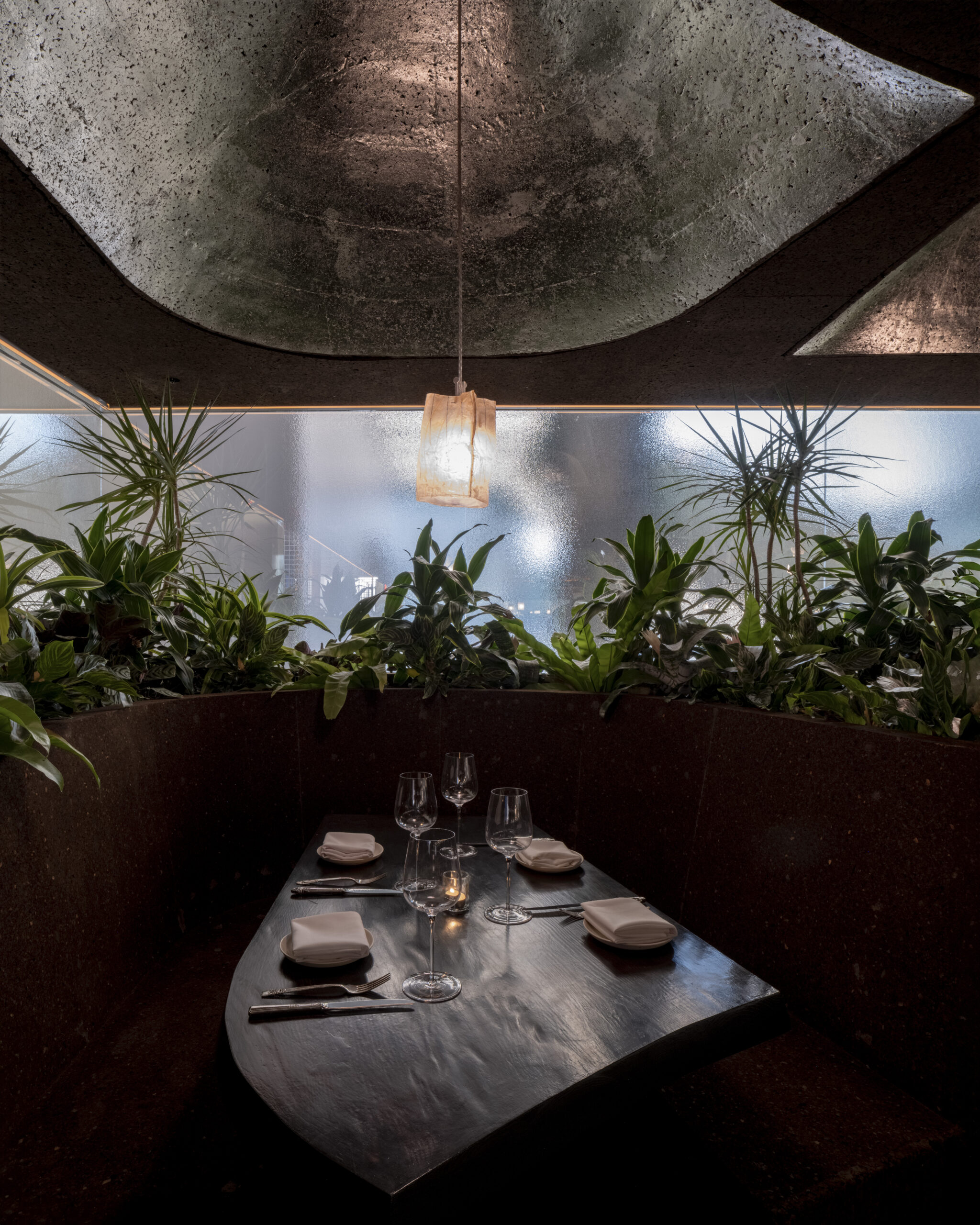
Like the museum’s expansion, which opened in March, Oberon is designed by OMA. Filled with contrasting interiors of metal and time-worn wood, it boasts an interactive bar by the artist Ian Chang and tables and lamps by designer Minjae Kim. The uniforms, made out of muslin, are designed by Mary Ping, a New York fashion designer beloved by the art world.
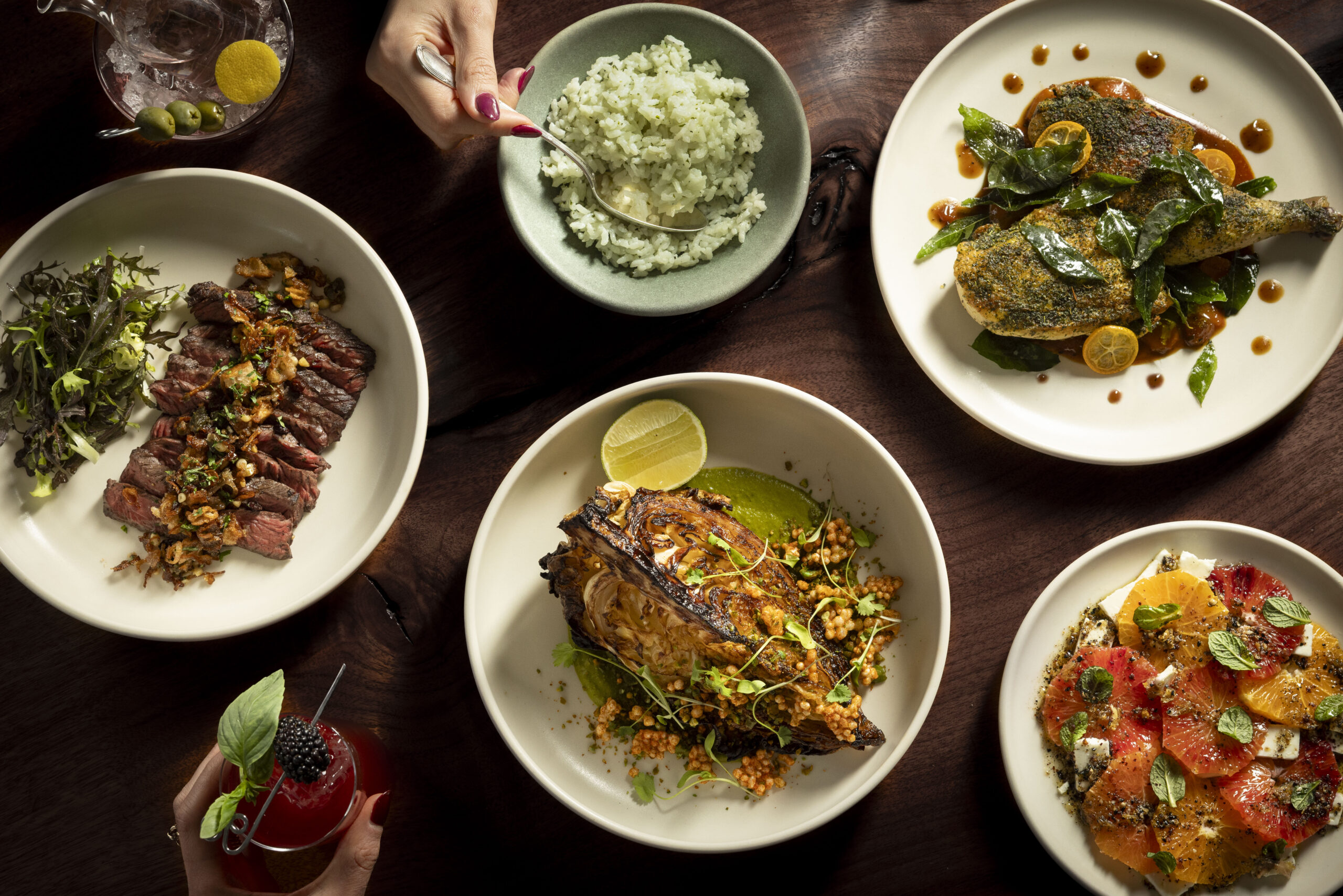
The executive chef of the restaurant is Julia Sherman, better known by her Instagram handle @SaladForPresident and her cookbook Salad for President: A Cookbook Inspired by Artists. For years, Sherman has been collaborating with artists through the lens of food, and brings that sensibility to the menu of the New Museum. We can expect dishes like red snapper crudo with bergamot and citrus, as well as what she is best known for—salads. Think of a Greek diner salad with grilled dolma, smoked caesar salad and then mains like fig leaf chicken and hanger steak with raspberry vinaigrette. She is ingredient-driven, freshness-forward, and tends to add a delicious twist to familiar dishes.
CULTURED sat down with Rich and Sherman about why this is going to be the new neighborhood restaurant for the art world and how the menu reflects what people actually want to eat.
Can you tell me about the restaurant project at the New Museum?
Henry Rich: The concept is a neighborhood restaurant for the art world—a place where our mission of sustainability, art, food, and community all come together. I want to bring people together from different layers: the collectors, the gallerists, the artists, and the enthusiasts there to see the museum.
We pitched a concept that we thought would be interesting enough to keep up with the contemporary programming of the museum, but also classic and New York enough that it would exist alongside all the currently popular art-world spots, which are mostly restaurants that have been around for decades. We have a history of working with cultural institutions such as Metrograph, Public Records, and Nowadays. I think we have a good track record of playing well with cultural institutions where the building isn’t mostly [food and beverage].
Making good food naturally aligns us with nonprofit institutions that are very mission-driven. We’re used to thinking about things beyond profits only.
How did your many years of hospitality training inform your vision?
Rich: First and foremost, I always try to envision what it feels like to be a guest at the restaurant. There are a lot of other stakeholders that have different agendas: Bartenders, designers, and chefs can make things too complicated, owners can make things too extractive. There’s a lot of things that happen in restaurants that are not very guest friendly—not seating parties unless they’re complete, weird fees, and doing anything in the room that takes people away from the reason that they’re there, which is to connect with people and have an enjoyable experience.
I think the hardest thing to do is create a simple restaurant that people want to go to.
Rich: It’s just that that’s just not what I do, right? The Metrograph menu is a good example, where that menu was developed to be beloved by everybody who’s already in the building for a different reason, but also classic enough that you would go there and enjoy the scene and enjoy the food.
The food has to be good, which is a perfect segue into Julia. How do you feel like your menu speaks to this vision? I also want to know how your years of collaborating with artists and food fit into this.
Julia Sherman: I thought a lot about my own experience eating in museum restaurants growing up with my grandmother. Like the Sarabeth’s that was at the old Whitney or the dining room at the top of the Met. I was thinking about me and her, who have totally different food interests, sitting across the table from each other. She’d be happy eating a tuna fish sandwich or brisket every day for the rest of her life. I wanna feel like I can get healthy, abundant, fresh food when I eat out, and that is something that’s very hard to do, especially in New York. I wanna eat every day at a neighborhood restaurant that is healthy without being dogmatic and without being trendy. Without being Instagrammy, you know?
I really wanted to create a menu that was some sort of derivative of how you would eat if you came to my house—not too cheffy, not fussy plating. I feel like a lot of the time, I go to a restaurant and I’m eating the ego of the chef. That’s not something I want to do every day. In a museum, there should be food that can be a scaffold for the experience.
Can you tell me about the artist collaborations?
Sherman: I worked with Mary Ping on the uniforms; they’re all made out of muslin, a fabric that’s used as a form of sketching for a designer. Mary does a lot of stuff with upcycled fabric and using waste and minimal fabric cuts. Mary and I are also actually making aprons that are gonna be sold in the shop made from fabric remnants.
Rich: Ian Chang made a commission: the whole back bar is a 12-foot-wide new work of art that contains an agentic A.I. that has some level of interaction with the bar patrons. Minjae Kim, who’s an artist and furniture designer, made all the tables and lamps. Working with them has been incredible, alongside OMA, which certainly brings architecture to artistic heights.
Henry, can you draw a parallel between your relationship to hospitality, your projects, and your way of living and looking at the world?
Rich: I think it’s life in practice. It’s an opportunity to try to do something with creativity that actually becomes a part of my non-working life. That integration is what makes something worth going back to over and over again. The other piece of it is being able to do that in a place like New York, where restaurants are in conversation with the communities around them, and a great neighborhood restaurant or a lack of one can kind of, I don’t want to say make or break a neighborhood, but it can really affect the quality of life. It’s a great area for a business to think about different ways of flexing into sustainability, because food is responsible for a quarter of global emissions and climate change. So, to be able to experiment with different ways of carbon accounting or neutrality or, in the case of this restaurant, focusing our embodied carbon footprint by using cork in the walls or thinking about ways that we can be zero waste in the kitchen, that is connected to the broader idea of hospitality as trying to do something good.
Julia, how about you? Can you draw a parallel between your relationship to cooking and a way of looking at the world?
Sherman: I’m always cooking. I’ll never get sick of it. It never stops being rewarding. As an artist, your role is to ask more questions and ask other people to start to ask more questions.
In food, it happens in micro ways. I think that you sit down and ask a question about where your food comes from, climate issues, why things cost what they do, how does one actually make something that you do want to eat every. These are all like relevant questions.
It’s time for our rapid-fire series. What’s your favorite kitchen tool?
Rich: Probably the Vitamix. I make smoothies for my kids every morning. You know, kale, blueberry, hemp, almond, lots of other stuff. My daughter’s favorite color is purple, so I have to make it extra purple.
That’s a good one. Julia, what is yours?
Sherman: Salad spinner. I feel like wet greens are just like the downfall of every salad. And if I can have a second, because it’s such a good question, my microplane. It’s one of those things I wonder, Does the average home cook have one? I feel like I end up using it for so many things—lemon zest, garlic, ginger—and it feels like just one step above your basic kitchen kit that I feel like everybody should have.
Breakfast, lunch, or dinner, and why?
Rich: Probably lunch just cause it’s the most consistent and I get to have it at Rucola every day. The same exact thing, and I never get sick of it. There’s more pressure with dinner.
What is the lunch order?
Rich: Escarole salad with avocado.
Julia, same question.
Sherman: Breakfast? Breakfast to me feels like one of the most generous meals. It’s how you start your day, and to have a luxurious breakfast feels like such a treat. I feel like there’s a lot of room for creativity and breakfast that isn’t often taken advantage of.
You know, you’re the first person in all of these interviews I have done that has answered breakfast.
Sherman: Well, I think that people really phone it in. A breakfast meeting is a really nice thing, to meet someone for breakfast is an unexpected suggestion and it’s always wonderful when that’s more than a pastry. I love hosting people for breakfast at home, too. It’s when everybody’s in our house is in the best form, before it all goes downhill slowly throughout the day.
More of our favorite stories from CULTURED
America Is Turning 250. These 13 Must-See Exhibitions Are Grappling With Its Legacy.
Is This 28-Year-Old Our Next Great Playwright?
Tiny Can Be Mighty. These Cottages Are Here to Prove It.
Paul Thek’s Difficult Afterlife: David Rimanelli on the Cult Artist’s New York Shows
Olivia Wilde Takes a Second, More Successful, Swing at Failing Marriages in ‘The Invite’
Sign up for our newsletter here to get these stories direct to your inbox.





 in your life?
