


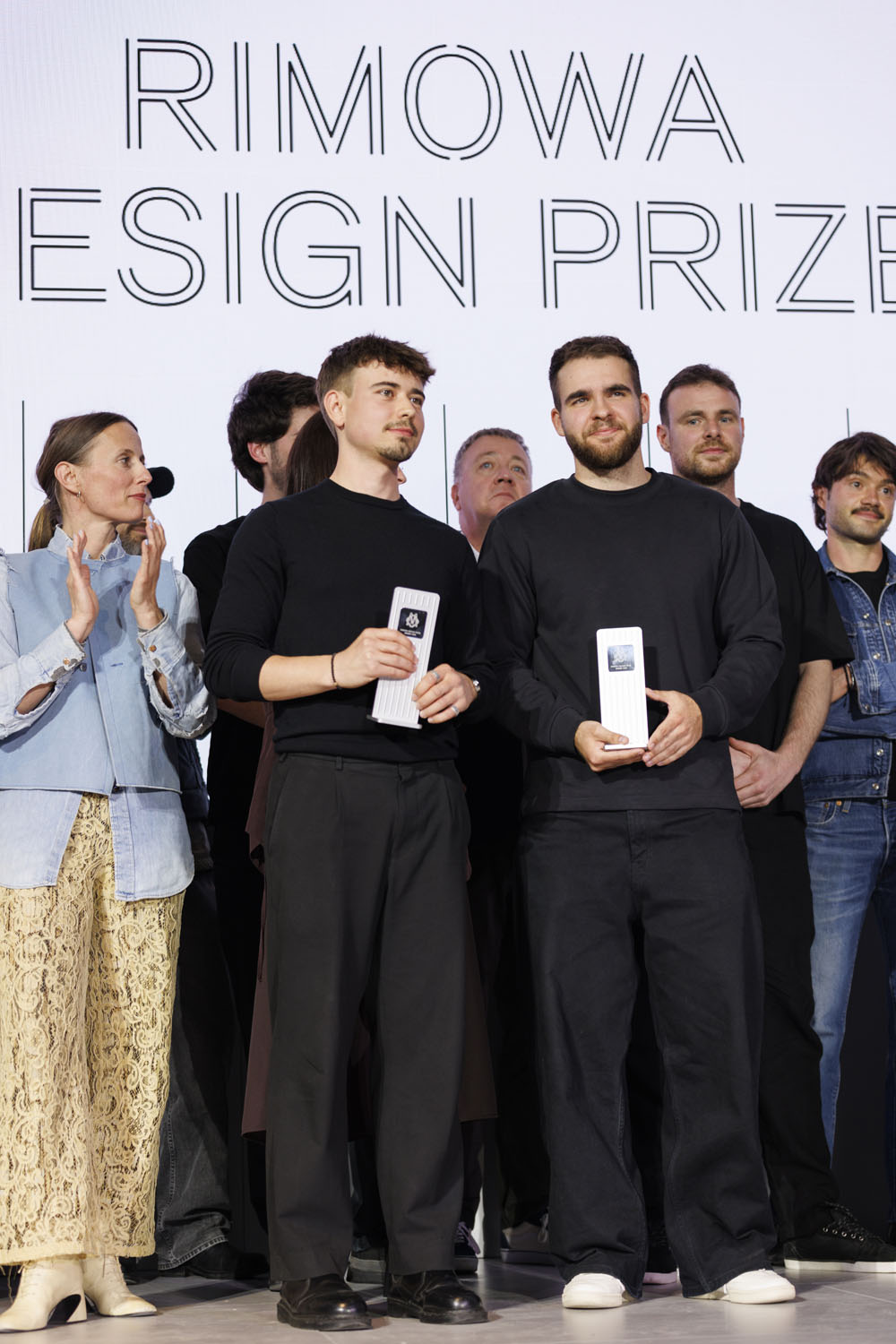
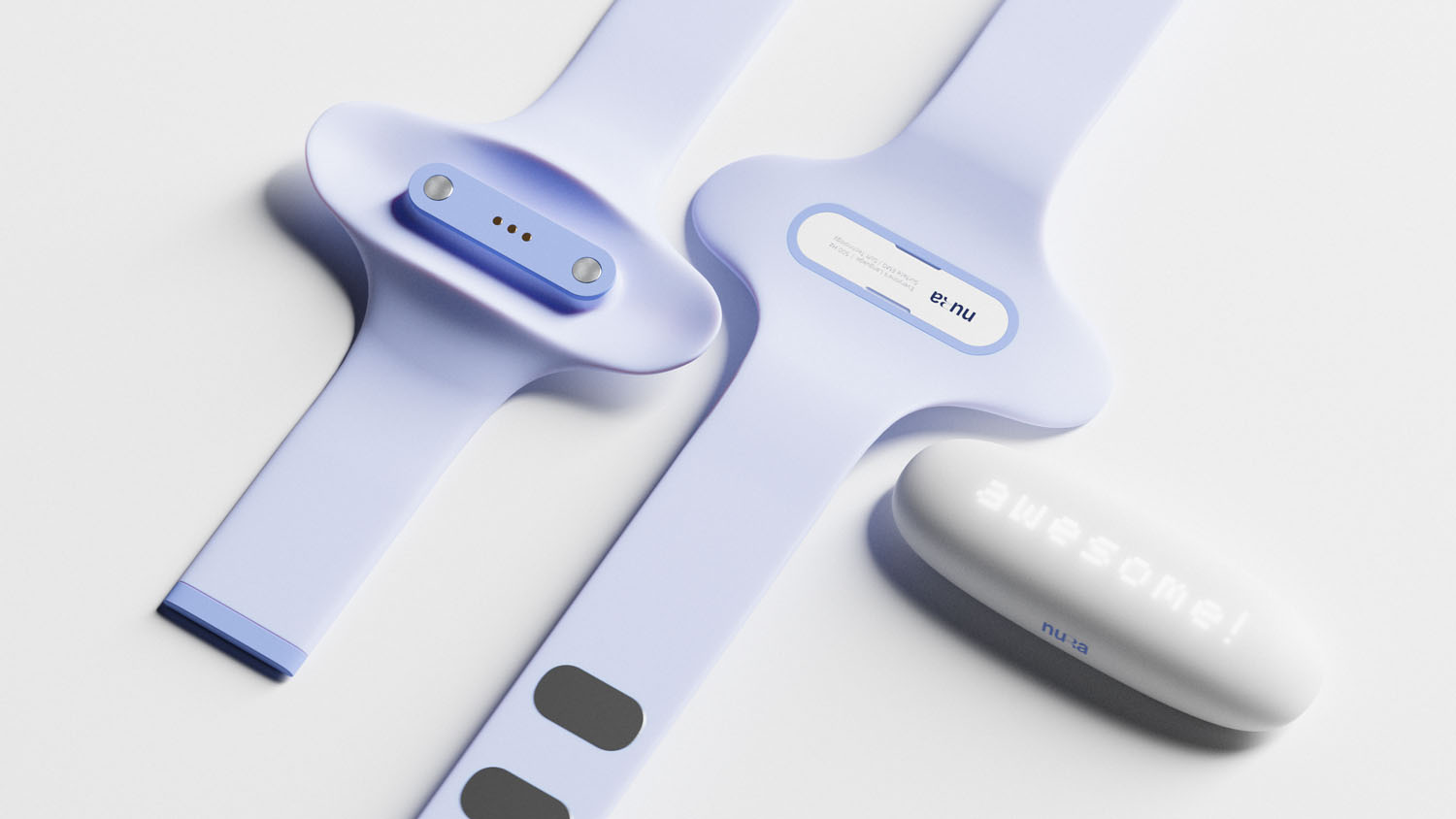
“Meaningful design does not always require greater complexity. Strong design can be humble,” says designer Farah Ebrahimi. “It can create joy, enduring quality, and cultural value.” This spring, the e15 art director was a juror for Rimowa’s fourth annual Design Prize competition. With her vote, Samuel Nagel and Paul Feiler won a €20,000 prize for Nura, a sleek wearable communication device that translates sign language into speech and speech into visible text for the deaf user, developed alongside the pair’s mentor, Tim Richter, head of Industrial Design at Siemens Healthineers. Despite the technological advancement, as Ebrahimi notes, the idea is delightfully simple.
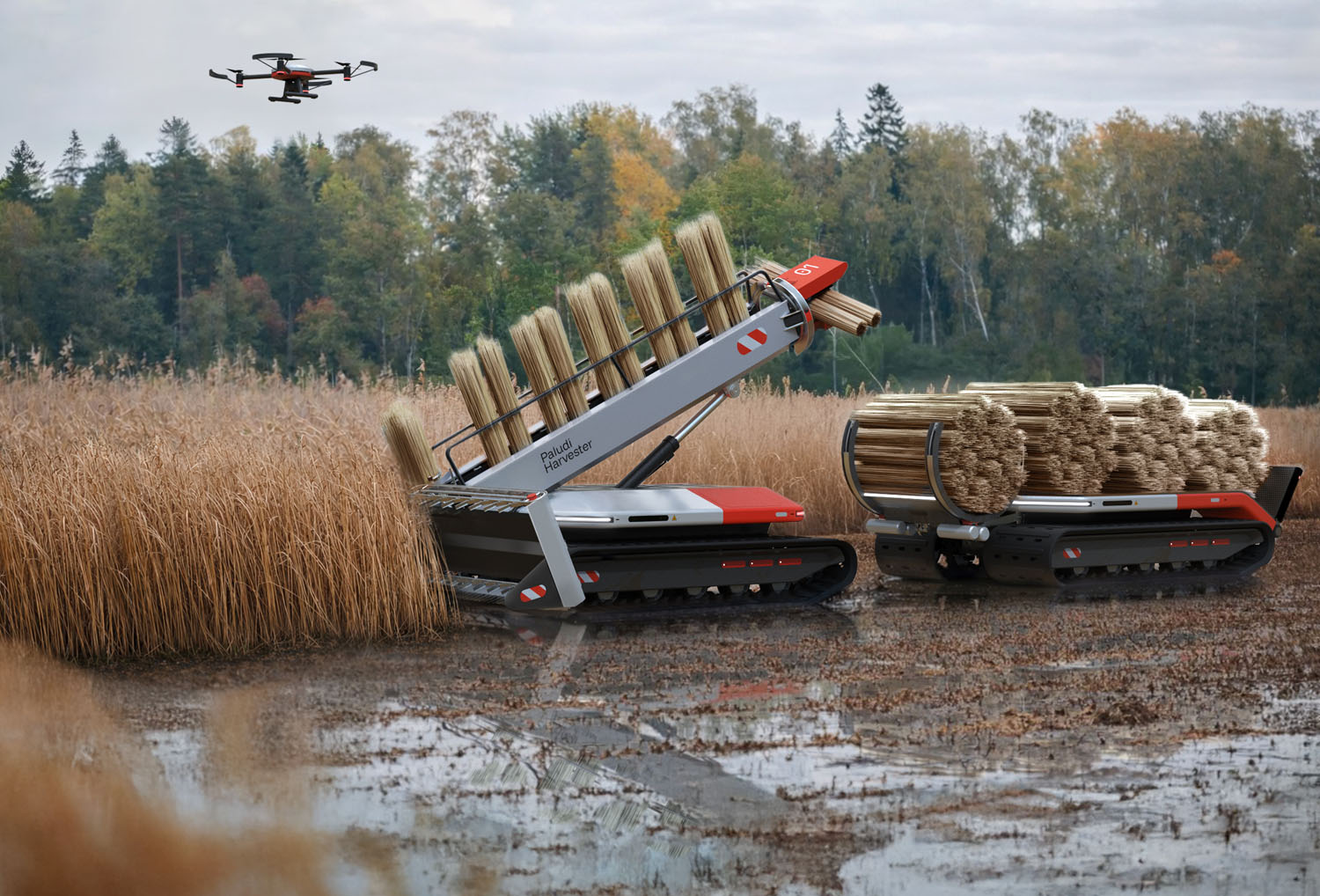
The runner-up in the competition—which asks students across Rimowa’s native Germany to submit ideas for designs that aid “mobility,” and a select few to create prototypes under the mentorship of a working designer—was Niklas Henning’s Paludi Harvester. The farming system restores peatlands through reed harvesting and processing, cutting down on current massive labor requirements and promoting environmental rejuvenation. For the prototype, he worked with Leica’s vice president of Photo and Design, Stefan Daniel, and received a €10,000 prize.
Following the award ceremony in Berlin, CULTURED talked to the three winners about the genesis of their projects, the impact of the competition, and where they plan to take their work next.

What was the initial spark that first got you interested in this topic?
Samuel Nagel: We realized how invisible communication barriers actually are. Even though you don’t see them, they quietly shape where people go and what they feel comfortable doing. That kind of everyday, easily overlooked problem is exactly the type of thing we find is worth designing for. What really brought it to life was talking to a sign language interpreter. She told us that she’s booked out months in advance, and is often asked to join people for gatherings, such as weddings or company events but simply can’t make it work on short notice. That stuck with us, and it also made us realize how many smaller, spontaneous moments in everyday life come with the same barrier. From then on, we wanted to design something that empowers deaf people to handle exactly these situations more independently, and that’s where the idea slowly started to take shape.
Niklas Henning: The initial spark came when I stumbled across peatlands and started learning about their role in combating climate change. After falling down a rabbit hole of research, I realized how powerful peatlands are as natural carbon sinks. I also learned about the E.U.’s ambitious plans to restore large areas of peatlands to help reduce the annual CO2 emissions.
However, restoring peatlands often requires rewetting land that is currently used for agriculture, which can remove an important source of income for farmers. I wanted to find a way to make peatland restoration both environmentally and economically viable. That is when I discovered reed. Reed has unique properties that make it a climate-positive material that can be used for thatched roofing and building insulation. Which is more sustainable than regular roofing and insulation materials. To maintain the carbon-storage capacity of peatlands, reed needs to be harvested annually. The challenge is that current harvesting methods are slow, physically demanding, and often dangerous. They require a significant amount of manual labor, resulting in a shortage of skilled workers. As a consequence, reed remains an expensive material that is only accessible to a limited number of people.
My autonomous harvesting machines enable large-scale reed production while maintaining the ecological function of peatlands as carbon sinks. This makes peatland restoration more practical and economically attractive. At the same time, it increases access to climate-positive insulation materials and creates a new, future-proof source of income for farmers.
What piece of advice from your mentor had the biggest impact on the direction of your project?
Nagel: One thing that really stuck with us was how much Tim pushed us to challenge our own ideas. He kept reminding us that the first idea is almost never the final one, and that it’s worth questioning a concept again and again instead of settling too early. That mindset helped us keep the project moving and not get attached to the first version of something. We learned a lot about the value of iteration, and about how often the better idea only shows up once you’re willing to let go of an earlier one.
Henning: Although Leica builds cameras rather than agricultural machinery, many of the principles behind great product development are universal. He challenged me to think carefully about every design decision and to make sure that each element has a clear purpose. He also taught me the importance of communicating that purpose clearly to others. One of the most valuable lessons I learned from him was to focus on what the machine genuinely needs to accomplish, rather than getting distracted by additional features. His advice helped me create a more focused, intentional, and user-centered design.
The theme of this project is “mobility,” and your work helps an individual move through the world around them more easily. How does pursuing design allow you to make an impact in this way, and did that factor into your decision to pursue it?
Nagel: For us, design is really about questioning how and why things are made the way they are. Before we design anything, we observe and start with questions. As designers, we start with asking about what something should be and try to understand what we actually want. Then, we try to find clever, sometimes out-of-the-box ideas to make it all possible, and combine them to find a good solution. That perspective is where design has its real strength, and it’s exactly what gives it the power to make an impact. Being able to take a situation that doesn’t work for everyone and make it a little better is a big part of why we were drawn to design in the first place—that sense of responsibility, of designing with more people in mind.
Henning: Designers typically work with a strong human-centered mindset. This enables them to develop products that not only solve problems but also improve people’s daily lives and create positive user experiences. We are trained to take a holistic, 360-degree approach, considering everything that contributes to a successful product—from functionality and usability to aesthetics, sustainability, and user needs. Rather than focusing on a single aspect, we look at the entire system surrounding a product.
As an engineering designer, I was additionally trained as a technical problem solver. This combination of design thinking and engineering allows me to create products that are not only desirable and user-friendly but also technically feasible and effective in solving real-world challenges.
Can you tell us about a challenging moment in realizing this project? How did you move past it?
Paul Feiler: One thing that challenged us quite a bit was wanting to step away from the look and feel of medical and tech devices. The goal was to land on a design where the technology is part of the background, while the interaction plays the leading role. At the same time, it was really important for us to create something elegant that people actually want to wear. Getting there, we had to go through many iterations of the design, countless prototypes and sketches, until it gradually came together. However, that is what makes design such a motivating challenge: you keep trying something different until it finally fits.
Henning: After spending so much time on the project and exploring countless aspects of the topic, one of the biggest challenges was communicating everything clearly and concisely. It was difficult to capture the full value of the design in just a few words while still highlighting its environmental, social, and economic benefits. I overcame this challenge by revisiting the entire design process from the beginning. Looking at the project with fresh eyes helped me identify the core message and focus on the aspects that truly matter.
Which part of the design process do you find most exciting—the ideation, the fabrication, seeing the final model? How did that stage go this time around?
Feiler: There isn’t really one answer to that—every step has its own appeal. At the very beginning, just grabbing a coffee and tossing around ideas for how we could solve the problem is a lot of fun. But so is the moment when it gets concrete, designing and testing the first prototypes, which we both really enjoy. That was probably the biggest part of this project: seeing how an idea slowly comes to life. And every project teaches you something new, so the most exciting part is often realizing at the end how much you’ve figured out along the way that you had no idea about when you started.
Henning: For me, the entire design process is exciting, but the most rewarding stage is turning an idea into the first digital models and physical prototypes. That is the moment when a concept starts to become something real and tangible. During this project, there were several times when I thought I was close to the finish line. However, each time I gained new insights that led to even better ideas, sometimes requiring significant design changes.
One of the most memorable moments happened just one week before the semifinal deadline. I realized that the mover unit could do much more than simply transport reed bales—it could also transport the harvesting unit itself. This would make storage, transportation, and road use significantly easier and more efficient. Once I had that realization, I could not ignore it. Even though the deadline was approaching rapidly, I decided to take the risk and redesign the entire mobile unit from the ground up. It meant several intense nights of work and uncertainty, but in the end it worked out!
What comes next for this project? Has winning this prize changed your ambitions for the idea?
Feiler: That’s a question we’ve been asking ourselves a lot lately, not only after the amazing experience at the Rimowa Design Prize, but also because our studies are slowly coming to an end. There are many possible directions right now: internships, master degrees, or maybe even starting something of our own. For now, I am going to do my master’s in product design in Sweden, which I’m really excited about. Samy is thinking about something similar but wants to do internships first. The prize definitely gave the idea a push and connected us with new contacts in relevant fields, so it’s definitely something we’ll keep working on and developing further to see where it can go.
Henning: I am currently looking for partners and investors to further develop the system and create a first prototype ready for use. At the same time, I am working on an attachment for the machine that will enable it to harvest additional crops that grow on peatlands. These crops can be used for biogas production, creating further economic opportunities while supporting peatland restoration.
More of our favorite stories from CULTURED
This Year’s Best Beach Reads, According to Rachel Reid, Yerin Ha, and More
‘Get a California King Bed’ and 17 Other Tips for Dating Within the Creative Community
Mina Stone’s Guide to Cooking From Your Local New York Bodega
Two of the Biggest Names in American Patronage Have Kept Their Homes Private—Until Now
What’s Next For a Beleaguered Hollywood? ‘Backrooms’ Offers a Few Clues
Sign up for our newsletter here to get these stories direct to your inbox.





 in your life?
