


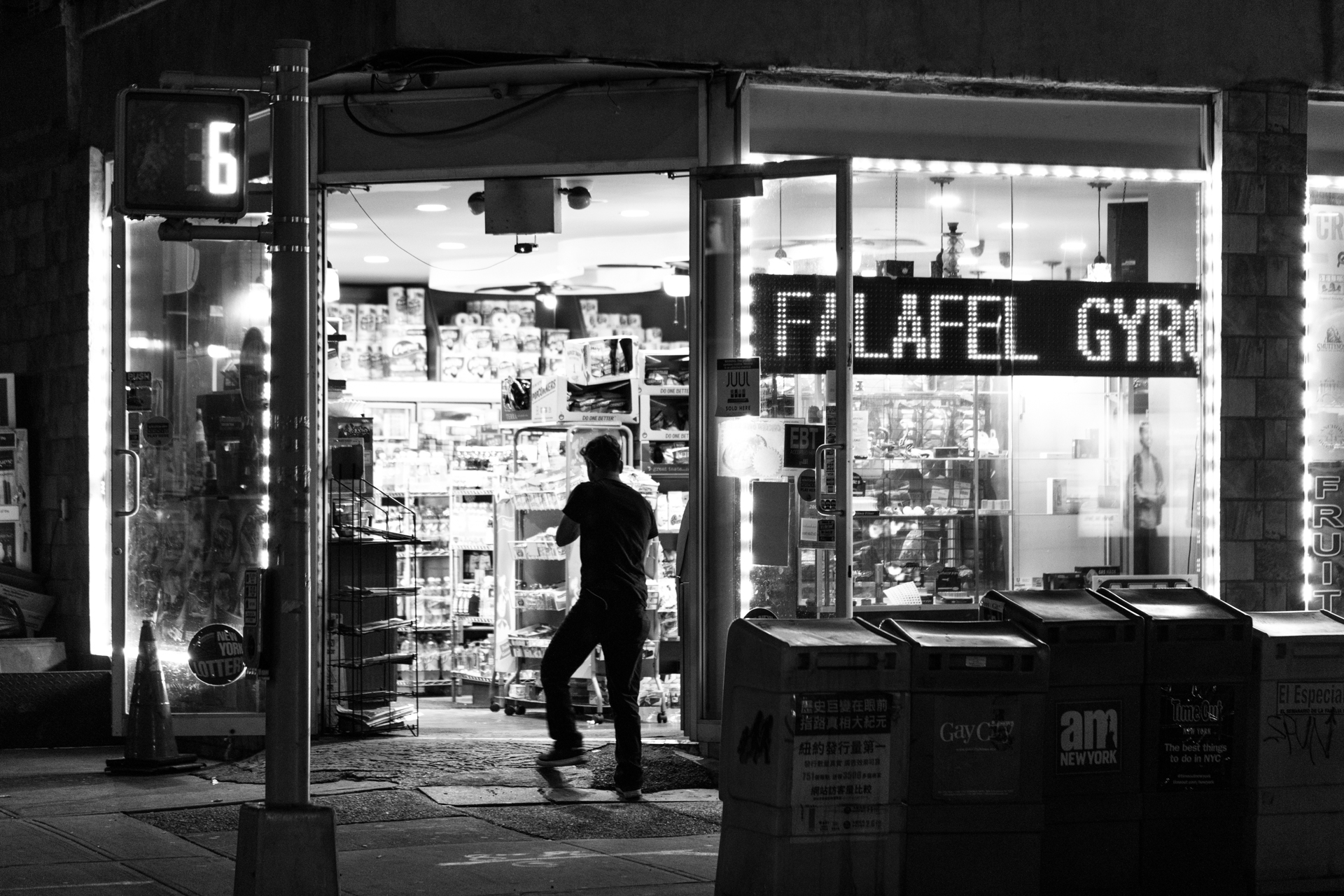
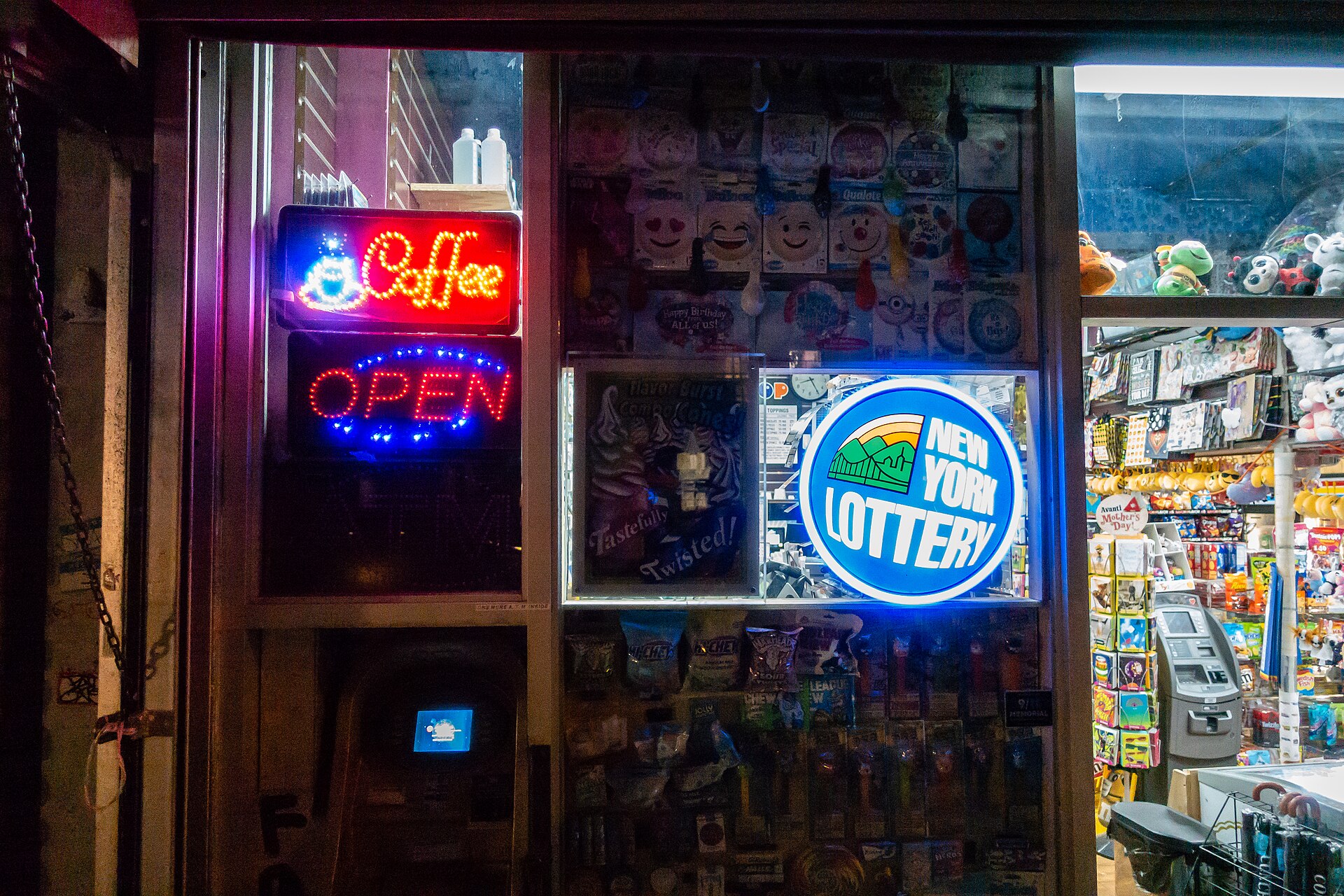
This is a love letter to my neighborhood bodega.
I took my first trip to New York when I was 5 years old. I knew then, as I know now, that this was the place I wanted to live. Every morning, my dad and I would walk to the local bodega to get the newspaper. (Print forever!) Then we would buy a bagel with cream cheese from the street carts outside. I insisted—I remember, and my dad confirmed—that bagels from anywhere else were simply not as good.
I loved New York because it reminded me of my other happy place: Athens. In these two cities, my childhood self never felt alone, constantly dancing among interactions between people, cars, food, and music.
In Athens, the periptero was where I went with my mom to get her newspaper—and where I was sent by myself to fetch cigarettes for the family. (They were usually in the middle of a heated political debate and could not be bothered to go themselves.) In lieu of bagels, the street was populated by carts offering a common Greek street food called koulouria: large, thin breadrings studded with toasted sesame seeds.
The periptero is an integral part of Greek history. Originally designed to employ Greek war veterans and refugees, it sells everything from newspapers (hung on clothespins) to snacks to clothes. In the 1950s and ’60s, when landlines were still a luxury good, the periptero also housed the neighborhood phone.
Both the periptero and the bodega serve as a pillar of their neighborhoods, cultural centers just steps from home. The term “bodega” comes from the Spanish word for warehouse, wine cellar, or storeroom. These catch-all storefronts took root in New York in the 1920s, when Puerto Rican immigrants came to the Lower East Side to work factory jobs. The stores bridged their two worlds by carrying hard-to-find ingredients from Puerto Rico alongside American goods.

In the mid-20th century, an influx of Dominicans fleeing the Trujillo regime bought some of these shops and added their own to the mix, followed by Yemeni people fleeing the North Yemen Civil War and other Arab immigrants in the 1980s. (The New York Times and the Lower East Side History Project have more information on the cultural history of bodegas; just remember that every book and article you read will tell you something different.)
In my present life, both grocery stores and farmers markets serve as a treat, even a luxury. I get the bulk of my groceries delivered, and anything missing comes from Green Farm, my corner bodega with a green awning. Occasionally, I’ll pick up juice and a sandwich there for lunch. But I can also make three entirely satisfying meals from bodega offerings, as I’ll show you below.
Most often, I’ll pick up the indestructible brassica otherwise known as kale. I chop it up, sauté it, and add it to pasta with lemon and parmesan. Or I’ll buy carrots and grate them, tossing them simply with lime juice and salt. I also like to get bananas for banana bread. Or rice, lentils, and onions for mujadara. Rice, beans, and coconut milk for… rice and beans. (One of the few things I won’t buy at my bodega is feta.)
I encourage you to utilize your bodega to supplement, or even source, your daily meals. Of course, buying local produce is important to support farmers and the environment (not to mention securing better tasting and more nutritious food). But patronizing your neighborhood bodega is just as important as your local farmer’s market. It strengthens the community and the walkable food ecosystem of the city. It’s “shopping local” in the truest sense.
The bodega is a landline. It connects us to the history of the city, of immigration, and even of political change. My great-grandmother Efthimia, a Pontic Greek refugee from Georgia, had her own periptero in the port city of Athens, Piraeus. She raised five children with the proceeds, and she was able to do so because she was a fixture of her neighborhood, supporting them while they supported her—and the generations that followed.
Below, you’ll find three simple recipes you can source at your neighborhood bodega. Thank me later!
Breakfast: Bodega Banana Bread
If I’m not picking up a bacon, egg and cheese on a roll or a griddled muffin (my personal fave), then I’ll try to put together a banana bread on a Sunday and griddle a slice on Monday.
3 bananas, any shade of yellow to brown, mashed
½ cup butter, melted
2 eggs
½ cup sugar
1 ½ cups flour (all purpose or I like to use oat flour too)
1 ½ teaspoons baking powder
1 ½ teaspoons baking soda
½ teaspoon kosher salt
1 cup frozen berries of your choice
Preheat the oven to 350 and grease and line a 9-inch loaf pan.
Whisk the bananas, butter, eggs, sugar and vanilla until well combined.
Whisk in the flour, baking powder, baking soda and salt. Carefully fold in the berries.
Bake for about 40-50 minutes, until it is a deep golden brown.
Lunch: The Bodega Sandwich
The bodega sandwich, a quintessential part of living in New York. If you ask anyone what their bodega sandwich order is, you are likely to get very passionate answers. Alex, my husband, gets this sandwich and I can’t believe he agreed to share it publicly—it is that good:
Any meat of choice (hot pastrami in winter, ham in summer)
Swiss cheese
Lettuce, tomato, onion, pickled jalapeños
Mustard, no mayo
Oil and red wine vinegar
On a roll or hero
My friend, Laura Marte, goes full veggie sandwich at the bodega:
Pepper jack or Swiss cheese
Avocado, tomatoes, shredded lettuce
Chipotle mayo
On a roll or hero bread
Dinner: Corner Store Pasta
Think of this pasta as a base for you to add whatever is available that day.
1 lb pasta of your choice
2 lemons, juice and zest
Clove of garlic
Olive oil and butter
Freshest green veggie in the case (kale, spinach)
Grated parm, pecorino, or cubed mozzarella or cheddar
Boil pasta to al dente and toss with olive oil, a knob of butter, lots of salt and pepper, a crushed garlic clove (you’ll remove it later), and the zest and juice of two lemons. Toss this mixture and set aside. Add the cleaned greens while the pasta is still warm, so the leaves wilt. Toss with cheese and serve!
More of our favorite stories from CULTURED
At 101, the Chinese American Artist Ce Roser Is Finally Getting Her Big Break
Yes, Kane Parsons Directed ‘Backrooms.’ Here’s How It All Went Down.
The Gayest Places in New York, According to Queer Culturati
Director Boots Riley and George Clinton Disagree About the Future of A.I.
The 8 Must-See Movies at Tribeca This June, According to the Ultimate Insider
Sign up for our newsletter here to get these stories direct to your inbox.



 in your life?
