


I spoke out loud and came up with the words.
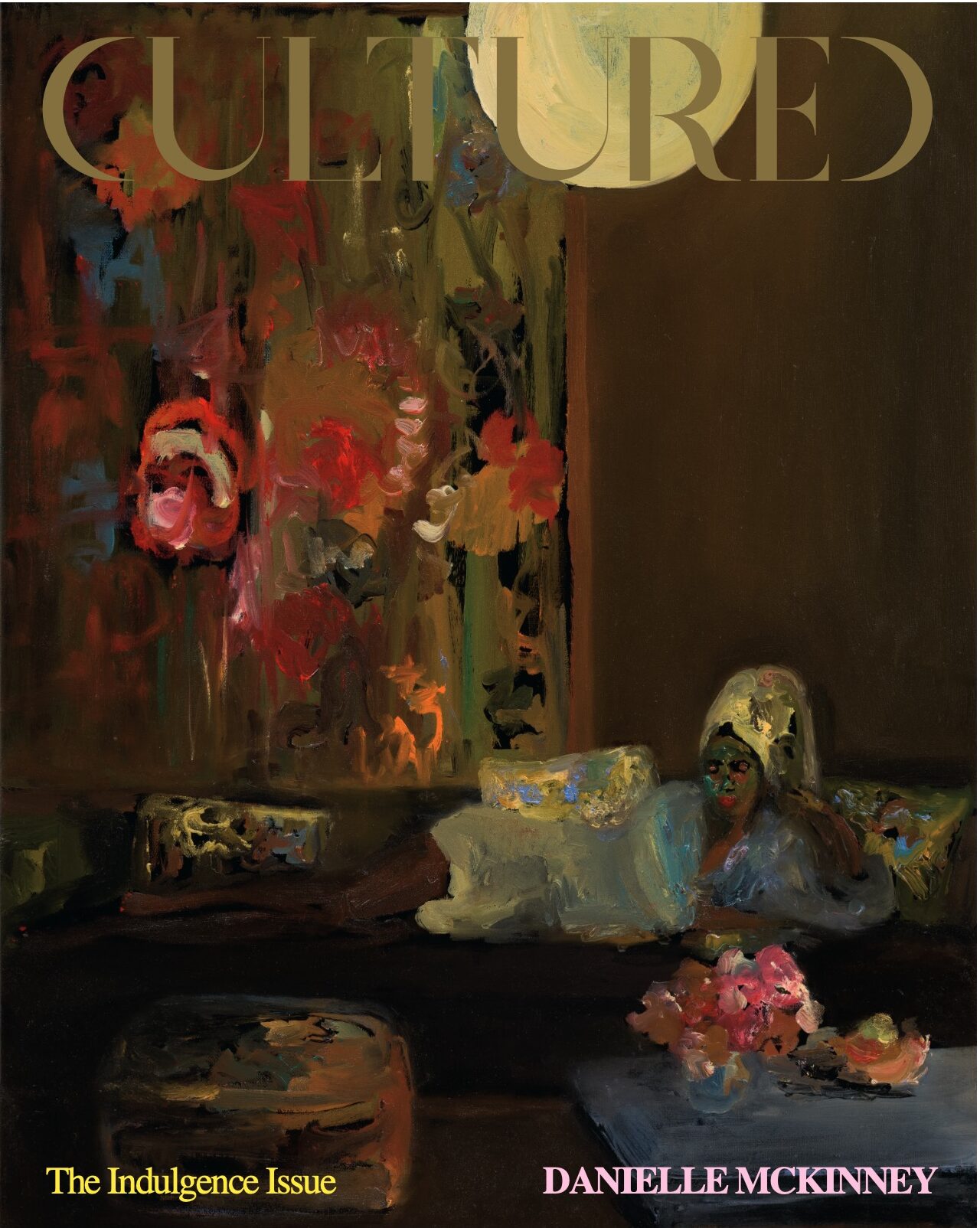
There are moments at night when the house finally becomes quiet, and I can hear myself again. As a mother, as a woman, as someone constantly moving between emotional worlds, those moments have started to feel almost sacred to me. I think Recess, the painting on the cover of this issue of CULTURED, came from that feeling, the deep desire to slip away from the demands of being visible for just a little while.
The painting is intimate to me because nothing dramatic is happening in it. A woman reclines on a couch beneath this enormous glowing light. There are flowers beginning to open on the table, traces of life around her, softness everywhere. She wears a face mask, suspended somewhere between caring for herself and disappearing into herself. I kept returning to that detail while painting because it felt so human to me. There’s something vulnerable about seeing someone in the middle of a private ritual usually hidden from the world.
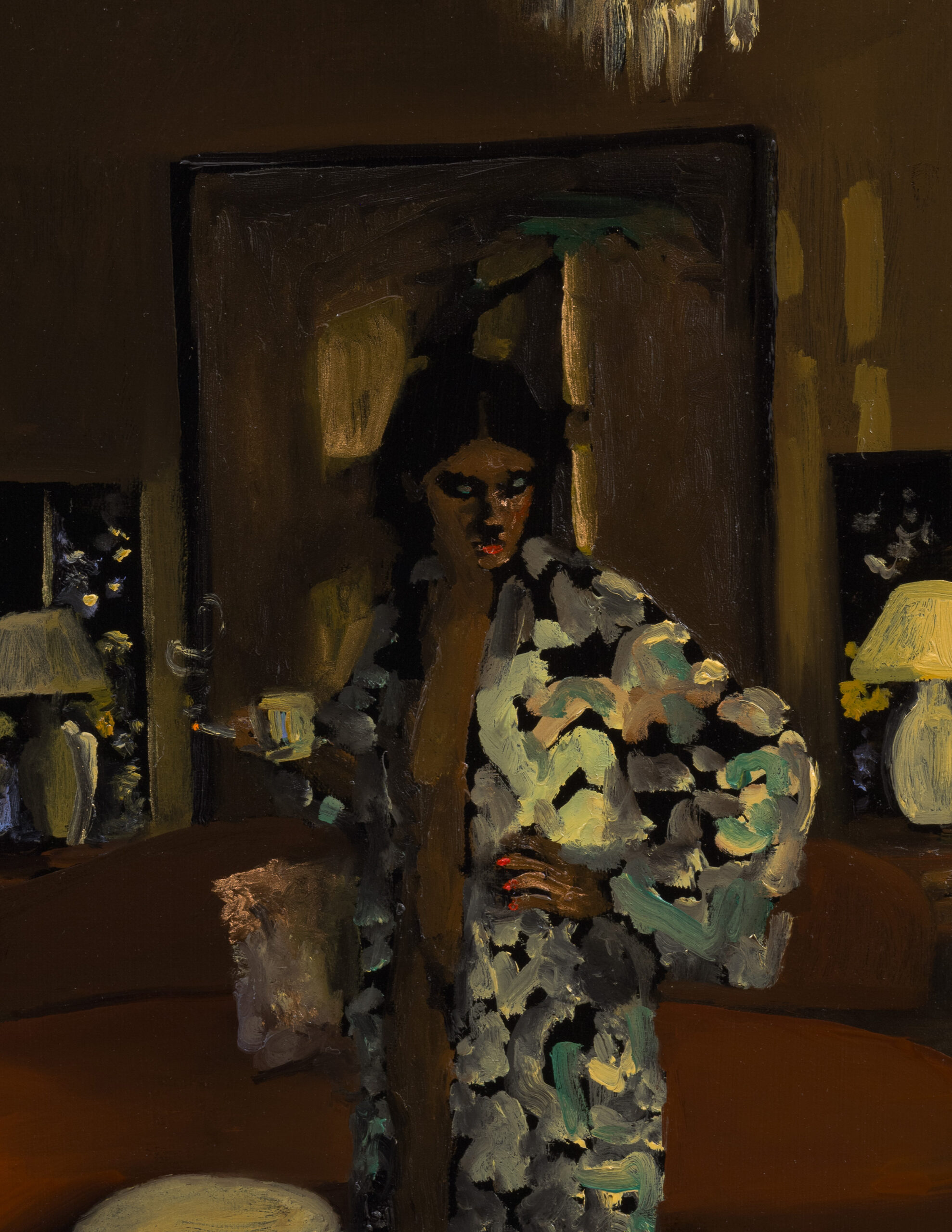
The face mask became less about beauty and more about restoration. About trying to repair yourself quietly. I think women become experts at carrying emotional weight while still appearing composed. We learn how to continue functioning while exhausted, heartbroken, overstimulated, lonely, needed. Sometimes indulgence is simply closing the door. Sitting in silence. Letting your body soften. Letting yourself exist without performing strength or care for someone else for a moment.
The Jungian psychoanalyst James Hollis writes that much of adulthood involves trying to recover the self we abandoned in order to survive. That thought follows me constantly now. Painting has become the one place where I don’t have to organize my emotions into something understandable. The paintings hold what I cannot always articulate out loud. The figures in my work are never direct self-portraits but carry an emotional interior. They hold loneliness, sensuality, fatigue, longing, fantasy, and the complicated desire to both retreat from the world and be deeply seen by it.

When I painted Recess, I kept thinking about the title itself. A recess is temporary. You eventually have to return to responsibility, conversations, noise, the outside world. Maybe that’s why the painting feels melancholic to me despite its warmth. The room glows, but there’s also the awareness that the moment will end.
Lately I’ve been allowing the paintings to become looser and less resolved. Brushstrokes dissolve, forms emerge and disappear. I trust the work more when it leaves room for uncertainty because uncertainty feels emotionally honest to me now.
For me, indulgence is not really about luxury. It’s emotional permission. Permission to pause long enough to feel life again. Permission to nurture the parts of yourself that no one else sees.
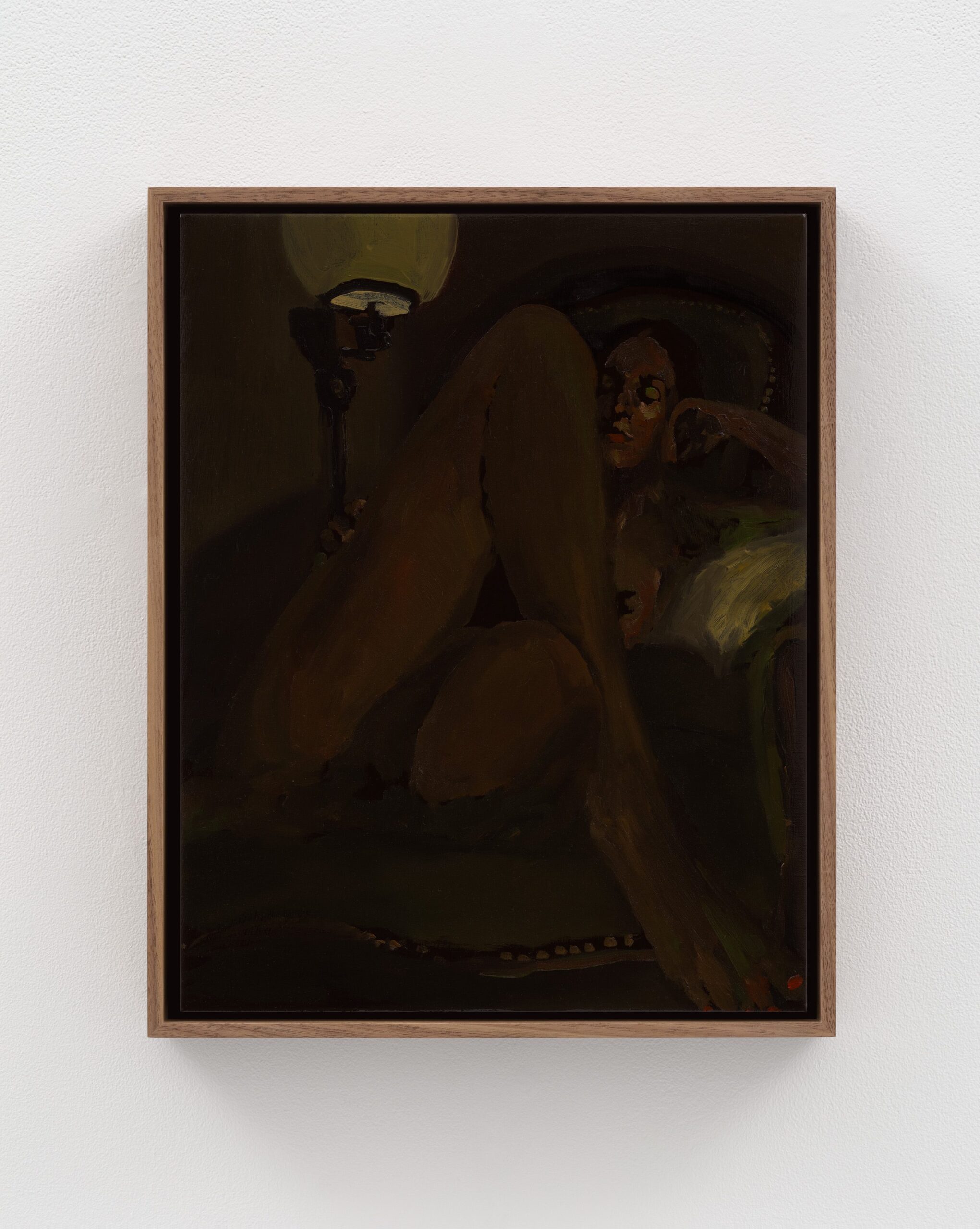
“Danielle Mckinney: Forest for the Trees” is on view at Marianne Boesky’s New York location through June 13, and “Danielle Mckinney: Shelter” is on view at the Norton Museum of Art in West Palm Beach through Oct. 4.
Order your copy of the Indulgence issue here.
More of our favorite stories from the Indulgence issue
Introducing CULTURED’s 2026 Young Writers List
‘I’m Less Vain Than I Am Tired’: Amy Adams Opens Up to Amanda Seyfried About Aging Onscreen
What Nicolas Winding Refn Learned When He Died and Came Back to Life
Andrew Rannells Has Had His Own Reappraisal of Girls, Too
A New Photo Book Sketches a History of Queer Nightlife—and Where It Might Go Next
Sign up for our newsletter here to get these stories direct to your inbox.







 in your life?
