


All summer long, I had “art world fall season vibe check” penciled in as my topic for today’s piece. I thought I might trace a thread through the first nine months of 2026 to find it surfacing in the late-August tranche of press releases, but… no, not really. It’s too soon to get a read. And, of course, the zeitgeist generally arrives without advance PR. This second-week-of-September column serves as an update and a moment for reflection rather than a frantic preview of the New York gallery openings.
That said, what’s caught my attention as a “trend” so far this year is a turn to historically minded structural analysis—young(ish) artists’ explicit engagement with the conceptual art and institutional-critique strategies of the 1960s and beyond. While Josh Kline’s October essay “New York Real Estate and the Ruin of American Art” precipitated our first local art-world town hall moment in some time (if group chats and Substack posts can, in sum, count as such a thing), it seems more interesting to see that text as a sidebar to artworks and interventions concerning racial capitalism and real estate than to debate it as a standalone diagnosis. Kline cites the cheap rents of New York in the ’60s and ’70s as crucial to the “canonical breakthroughs” of the era (including Conceptualism); his fellow artists cite that breakthrough formally in adjacent critiques.
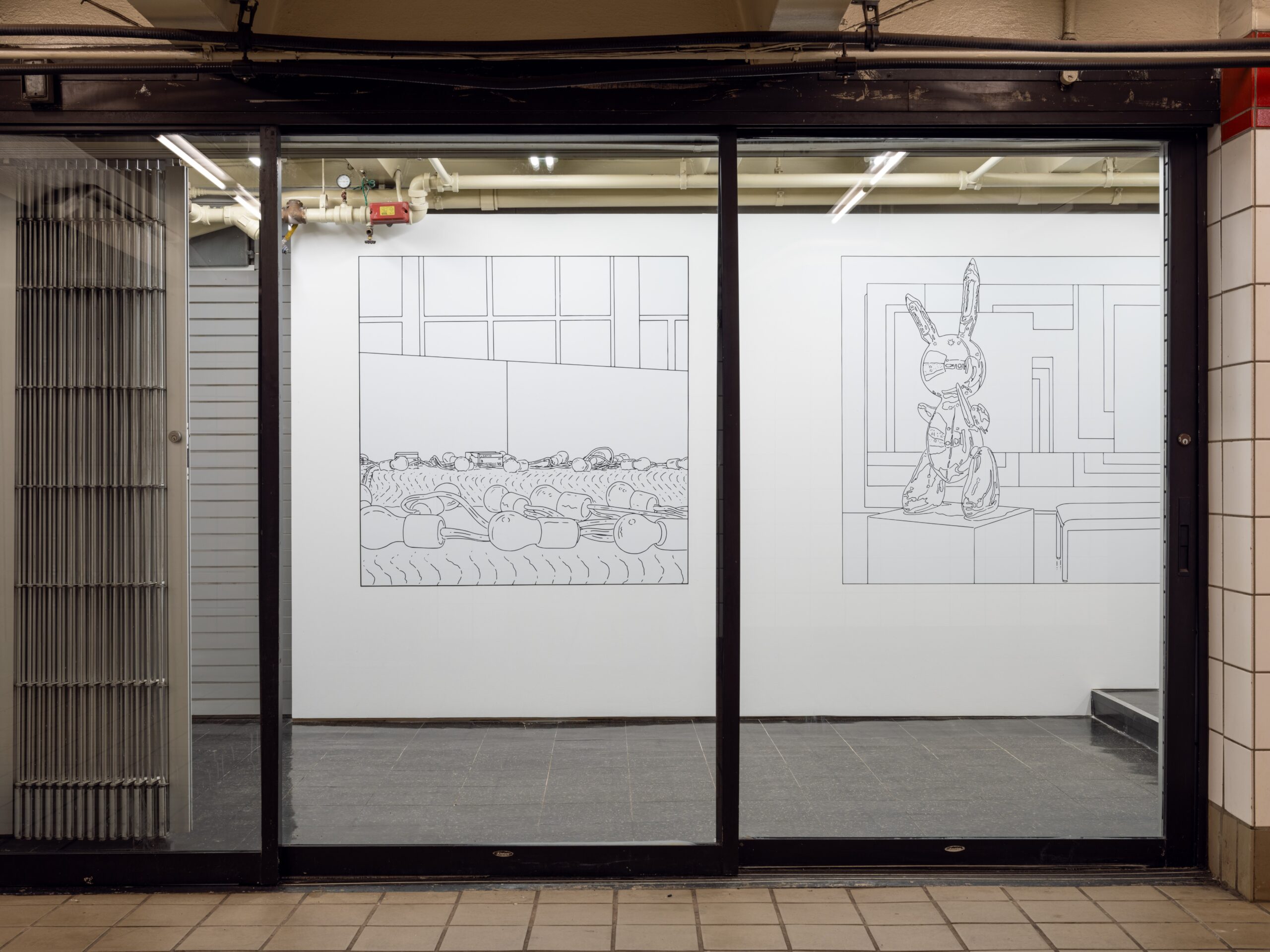
The noble or inevitable companion to Kline’s important question of affordable studio and exhibition space, of how and where can artists access more, is the question of what can be done with less. DIY production values and dematerialized practices are tried-and-true practical solutions as well as, sometimes, references. The 1-year-old, vest-pocket MTA-mezzanine space Emmelines has made cross-generational exhibitions of conceptual work central to the gallery’s program (I wrote about one of them: Harrison Kinanne Smith’s show “Tracings and Arrangements,” for which the artist put two Louise Lawler decal-murals in the subterranean shopfront window). SoiL Thornton rehearsed a number of historical conceptual styles, both bureaucratic and poetic, in their solo presentation at the Swiss Institute, “Metabolizing eviction try, work_mp3 and other games of topping” (I reported on a related, in-gallery workshop on the unaffordability crisis in June).
And one of my favorite shows I saw over the summer, the deceptively quiet, timeline-scrambling show “Institutional Critiques”—organized by T. Lax with Abby Hermosilla, now on view in MoMA’s reshuffled 2nd floor collection galleries—illustrates my point about citation. Contemporary works by Cameron Rowland, Carolyn Lazard, and Park McArthur slip into the Conceptualist canon alongside some of the usual suspects: Adrian Piper, Allan Sekula, Lawrence Weiner, and Lawler again. But, no doubt, much of the most interesting new work in this tradition will show up not in the major institutions or mega-galleries, but in artist-curated and nomadic spaces—experiments too small to fail.
My niche, wishful observations aside, September is always mayhem, not reducible to one or even several themes. But, while there are a record number of shows set to open this month (422, according to Alex Feim’s impressive research), I feel a sense of relative calm—the Armory Show is happening a bit later than usual (opening on the 24th) and the big museum shows on the horizon are focused. Roy Lichtenstein at the Whitney, Arthur Jafa at New Museum, and the Met’s Krasner/Pollock exhibition form an exciting but more manageable trifecta than the spring’s confluence of the Whitney Biennial, “New Humans,” and “Greater New York.”
And when I turn to my little corner of the art world, right here, the vibes are amazing: Over the summer, I took on the role of chief art critic for CULTURED and began to round out a network of contributors around the country and the globe, as our growing community of subscribers stepped up to support this work. I’m especially thrilled that this fall, the artist and critic Juliana Halpert will join the Critics’ Table as contributing editor and LA correspondent to expand and formalize our West Coast coverage. A sharp reviewer, interviewer, and essayist (read her recent, much-shared, unsparing take on LACMA’s David Geffen Galleries), she’s also the author of two of my favorite Critics’ Table diaries, which exemplify and elevate the form, showing “the critic” as both a persona and an embedded, invested observer-participant in the world she travels through. (While both writers are flattered—or extremely gracious—when their bylines are confused, it should be noted that Juliana Halpert and my colleague Julia Halperin, CULTURED’s editor-at-large, are not the same person.)

I’ve also been working for the last few weeks to enlist contributors for the second edition of our Speed Round, or one-sentence reviews. If everyone, knock on wood, does what they’ve promised, this time next week we’ll publish around 20 critics on some 30-plus exhibitions, providing you with a polyvocal, panoramic start to the season. In the responses to my invitation to write a super-short review (or several)—that is, in the enthusiasm, curiosity, passion, speculation, trepidation, overthinking, excited back-and-forth exchanges, bitchiness, and territorial or polite dibs-calling prompted by my preliminary spreadsheet of openings—I can see that the critics at least, on some fundamental level, are alright.
Of course, it’s not our spiritual and intellectual wellness (for the most part) that’s in question when the so-called crisis in criticism is invoked. The Critics’ Table, appearing when it did two years ago—while outlets, staff positions, and column space for art criticism disappeared—has become a catalyst for conversations about the status of the field. The decision by CULTURED’s Sarah Harrelson to sail against the headwinds, investing in this new vertical, came with it the challenge to build something that begins to fill the growing void, that offers an alternative to both the dwindling established venues and the atomized landscape of Substack. And so, the unspoken meta-subject of the section from the start has been the fate, the role, and the possibilities of criticism.
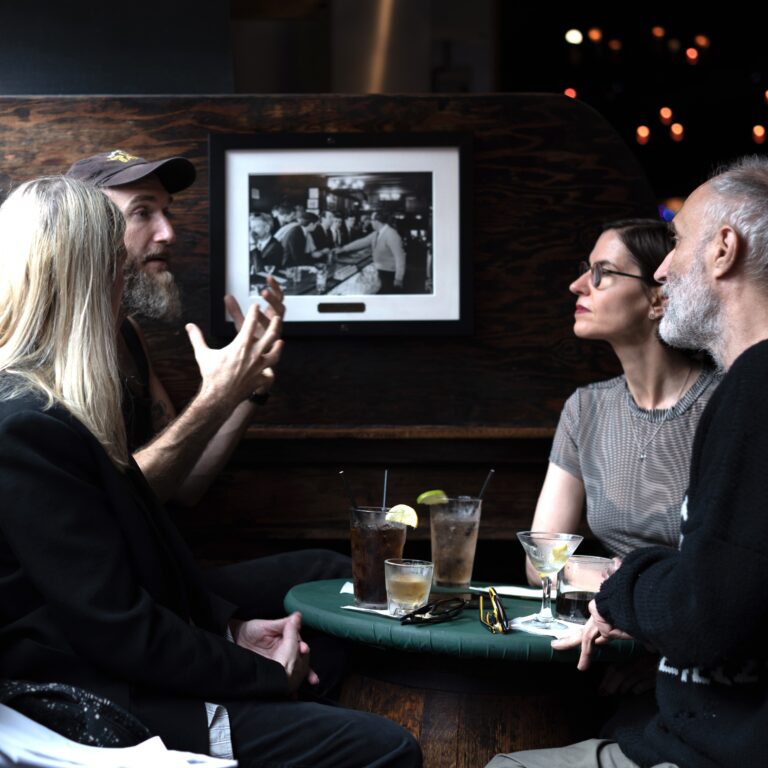
In public, on panels and in interviews, as well as over drinks, in private, I’ve posed my nagging questions about the what and the why of it all, and heard the visions and grievances of art-world friends and colleagues. Ultimately, I’ve found that, while writers are called on to opine on the bleak situation, it’s artists who most passionately articulate the need for criticism, even as they concede it drives neither sales nor foot traffic. It’s artists who see and feel it as a vital complement, affirmation, or irritant to what they’re doing, a parallel practice of making meaning—but criticism, at its best, makes everyone a better viewer. So, watch this space: In addition to ambitious plans to cover the goings on in New York, LA, and beyond, I hope to bring more artists and artist-critics into the conversation, to find and engage criticism’s true stakeholders, and to experiment with form to figure out what really works.
More of our favorite stories from CULTURED
The 15 Must-See Solo Gallery Shows in New York This Month
What Does It Take to Make It as an Independent Fashion Designer in 2026? We Asked 3 of Them.
You’re Welcome to Keep Listening to ‘Rush.’ But Troye Sivan Has Moved On.
Post-Banana, Can Maurizio Cattelan Escape His Reputation as a Readymade Rabble-Rouser?
Art Fair Season Is Approaching. Here’s How to Get the Most Out of Your Visit.
Sign up for our newsletter here to get these stories direct to your inbox.





 in your life?
