


Altoon Sultan
Hoffman Donahue | 99 Bowery, 2nd Floor
Through July 18, 2026
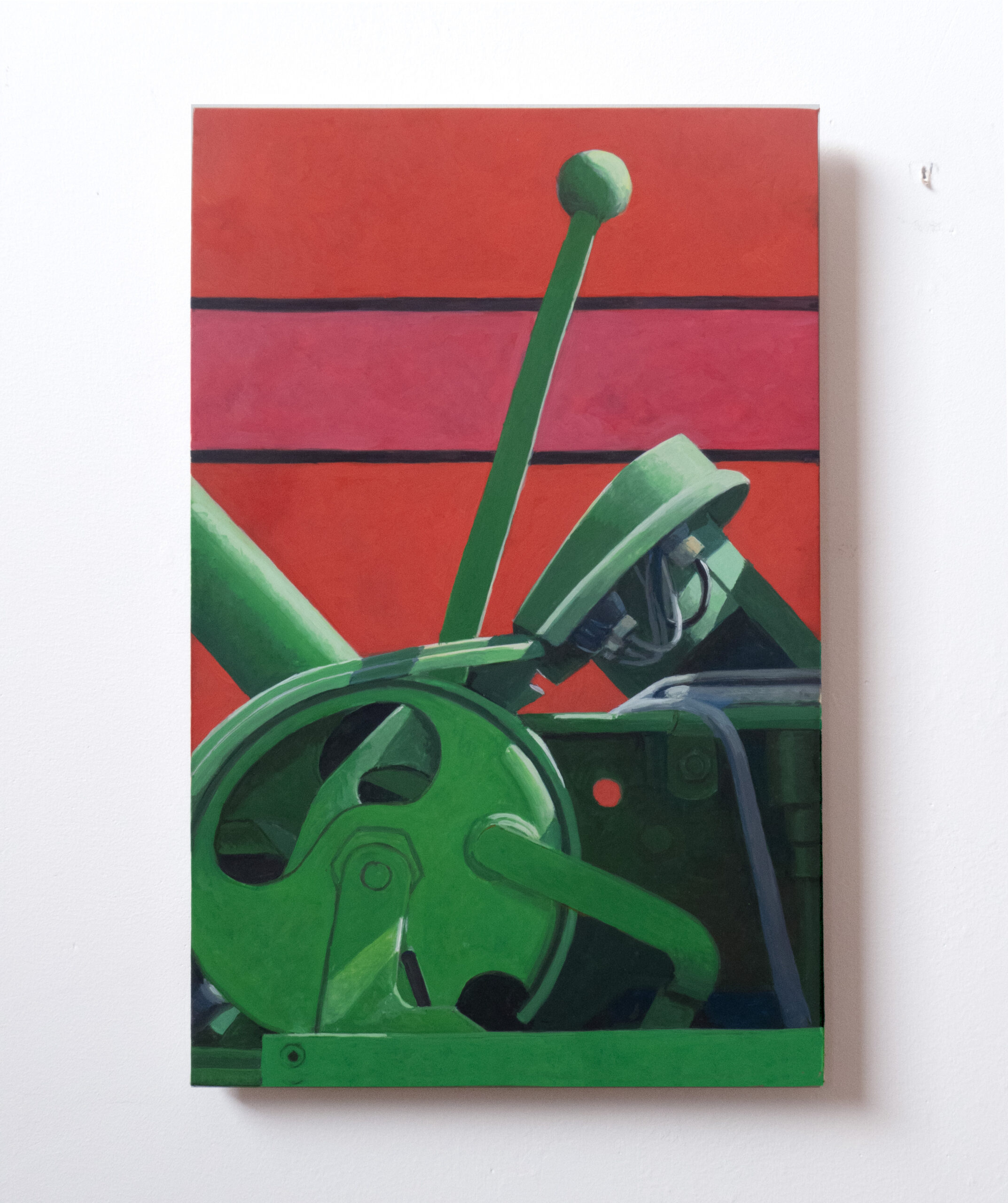
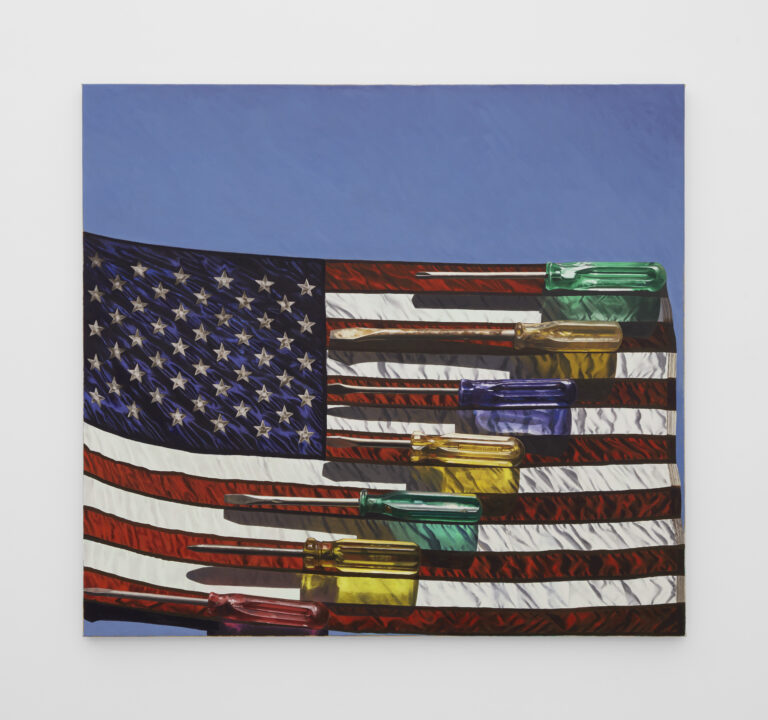
Altoon Sultan makes deliciously understated paintings. On first look at the 13 small paintings of agricultural machines in egg tempera on parchment-covered panels, I wondered if some Donald Judd obsessive had been abandoned on a far-flung farm and forced to make their own art materials.
That might not be too far from the truth. Born in Brooklyn, Sultan showed at Marlborough Gallery in the 1970s, and later at Tibor de Nagy, while living in rural Vermont for more than 30 years. The work on view at Hoffman Donahue is the sort that someone who has stuck with exploring paint’s possibilities for over 45 years makes. She zooms in on fragmented details of mechanical parts within larger, complex systems while recording her findings through an idealizing reduction. Her compositions are heightened essences of her subjects.
Pay attention not only to shapes and forms—the circles and cylinders, gears and hoses. Attend also to the artist’s commanding treatment of light. I stood transfixed, observing the way sunlight falls in Tall Handle, 2025—a painting diminutive in size but huge in its painterly effects. The horizontal bands of orange-pink in the background make the elements of a green tractor or machine pop out in the foreground. What does the handle do? Functionally, I don’t know, but if you see it as the artist does, it’s like an antenna meant primarily to capture the magic of sunshine on the painted metal of a human-made, agricultural contraption.
Tilled soil and rows of crops are mostly kept out of the frame, even as these images prod the viewer to think about factory farming, slyly evoking animals and industrialized cruelty. However contemporary Sultan’s subject matter may be, the choice to use egg tempera on parchment recalls late-medieval and early-Renaissance panel-paintings and illuminated manuscripts. Before Claude and ChatGPT, there were combines and John Deere tractors, and before that, there was a more than 500-year-old revolution in how we represent the world in paint. All of this telescoping history is in these pictures.
This exhibition makes the gallery a chapel for celebrating attention, discernment, and touch. We cannot avoid the machines, this show whispers; we should pay attention to and study them also.

Hayden Dunham
Company | 145 Elizabeth Street
Through June 13, 2026
Somehow, I found myself in a nearly pitch-black basement on the Lower East Side. The basement was part of Hayden Dunham’s third solo show, “NEVER IS OVER,” at Company gallery. I felt like I was coming out of a fugue state, grateful to be jolted back into a sort of multisensory attention. A droning ambient musical track (whale sounds are involved) emanates from speakers throughout the space, as multiple video projections show a diaphanous porcelain-skinned figure looking more cyborgian than ghostly. Most intriguing were several egg- or stone-shaped constructions that look like paintings, cut up and reshaped into sculptural papier-mâché orbs.
The environment felt refreshing after seeing a series of painting shows, and recalled for me the darkened room of Zach Blas’s CULTUS, 2023, in the current Whitney Biennial, situated alone in the museum’s lobby gallery. Blas’s work explores and parodies the cult of A.I., while Dunham’s work reads more like a knowing throwback to 1990s or early aughts installation. This isn’t a negative—it feels free of the obsession with the digital, concerning itself primarily with the possibility of throwing light off and around objects in the dark. The nested set of glass cylinders (repurposed vases?) in Battery (lifted), 2026, does this playfully on the floor, with the vessels holding liquid, silicone, bubble wrap, and pearls, among other translucent materials.
The ovum-shaped objects on the wall contain recording devices that play when exposed to light (seemingly requiring their destruction, as you’d have to tear them open for them to make their sound). Made of materials like T-shirts, leather, and silk, the recordings reproduce the words or voices of the late science fiction writer Octavia Butler, the late artist Pippa Garner, and the late hyperpop musician SOPHIE (Dunham’s own musical collaborator), among others. Or so the accompanying text I only read after tells me. The upside-down field of lilies hanging from the ceiling on the first floor are worth moving through to explore this basement space, where you too may find a kind of refuge.
Stan VanDerBeek
Magenta Plains | 149 Canal Street
Through June 20, 2026
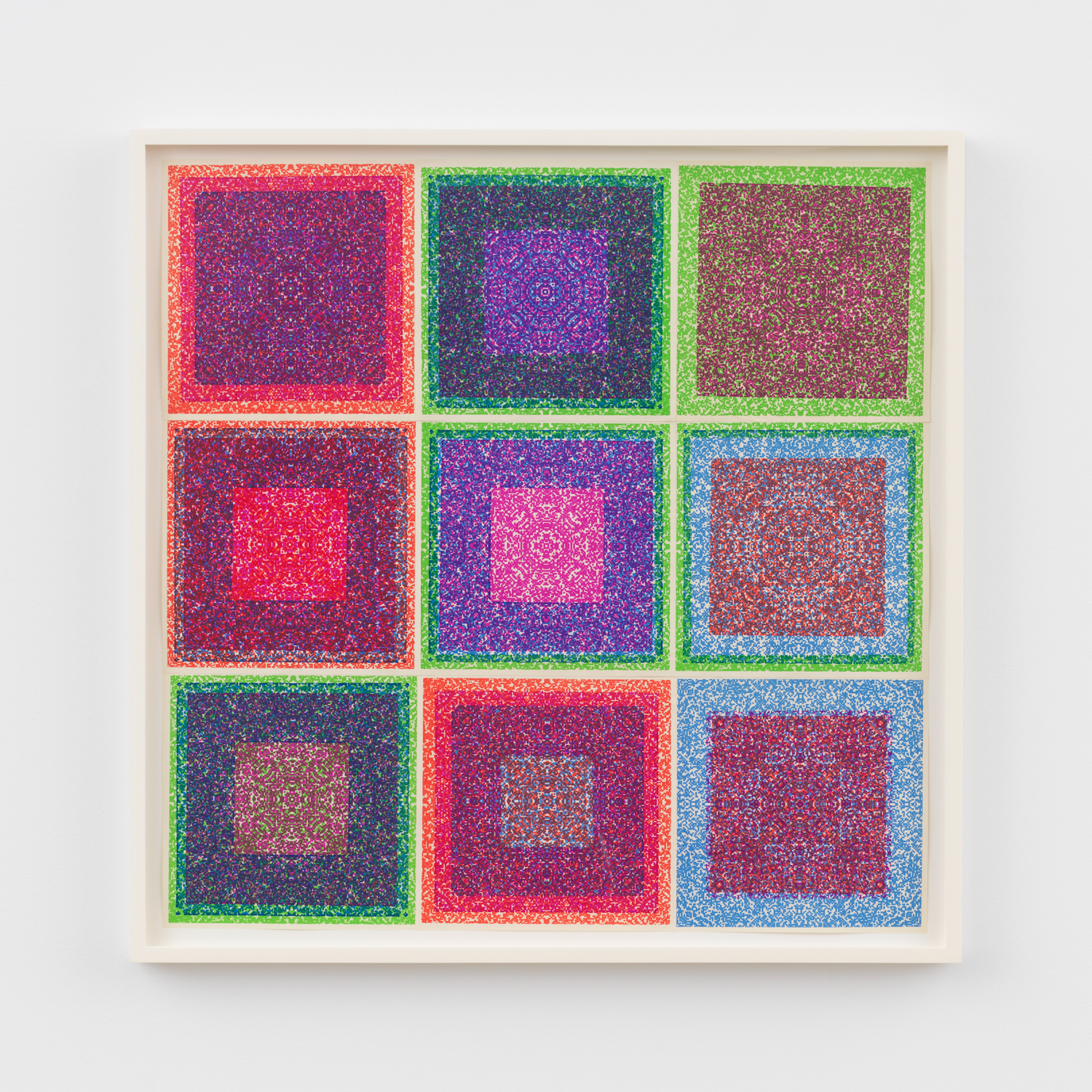
Head next to Magenta Plains down on Canal Street at the foot of the bridge. You’d be forgiven for thinking Stan VanDerBeek’s prints and computer animation work relate somehow to the history of the QR code. In the prints, especially the grid of nine color silkscreens sourced from computer graphics, Moveable Mandala, VanDerBeek builds pixelated abstractions that resemble the now ubiquitous “Quick Response” machine-readable barcodes… but these were made in 1976, from his experiments with computer animation that began a decade earlier.
A monitor in the gallery plays Poemfield No. 1 (Blue version), 1967, which survives through a series of intermedia transmissions: the computer graphics, made in collaboration with Bell Labs engineer Ken Knowlton, were first transferred from the computer to 16mm film then back to a digital format for contemporary viewing. Digital art—its promise and its attempts—are everywhere, but too little attention is paid to early examples. This is a tightly focused show, not to be missed, of one artist’s experiments with kinetic, rather than concrete, pixelated poetry. (The similarly small but potent show of Jane Swavely’s abstract paintings in the basement here is also worth seeing.)
Adelisa Selimbašić
Lubov | 5 East Broadway, 4th floor (stair access only)
Through June 13, 2026
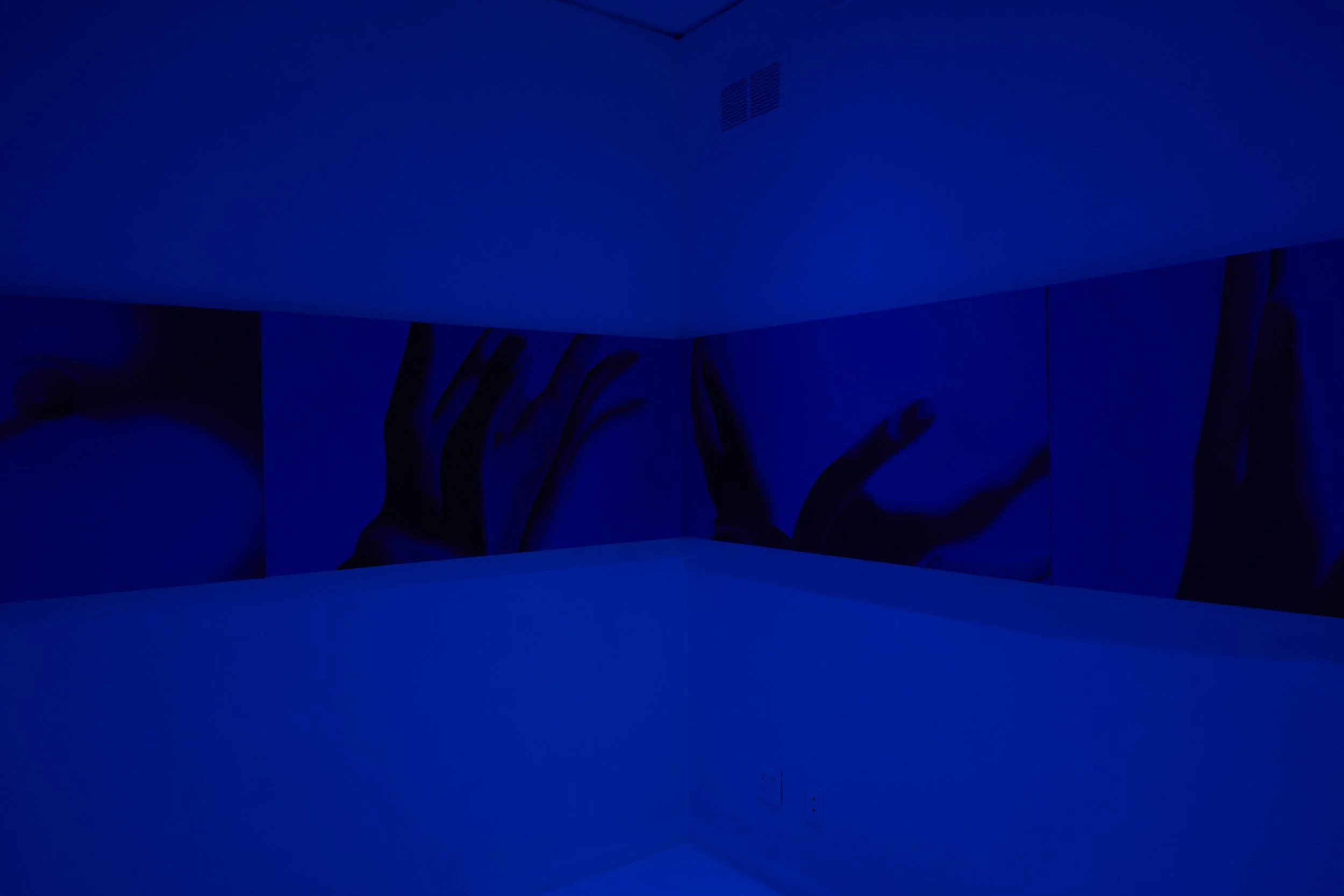
If Hayden Dunham’s installations worked for you, push beyond the bridge and Henry Street to catch Adelisa Selimbašić’s immersive installation of paintings at Lubov gallery. The Italo-Bosnian artist deconstructs the (mostly) female or feminine figure with a focus on legs and heels, torsos and breasts, in a series of paintings on cylindrical columns that interrupt the main front-room space, and in a horizontal band of canvas lining the walls of the back space, bathed in blue light. As in Dunham’s show, there is an aspect of the perception-bending theme park experience in these immersive environments—gummies are optional. The artist sourced her models from the New York nightlife scene, at clubs like Basement or Nowadays.
Selimbašić can paint, and, like Altoon Sultan, she is able to conceptually elaborate on her realistic images, here by constructing an environment for her pictures that the viewer wants to dwell in. Or at least I did for several minutes in the empty gallery.
More of our favorite stories from CULTURED
At 101, the Chinese American Artist Ce Roser Is Finally Getting Her Big Break
Yes, Kane Parsons Directed ‘Backrooms.’ Here’s How It All Went Down.
The Gayest Places in New York, According to Queer Culturati
Director Boots Riley and George Clinton Disagree About the Future of A.I.
The 8 Must-See Movies at Tribeca This June, According to the Ultimate Insider
Sign up for our newsletter here to get these stories direct to your inbox.




 in your life?
