



Most startups dream of one big check from a few major investors. The founders of NOVA, a creative industries jobs platform and studio space, went in the opposite direction. Instead of a single funder calling the shots, they spent what they describe as an exhausting stretch stacking over 50 contributions from friends and contacts, including actor Evan Mock, photographer Brianna Capozzi, creative director Alana O’Herlihy, and superstar musician Drake and his DreamCrew entertainment company.
Founders Alex Gruszynski and Aidan Cullen maintain that getting 50 people who actually believe in you is harder (but better) than getting one who just believes in the upside. The proof, they say, is in NOVA’s transformation into a quickly-scaling team that’s connected creatives to upward of $120 million in work. To learn more, CULTURED sat down with the founders to talk fundraising and friendship, as well as with key investors to get their reflections on the startup’s game plan.
To start, can you take us back to the moment that you realized VC wasn’t going to be the right route for NOVA?
Aidan Cullen: After having hundreds of meetings with every type of investor, Alex and I felt like the venture capital route was not the route for us. We’re building a company to support the creative industry, and we wanted a lot of our creative friends, and people we look up to who’ve supported creative infrastructure for years, to be part of that. There’s no better way than tapping in with investors who are actually using the platform, whether they’re posting jobs, applying to jobs, or running companies that need help in this vein. It also helps spread our octopus tentacles into different zones, and to us it’s a lot more meaningful than being beholden to a partner with different objectives.
Alex Gruszynski: A lot of the more cultural people around us—whether it’s the Drakes of the world or someone high up at Adidas, one of our investors—we wanted to surround ourselves with people who understand the contributions that creatives are making to shape culture, from the biggest musician in the world to the biggest brands. Going the VC route, we noticed people didn’t really understand how much they’re shaping the storytelling of the world.
What kept you going during that stretch of gathering 50 checks?
Cullen: It was fucking exhausting. Maybe the hardest business feat I’ve ever accomplished, and Alex, too. It’s way harder to get 50 checks from people we believe in than to take one check for a lot more money. To us it mattered that much. We had a new business, we needed to keep it afloat, and we’re passionate enough about doing it this way that we didn’t care if it took a year. We just took money as it came and kept building.
Gruszynski: Over the course of raising for NOVA, we noticed a pattern: a lot of VCs kept asking, “What about A.I.? Are creatives even going to be a thing anymore?” while the cultural leaders were thinking, Of course this is a problem, we need to make the world better for creatives. We were seeing such volume through NOVA, so many people getting hired, so many connections made, and we knew we were onto something.
What did someone have to bring to the table to be part of this diverse investor list?
Gruszynski: It was easy to differentiate who to involve based on the people who asked, “How big can this be?” versus the people who got excited and started throwing out ideas, like how we could add healthcare benefits. It’s as simple as passion.
Cullen: It comes down to this: do you give a shit about what we’re doing in a meaningful way? We’re trying to build a rocket ship and get amazing people aboard for a long journey. Even someone with a small check can be in your corner for five, 10, or 20 years. It’s a bit like getting married, and I want to make sure we’re getting married to 50 of the right people.
Tell us about the working relationship between the two of you, and don’t hold back.
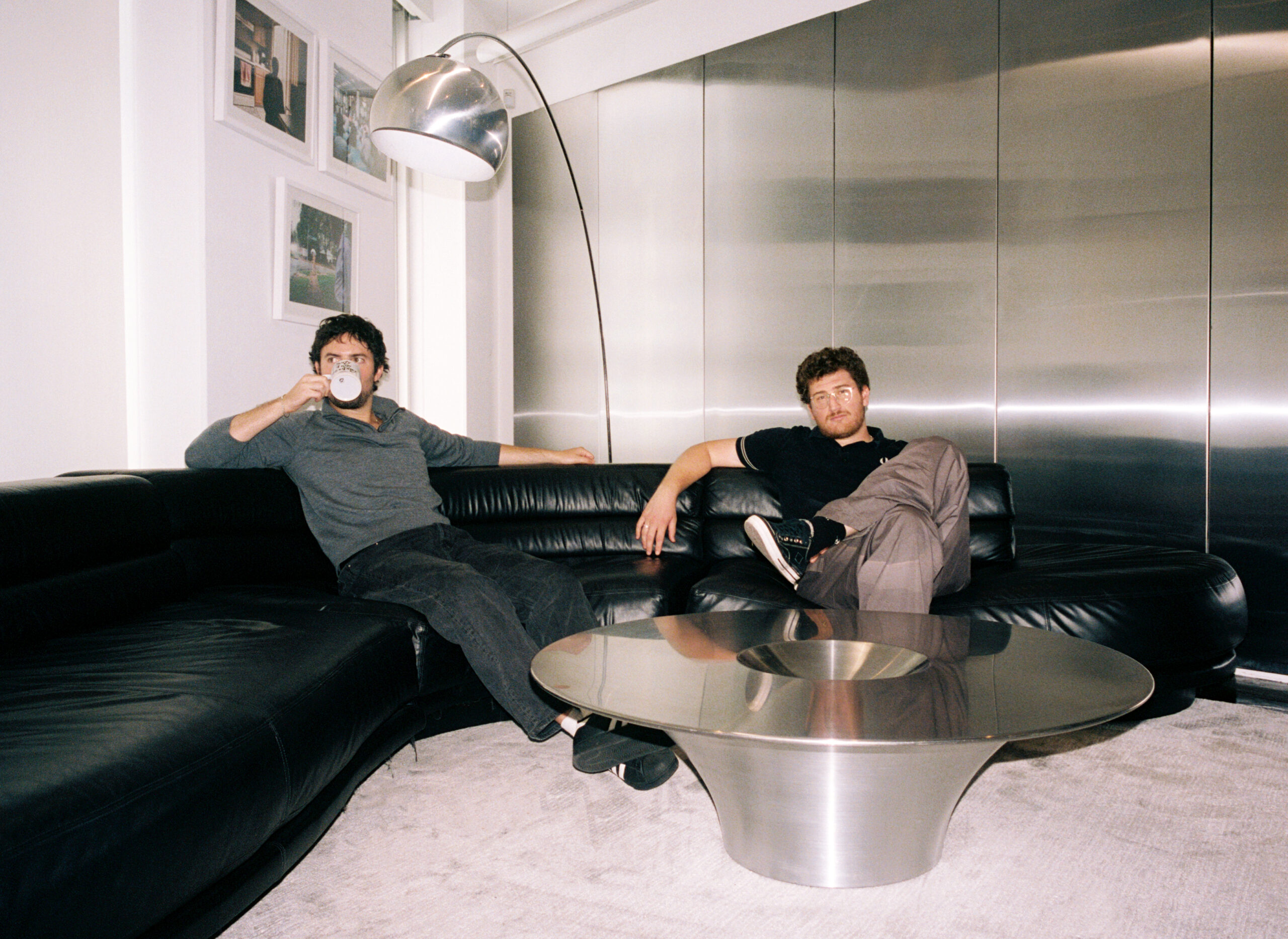
Gruszynski: We met through our mutual best friend, Dylan Shanks—he manages [singer] Omar Apollo. At the time, I was working at WME and doing my best to help people around me get their foot in the door. Without the right connection, it was nearly impossible. It started with a lot of late-night conversations about that overarching frustration. My dad is a cinematographer who immigrated from Poland with a suitcase. Aidan’s parents were also in the industry, and seeing how they struggled, we kept thinking: what if they’d had some version of NOVA?
Cullen: We’re definitely work wives. I’ve been a photographer and director for over a decade, and I know the issue firsthand—when I’m traveling, why can’t I build a crew? Both my parents are freelance screenwriters who struggled for a long time, and I’ve struggled for 12 years making a real living doing this because of how the industry is set up. Alex is a lot more operational and product-focused, and I’m more marketing and community-building.
If NOVA works exactly as you want it to in five years, what does it look like?
Cullen: It’s less about a specific action and more about whether we can keep growing this and help more people through different verticals. Inspire people to just keep making shit. It’s as simple as that.
Gruszynski: It’s a business we love, just on a bigger scale. We’re a culture company with tech products. I’m excited to get into independent film and keep doing events like the NOVA Award show. It’s this flywheel of the tech product as the backbone plus cultural moments, events, funding creative projects, and physical spaces.
What can users expect from NOVA in the future?
Gruszynski: One thing we’re excited about: the sheer amount of jobs and money we’ve connected in our community. At this point it’s at over $120 million, though we think it’s closer to $200 million if we’re counting existing relationships and repeat work. People go toward the dollar figure, but it’s also the connections. Your network is everything, and a lot of platforms today are constructed to create hierarchy that’s contradictory to networking. The whole idea of NOVA is that who you know is everything.
One of our big goals is creative attribution. Brands aren’t tagging the creatives, so there’s a lot of opportunity to make sure creatives are credited the right way, because that’s how they get more work. We’ve also been working on what we’re calling NOVA Net Zero…
Cullen: Which has been a huge passion of mine for years. Right now, I’m owed by probably five companies past net-30 for work I’ve done, which is fucked up. Creatives are constantly in a place of no leverage. We’re working our ass off to change that. We want to launch NOVA Net Zero in the near future, which would allow for getting paid within 24 hours no matter who it’s for. I think that’ll be a massive moment for the industry.
Matte Babel on behalf of Dreamcrew, entertainment company
“I love the idea of supporting creatives, giving them the freedom to pursue the work they care about without having to give up who they are to do it.”
Evan Mock, actor and model
“NOVA really simplifies the steps to making your dream project come to life. I have a sarcastic running joke with Aidan about him having to jump on a Zoom during dinner or in the middle of a thumping Ibiza afterparty, which usually backfires because he usually does then jump on a call or Zoom consisting of anything NOVA. So joke’s on me.”
Isaac Hindin-Miller, DJ and cultural commentator
“I met Aidan on a random Tuesday in LA, and within 10 minutes I knew I liked him. He picked up a camera as a teenager and started relentlessly pursuing his passion until he made a career out of it. When I found out about NOVA it made perfect sense. A lot of creatives famously, unfortunately, are the opposite. And if their only hope of marketing themselves is social media or word of mouth (both of which can be hard nuts to crack), they might need some extra help. I’ve hired directors, editors, and writers in New York and LA, and I even found a guy to film an ad for me on location in Prague a few months ago. So, I like NOVA and I like you!”
Brianna Capozzi, photographer
“I believe when a certain idea comes to you, you have to entertain it immediately or you miss the opportunity. It’s a philosophy that’s brought a lot of amazing work out of me. NOVA’s been clutch for these types of projects. If I’m in bed late at night and decide that I absolutely need to shoot three sisters with giant scars cross their chest… I have five amazing FX artists to choose from. It opens a whole world of possibilities within creation.”
Alana O’Herlihy, artist and creative director
“I am currently interviewing candidates for an additional creative assistant for the month of September, very urgently, and without NOVA, I’d be screwed. I have some promising candidates, which is great. People need to make money from their creative work because it is still work.”
More of our favorite stories from CULTURED
Everything You Need to Have On Your Cultural Calendar for Fall 2026
How Cow’s Milk and Missing Checks Brought Down Brooklyn’s Burgeoning Vegan Empire
Which Film Has the Best Fashion of All Time? We Asked Our Editors to Weigh In.
America’s College Dream Is Dying. Why Is the Campus Novel More Tempting Than Ever?
What Does It Really Cost to Be an Artist in New York? Here Are the Numbers.
Sign up for our newsletter here to get these stories direct to your inbox.






 in your life?
