


Casa Batlló is captivating at all hours, but perhaps none so much as at twilight. Its undulating façade catches the last rays of sun before daylight dissolves and Barcelona’s Passeig de Gràcia lights up. In a city of Gaudí masterpieces, Casa Batlló stands apart: nestled among the storefronts of one of the city’s busiest shopping streets and nicknamed “the House of Bones” for its articulated, skeletal quality.
It’s stirring to imagine that the building could have gone to seed. Its original custodians—the wealthy textile merchant Josep Batlló and his family—relinquished control of the property in the 1950s. During the second half of the 20th century, the building’s charms gave way to practicalities: the upper floors were subdivided into apartments, while an insurance company established offices inside.
Today, more than a century later, the museum retains the uncanny quality that has made it one of Barcelona’s enduring marvels: less a static monument than a living organism. It’s that vitality that led the Bernat family to acquire and painstakingly restore the property in the 1990s, a process that culminated in Casa Batlló becoming the world’s only privately owned UNESCO World Heritage Site in 2005. (The Bernats are perhaps better known as the founders of Chupa Chups, the lollipop company whose psychedelic logo was designed by Gaudí’s fellow Catalan visionary, Salvador Dalí.) The family has become the unlikely custodian of one of architecture’s greatest masterpieces—an undertaking they refuse to confine to conservation alone.
“We could just be managing the building and making it beautiful and having people come in and out, and it would probably work,” says María Bernat, who heads the institution’s art program. “But we don’t want Gaudí to only be a historical figure. We want to show that he’s still present.”
For Bernat, preserving Casa Batlló means more than restoring mosaics or maintaining its sinuous interiors. It means ensuring that the architect’s work remains in constant dialogue with evolving perspectives on art, architecture, and accessibility. A walk through the museum reveals the wide range of techniques employed in pursuit of this goal: interactive installations designed to engage younger audiences, an expansive gift shop, and an elaborate rooftop photo opportunity among them. The future of Casa Batlló is not to exist behind glass but to draw crowds.
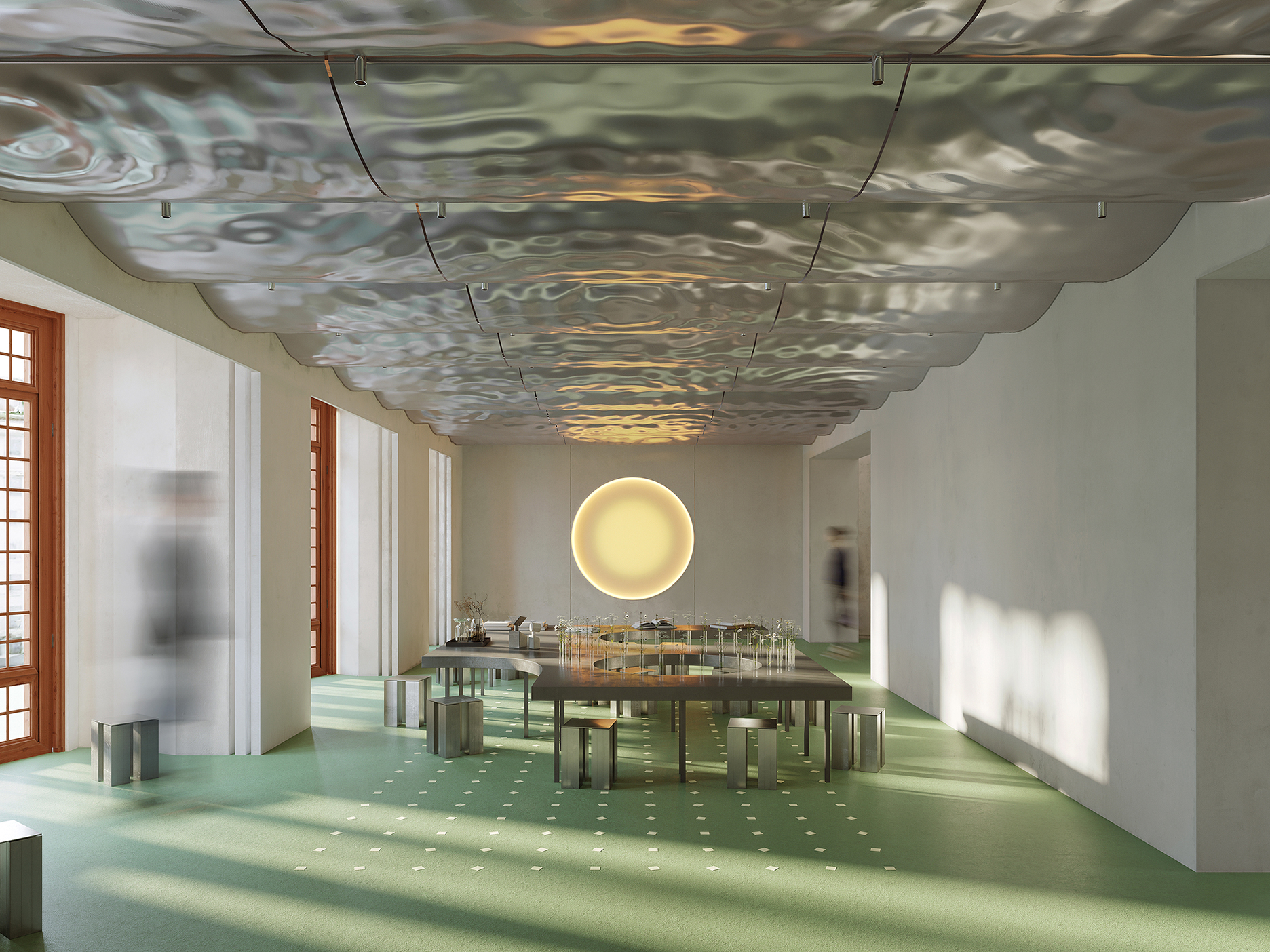
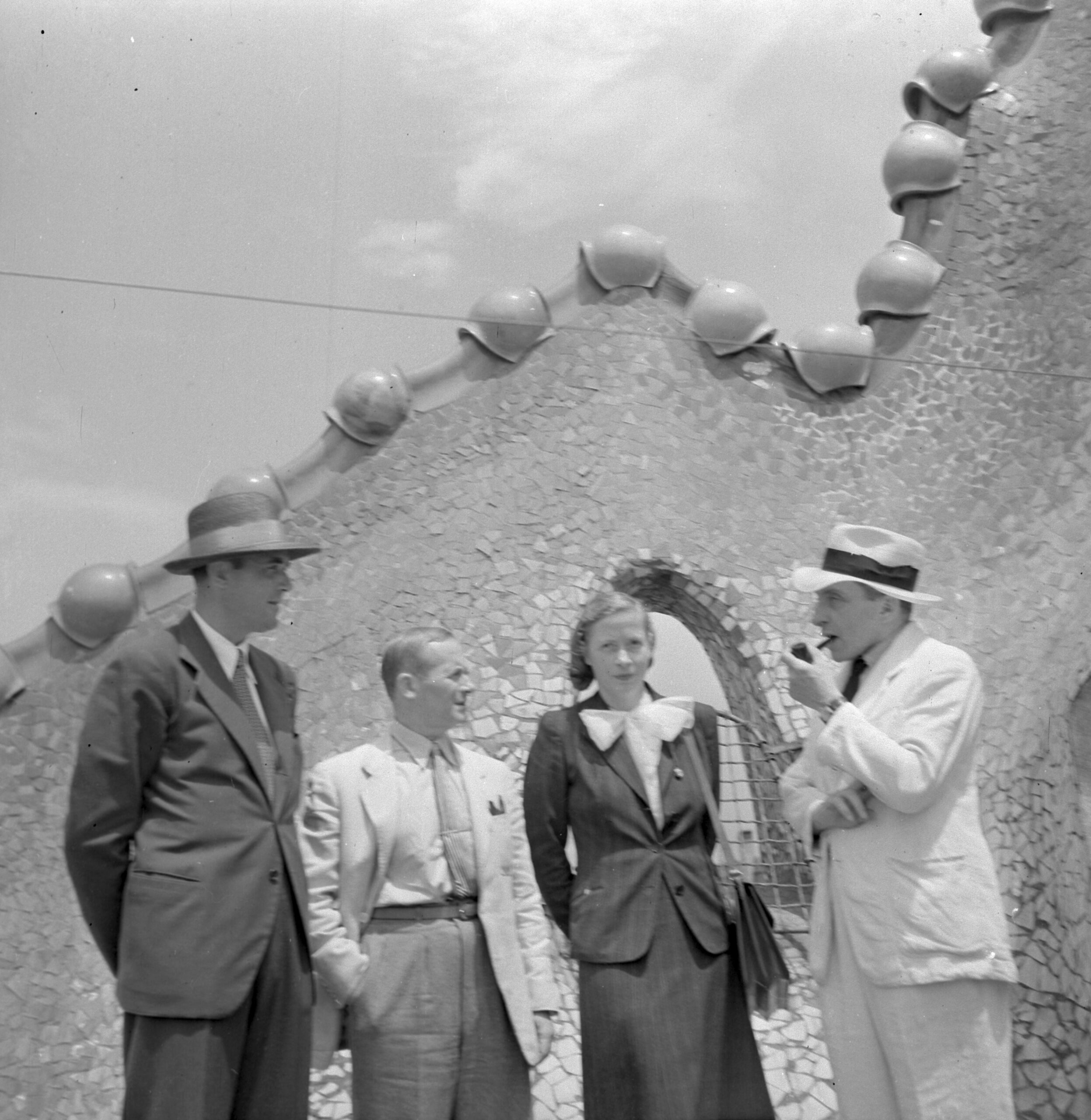
This is less a critique than a hallmark of contemporary heritage tourism—one the family counterbalances with a robust art program. Earlier this year, following a three-year restoration by Barcelona-based Mesura Architects, the institution opened a previously inaccessible floor of the building as a permanent gallery devoted to contemporary art. Casa Batlló Contemporary invites artists working across architecture, performance, and digital media to respond to Gaudí’s legacy. This summer, Bernat mounted the space’s second exhibition, Gaudí–Miró–Gomis: Deconstructed, a collaboration with Fundació Joan Miró that brings together original works by Miró, photographs by Joaquim Gomis, and newly commissioned installations by the London-based studio Tomorrow Bureau. The exhibition clearly articulates Bernat’s broader thesis: to ensure that Gaudí’s legacy remains woven into contemporary, cross-disciplinary conversations, and that his residential masterpiece continues to function as a place in which those conversations unfold.

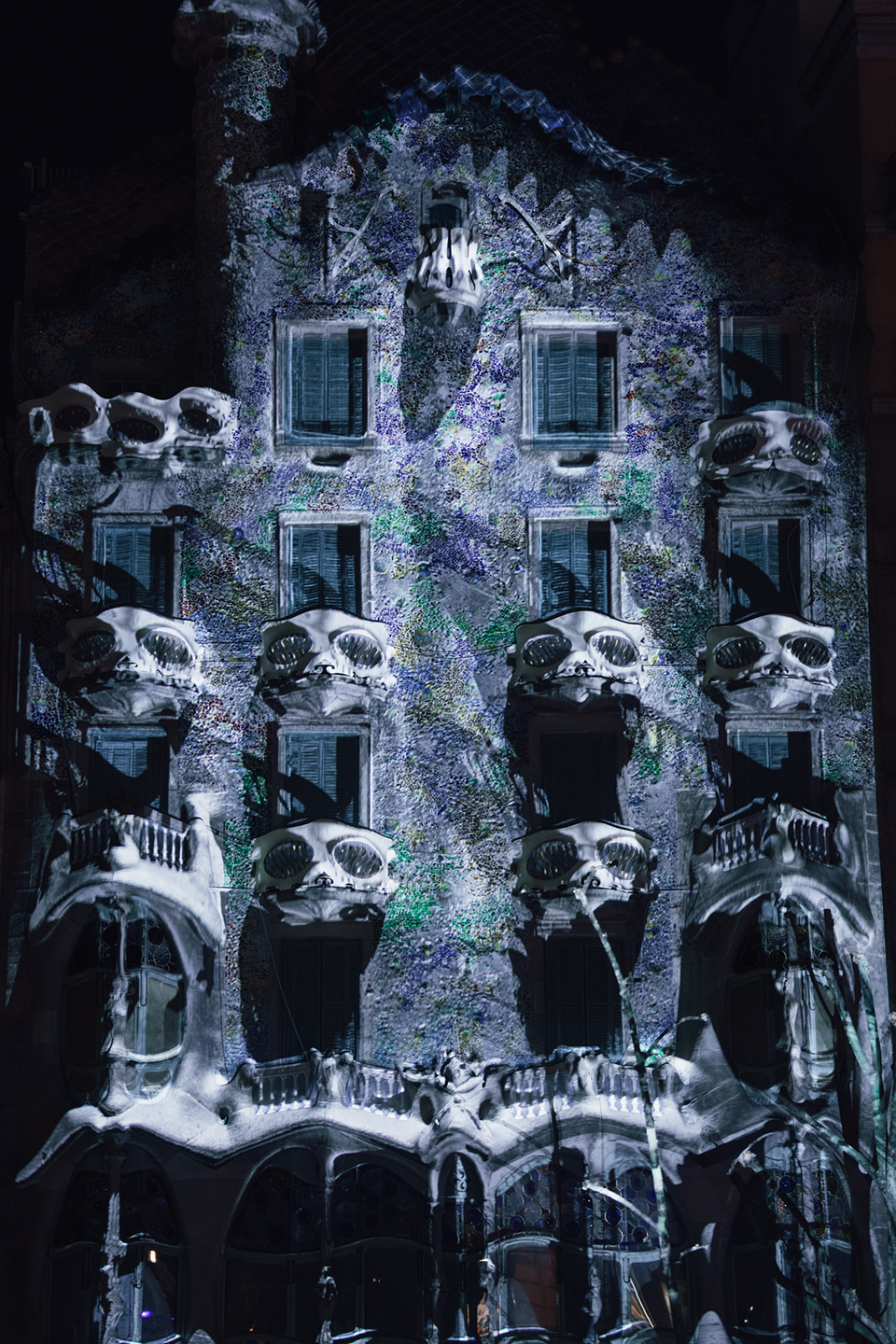
The exhibition space is only one part of Casa Batlló Contemporary’s broader ambition. Since 2021, the institution has also commissioned an annual façade mapping project, inviting leading digital artists to transform Gaudí’s exterior into a monumental public artwork. (Past editions have featured Refik Anadol, Quayola, and Sofía Crespo.) This January, British artist Matt Clark joined that lineage with Hidden Order, an audiovisual commission exploring the invisible systems that connect nature and perception to the body and the built environment.
“To me, Gaudí is more of an artist than a traditional architect,” Clark said of Hidden Order, which debuted across the building’s façade before a crowd that spilled into the street outside Casa Batlló last winter. “This building felt like a body. The façade felt like skin and bone, the internal spaces like organs. It felt like a living, organic thing.”
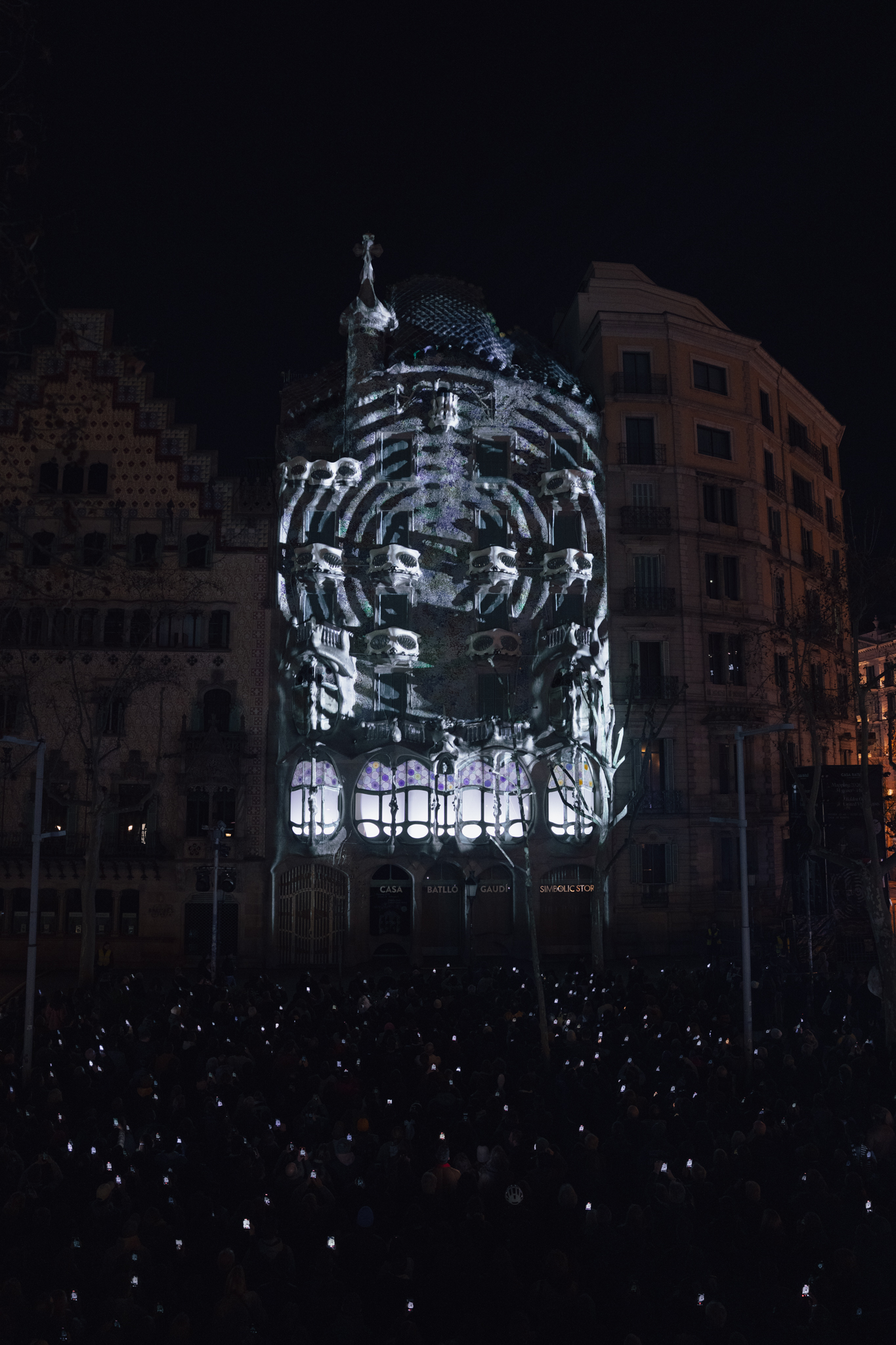
Clark’s work unfolded as a multidisciplinary performance in which choreographer Fukiko Takase could be seen from the street moving through the building to an original score by Daniel J. Thibaut while Clark’s projections animated the façade outside. Rather than imposing imagery onto Gaudí’s architecture, Hidden Order responded to the building’s physical texture, treating it as a collaborator.
For Bernat, this is the ideal approach. “Each artist looks at [the commission] almost like adding another layer,” she says. “The building already contains so many suggestions. Every artist picks up a different one and amplifies it. It improves our understanding of the building and makes us think about it in a way we hadn’t before.”
This summer, Casa Batlló’s vitality is perhaps best experienced through Gaudí–Miró–Gomis: Deconstructed. On the museum’s second floor, visitors first encounter high-resolution digital imaging of Miró sculptures that reveals textures invisible to the naked eye, while Gomis’s photographs become the source material for an AI-based installation by Tomorrow Bureau that reimagines the artist’s archive as a tactile medium. “We’re a mirror of the city,” Bernat says. “And that’s why we’re doing public art—because it’s part of Barcelona’s cultural ecosystem.”





 in your life?
