



The Cannes Film Festival takes care to define itself as a defender of cinema as an institution. Notably, it was one of the few festivals that refused to run any sort of virtual edition during the pandemic. Since it returned from that hiatus in 2021, the festival has seen a strong run, premiering more films that went on to commercial and awards success than it had in a while—Sentimental Value and The Secret Agent last year, Anora and The Substance the year before that.
But this year’s program had fewer auteur-led titles than usual, eliciting a muted response. That’s carried over into the festival itself, with both attendees and observers commenting on an overall lack of enthusiasm. There are exceptions, like the vigorous receptions for Teenage Sex and Death at Camp Miasma, Club Kid, and All of a Sudden. But by and large, it seems the vibes were off this year.
Here are assorted observations—some highs, some lows, and some curiosities—from one week on the Croisette.

Best Cigarette Lighting and Worst Cameo: Parallel Tales
Cannes fixture Isabelle Huppert plays Sylvie, a novelist who indulges in some Rear Window antics, using a telescope to spy on her neighbors and taking what she sees as inspiration for her stories. Sylvie is a typical Huppert figure, witheringly acerbic and pithy, with the wrinkle that she’s a shut-in hoarder who keeps breaking jars because she insists on boiling food to avoid microwave radiation. The best example of her dirtbag no-fucks-given attitude is when she lights a cigarette by sticking it in a toaster. It’s sadly one of the few illustrative flourishes in this tepid effort from director Asghar Farhadi.
Similarly lacking is film legend Catherine Deneuve’s walk-on role as Sylvie’s l’éditrice. The two trade mild banter for a few minutes—a waste of a rare opportunity to see these icons share the screen.
Fit of the Fest: John Travolta
First they mocked him, then the mockery became more affectionate. By mid-fest, we had all learned to love John Travolta’s sharp-cut beard, his unc glasses, and his newfound affinity for berets. He debuted the look with a cream-colored hat and later showed off a black one that matched his ensemble. By all accounts, the movie he was promoting, Propeller One-Way Night Coach, is a dud. But he got an honorary Palme d’Or and a fresh wave of public endearment, so he won anyway.

Best Cameos: Teenage Sex and Death at Camp Miasma
Jane Schoenbrun’s metafictional investigation into the slasher genre, Teenage Sex and Death at Camp Miasma, is the first film to draw major buzz at this year’s festival. It tells the story of an ambitious queer filmmaker (Hacks’s Hannah Einbinder) reviving a horror franchise who is intent on casting a reclusive actor from the original (the one and only Gillian Anderson). While most of the attention has focused on the two leads, the film also makes great use of familiar faces in small roles: Severance’s Zach Cherry, Saturday Night Live’s Sarah Sherman, Kids in the Hall’s Kevin McDonald, Yellowjackets’ Jasmin Savoy Brown, director Eva Victor, and character actors like Patrick Fischler and Dylan Baker are targets for the spear of killer “Little Death.”
Worst Needle Drop: The Electric Kiss
Due to behind-the-scenes politicking, Cannes’s opening night premiere has for years been a domestic title that goes straight into a wide theatrical release. This has resulted in a string of thoroughly middlebrow pictures incongruously inaugurating the world’s most prestigious festival, and this year’s pick is no exception. La Vénus électrique is a dramedy set in 1920s Paris about a carnival worker who pretends to psychically channel a suicidal painter’s dead wife to help him rediscover his passion for art. (Naturally, they fall in love.) It’s mostly inoffensive, even intermittently charming, until it hits a dreadfully stupid climax, punctuated by a terrible cover of Shocking Blue’s “Venus” playing over the end credits. The audience cringed their way out of the theater.
Best Art: Nagi Notes
This is one of the more under-the-radar picks that’s worth keeping an eye on when it comes to a theater near you. Set in the small town of Nagi in western Japan, the story follows a sculptor reconnecting with her former sister-in-law, which involves the sculptor carving a wooden bust of her. Director Koji Fukada pays meticulous attention to the labor and process of art, as well as the role art can play in communities. To that end, it’s also a great showcase for the Nagi Museum of Contemporary Art, making evocative use of distinctive pieces by artists like Aiko Miyawaki, Shusaku Arakawa, and Madeline Gins.
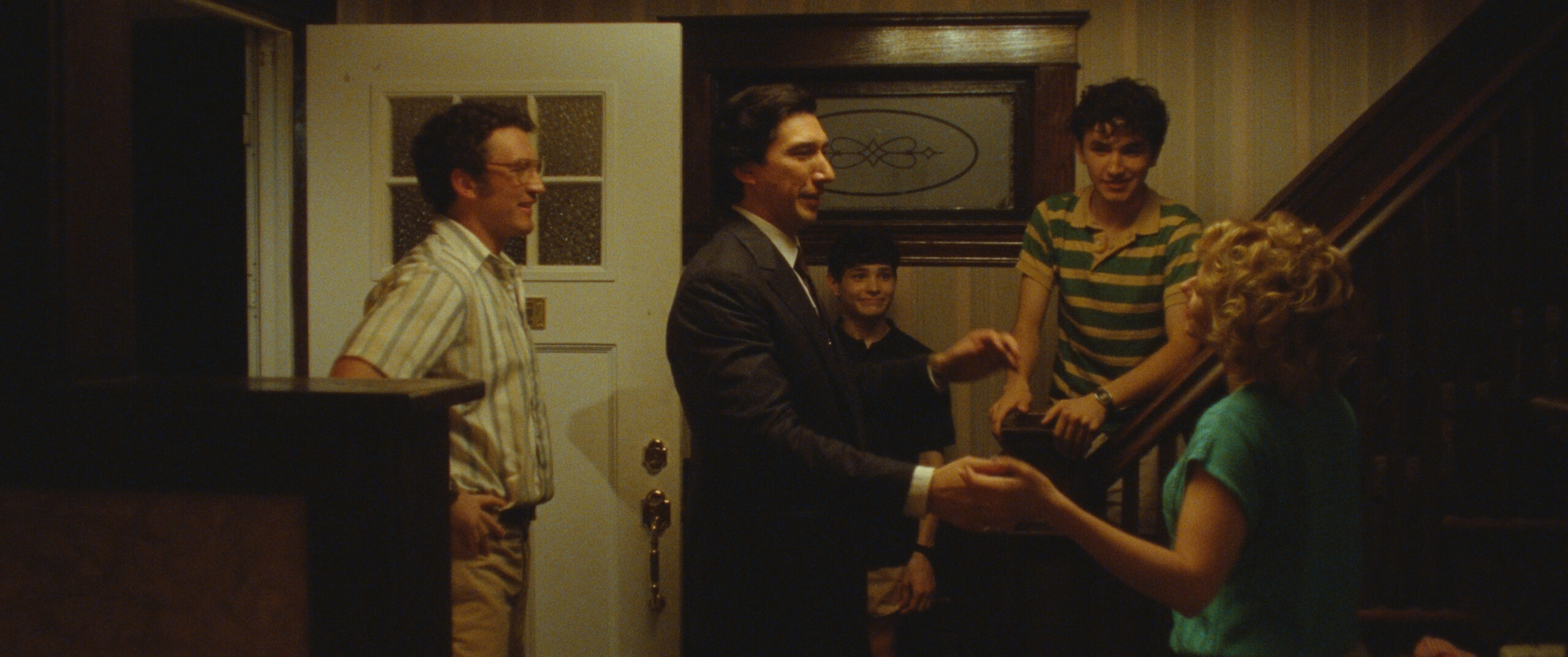
Best Use of Historical NYC Landmarks: Paper Tiger
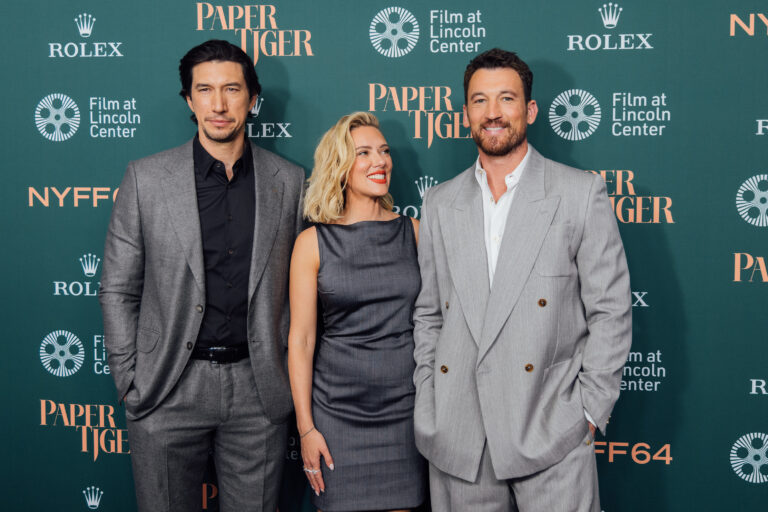
James Gray’s family crime drama features Adam Driver, Scarlett Johansson, and Miles Teller, but the true star is its meticulous recreation of 1986 New York City. The Gowanus Canal is restored to its former anti-glory as an oily slurry. Driver’s character gets Peter Luger Steak House to deliver dinner to his brother’s home as a flex. In the most impressive set piece, Teller warily walks the street in Brighton Beach, with seemingly every building reverted to the era when the neighborhood was an enclave of recent Russian émigrés.
Best Use of Modern NYC Landmarks: Club Kid
Writer/director/star Jordan Firstman’s party impresario lives in a Chinatown loft and shows his previously unknown son some of the fixtures of the area, including brunch at Balthazar (“The food is kind of shitty, but it’s an institution”). We later see him hauling groceries out of Hispanic Chinese, and he gets a job bartending at Bar Oliver. Naturally, the city’s club scene factors in as well, though Basement has only a cameo.

Best Cat: Leo in All of a Sudden (the Best Movie)
Since 2001, critics at Cannes have bestowed the “Palm Dog” award upon the best canine actor in a movie. It is an ongoing injustice that a similar award has not been created for felines. If there were one, this year’s prize would undoubtedly go to Leo, a staggeringly beautiful cream-white shorthair featured in All of a Sudden—which was also my favorite film at the festival.
By now, Ryusuke Hamaguchi has refined a particular brand of slow-paced but enrapturing, emotionally intense humanism. This look at an experimental French nursing home and the deep friendship that blossoms between the home’s director (played by Virginie Efira) and a terminally ill Japanese theatermaker (Tao Okamoto) is more than three hours long. I wish it were longer. The movie’s many digressions and leisurely exchanges build to an emotionally shattering thesis on community, care, empathy, and grappling with death. This is the best of what Cannes offers world cinema.
The Trend That Needs to End: Standing Ovation Clockwatching
People are obsessed with how long the Cannes premieres’ standing ovations last. It’s the top subject on the Wikipedia page about the festival’s records. Vulture aggregates the times, updating as the fest progresses. People on social media have joked that Hirokazu Koreeda’s Sheep in the Box receiving “only” a 3.5-minute standing ovation this year is the most damning sign of its quality. The festival encourages this mindset; its press release announcing that Pan’s Labyrinth would be playing in this year’s Classics program made special note that, when the movie premiered 20 years ago, it received the longest standing ovation in Cannes history (22 minutes!).
It’s difficult to conceive of a more absurd metric. This is the ultimate exercise in film industry gladhanding and celebrity worship; of course people can’t stop applauding. The record-holders for longest standing ovations are hardly classics. Mud? Capernaum? Rust and Bone? Can we be serious? If you want a real gauge of what a Cannes audience’s response may bode for a film’s legacy, you’d do better to look at the history of movies that have been booed at the fest.
More of our favorite stories from CULTURED
Danielle Mckinney Shares the Advice That Keeps Her Painting Even on Her Worst Days
What Not Having Mental Imagery Implies for Psychoanalysis, Trauma, and Our Sense of Self
Meet the Woman Who Curated the Art on Miranda Priestly’s Walls
Mina Stone’s Guide to Eating, Buying, and Cooking With Chocolate (More) Safely
Can Raising Children Make You a Better Artist? Four Artist Mothers Weigh In.
Sign up for our newsletter here to get these stories direct to your inbox.






 in your life?
