


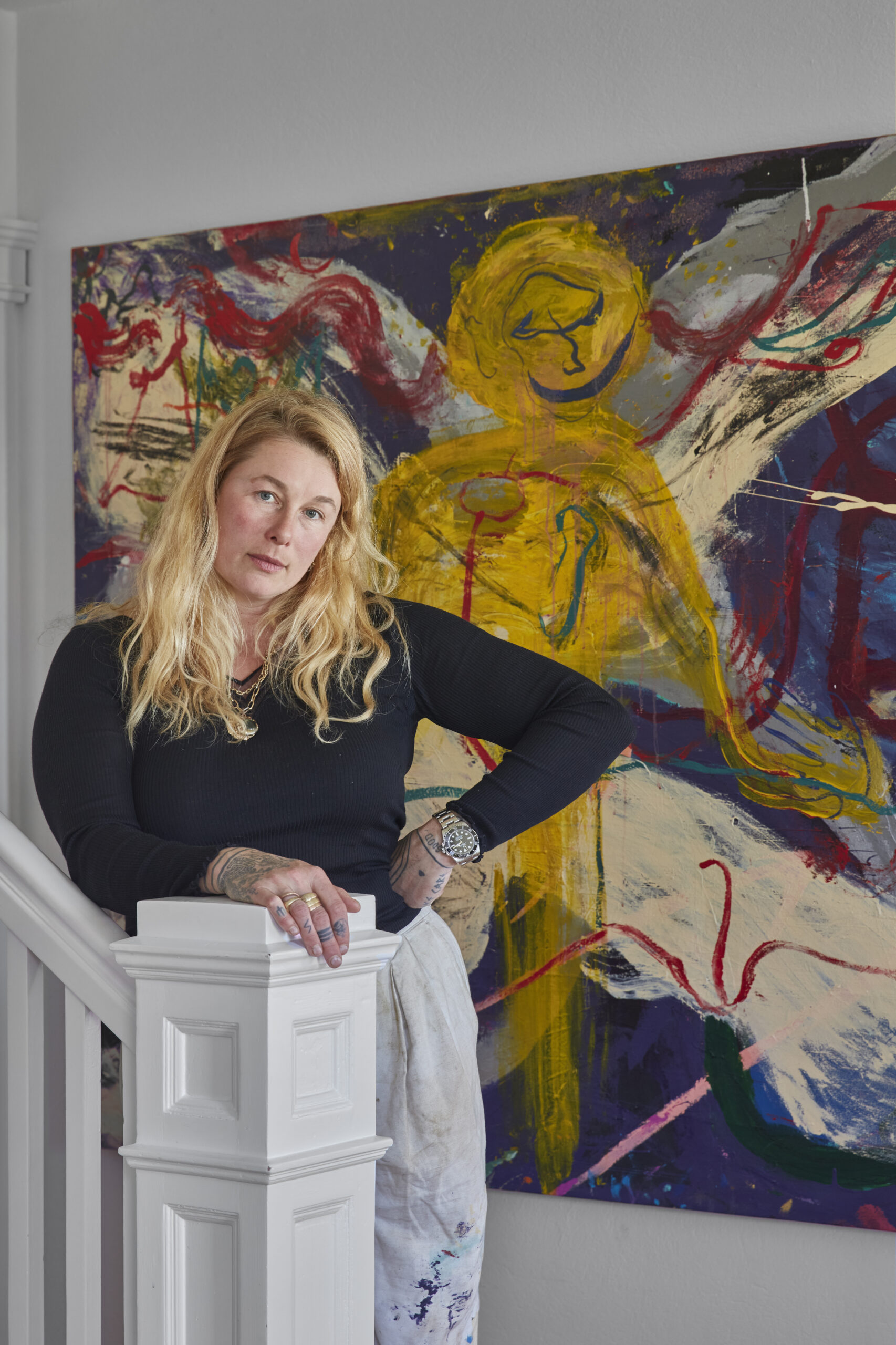
In the early aughts, Suzannah Wainhouse was a part of New York’s coolest fashion tribe. Her jewelry line was thriving, carried by then-flagship department stores like Barneys New York. Once referred to by T magazine as a “modern mystic,” she developed a cult following with a menagerie of women about town that included designer Maryam Nassir Zadeh, actor Jemima Kirke, and musician Cat Power. Then, in 2017, Wainhouse sold all her jewelry-making equipment, packed up her family, and left Williamsburg for the Hamptons.
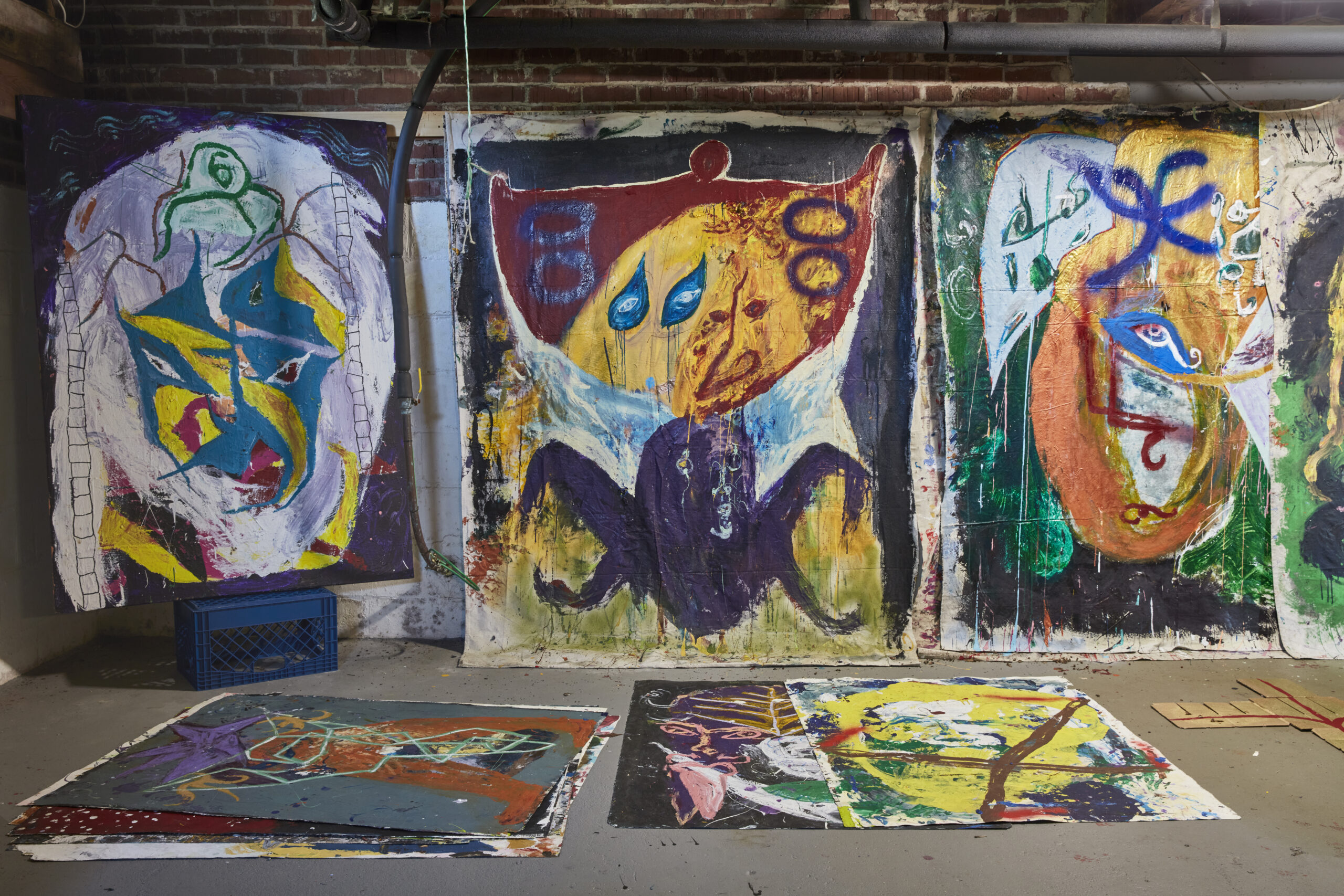
Wainhouse wanted a change and to reconnect with the earth, something she missed from a childhood spent growing up in rural Vermont. She yearned for space and freedom for her daughter to play outside. In her second act, she’s reinvented herself as a farmer, managing more than 200 acres of potatoes, small grains, heirloom tomatoes, and seasonal vegetables at Marilee’s Farmstand and Sagaponack Farm Distillery. By night, she’s a painter with a home studio teeming with canvases.
This summer, her two passions collide as designer Sean McNanney, of renegade cashmere studio Saved, presents a limited-edition collaboration with Wainhouse as part of his pop-up at Il Buco Vita in Amagansett from Memorial Day weekend through Labor Day, where he is showcasing a selection of her paintings and crafting blankets out of the compositions. For now, under the glittering Hamptons sun, she’ll be “squeezing out every drop of the day” in her artmaking, farming, and motherhood.
Tell me about your previous life in New York.
I started designing jewelry in 2009. My collection very quickly got picked up by Barney’s, and then many, many doors opened, and it exploded. I had a studio in Chinatown. I was on Grand and Eldridge and a part of a very vibrant community. Maryam Nassir Zadeh was across the street. My friend Lindsey Thornburg was down the street. There was incredible energy, and it was a beautiful time. I had a little corner in my studio where I started painting. And whenever I had any spare time, I would go over there and work on my paintings. It became something I did more and more, and I started to have some shows and exhibit my work.
When did you move?
I closed down my business in 2017. Barney’s was about to close. The market felt super saturated. I had achieved many of my goals with regards to the jewelry line, and I was much more interested in transitioning from three-dimensional work into painting. I felt like making jewelry had become superficial. I sold all my equipment. It was really hard to do that. I had all these beautiful vintage anvils and hammers.
I knew I wanted to farm. I wanted to learn how to grow vegetables. I wanted to get back to a more hands-on existence. Being from Vermont, I grew up in a very rural area. My mom had a huge vegetable garden, and self-sustainability was a huge part of my childhood. I wanted to be connected to the cycle of life.
I checked out multiple different farms out East, and everyone I talked to told me to find Marilee Foster. She said, “Yeah, you can work here, no problem,” and that’s what led me to Sagaponack. The rest is history. I manage the farm, the wholesale vegetables, and the production of the wholesale business.
Can you tell me what farming as a practice in trust means to you?
What farming has taught me, which is something that I desperately needed to learn, is patience. You’ve got to get the plants in the ground. You’ve got to put the seeds deep enough. You’ve got to water them properly. You’ve got to make sure they have all of the elements. And then you wait.
Farming isn’t something that can be expressed, manipulated, or interpreted. It is absolute. It is counter to my art practice, which is about revisiting something over and over again until an image emerges that I can recognize.

What do you feel it is about the Hamptons that inspires artmaking?
There’s a history here: the connection between New York artists coming out East and making work influenced by this terroir and beautiful, maritime climate. What’s most captivating to me is the light. It’s luminosity. It’s also probably because we’re right on the ocean. There’s something about the way that time passes where I’m squeezing out every drop of the day. There’s an openness here that feels infinite.
What would you say your work is about today?
Small battles. The success and the failure. The paintings are a series of tombstones. In each painting, we consider the pendulum, swinging from paradise to hellfire. These transitions are human, provocative, and personal. It is exploring the liminal space that can only be felt. I am holding them up equally, the ability to hold two things at once.
Can you tell me your favorite thing about the Hamptons?
At the beginning of September, everything completely changes, and it gets very quiet. There’s almost this heartbreak and longing for summer. But you’re moving into something much deeper and much greater. You feel like you own the place. The roads are empty. The beaches are empty, and everything returns to you.
Suzannah’s Hamptons Guide
Bloom in Sag Harbor: “Mona is a legend. She carries the best fragrances and Astier de Villatte.”
Il Buco: “For the best bread.”
Love Adorned and Love Eats: “Lori Levin is a dear friend. She was one of the first stores to pick up my jewelry line back in 2014 on Elizabeth Street. Her Amagansett store has amazing jewelry and home goods. Her new project, Love Eats, stocks healthy and hard-to-find natural foods and wellness products.”
Marilee’s Farmstand: “The best vegetables on the East End!”
More of our favorite stories from CULTURED
At 101, the Chinese American Artist Ce Roser Is Finally Getting Her Big Break
Yes, Kane Parsons Directed ‘Backrooms.’ Here’s How It All Went Down.
The Gayest Places in New York, According to Queer Culturati
Director Boots Riley and George Clinton Disagree About the Future of A.I.
The 8 Must-See Movies at Tribeca This June, According to the Ultimate Insider
Sign up for our newsletter here to get these stories direct to your inbox.





 in your life?
